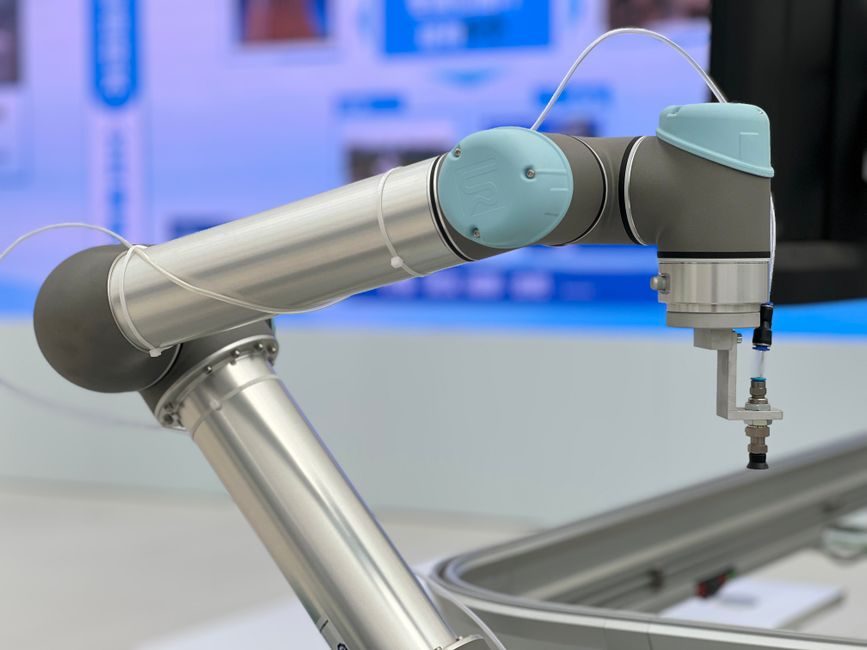
Battery Energy Storage System (BESS) smart manufacturing in mid-2026 is converging on three load-bearing automation layers: dry-room cell assembly with sub-0.2 mm laser-welded tab tolerance, MES-traced pack formation cycling, and containerised rack integration with container-level FAT (Factory Acceptance Testing) per IEC 62619 frameworks [S1][S3].
North American integrators are scaling LiFePO4 cell-to-pack lines beyond pilot, with one supplier disclosing cumulative shipments above 3 GWh and active cell-format work spanning 280 Ah to 314 Ah prismatic formats [S2][S3]. Stack vendors span low-voltage AC/DC components from ABB, full-system integrators such as FPR New Energy, and pack-level OEMs with Samsung SDI, LG, Panasonic and Sanyo cell procurement programs [S1][S3][S4].
Cell Formation and Dry-Room Electrode Stack
LiFePO4 prismatic cell production in 2026 lines runs calendered electrode coatings at areal loadings typically cited between 150 g/m² and 200 g/m² for LFP cathodes, with dry-room dew points held at -40 °C to -60 °C to suppress moisture-driven electrolyte side reactions [S1].
Stack automation pairs slot-die coaters with optical defect inspection at line speeds above 30 m/min on production-scale coaters; FPR New Energy's published 3 GWh cumulative shipment figure illustrates the volume benchmark that pushes vendors toward inline X-ray coating-weight gauging and laser-notching for tab formation rather than mechanical die-cutting [S3].
Electrode drying is moving from convection ovens to floating-film dryers with residence times under 90 seconds, which compresses floor space and lets cell lines run above 200 ppm defect thresholds for separator pinhole detection [S1][S3].
Pack Assembly: Laser Welding, BMS Integration and Traceability
Pack-level automation in 2026 specifies laser-welded busbars with positional tolerance held under 0.2 mm and pull-strength acceptance criteria typically above 1,500 N for prismatic-to-busbar joints, which is the practical gate that separates hand-welded prototype lines from production-volume pack lines [S1][S3].
Battery Management System (BMS) integration has shifted from connectorised slave boards to integrated master-slave topologies with CAN 2.0B or daisy-chained RS-485 comms, sampled at 100 ms per cell; BMS firmware flashing and cell-parameter calibration are absorbed into the MES as a station-level step before the pack leaves the line [S1][S4].
Traceability is enforced per-cell: each prismatic cell carries a DataMatrix code linking electrode batch, formation cycle coulombic-efficiency data, and final cell grading (typically A/B/C tiers on internal resistance and capacity) [S3]. Dragonfly Energy's published patent portfolio and pack-design program in North America operates on the same per-cell genealogy model, with pack-level FAT data stored against the rack serial number for downstream warranty and recycling claims [S2].
Containerised Rack Integration and Skid FAT
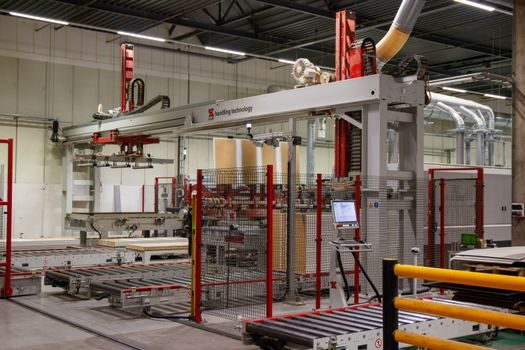
Utility-scale BESS racks ship as 20-ft or 40-ft ISO containers with rated energy densities in the 2.5 MWh to 6 MWh band, integrating 1500 V DC battery racks, PCS (Power Conversion System), transformer, HVAC, fire suppression and BMS gateway in one skid [S1][S3].
Container-level automation focuses on module loading sequence, torque-controlled busbar fastening (typically 25-35 Nm on M10/M12 connections for 1500 V class hardware) and helium-mass-spec leak testing on liquid-cooling manifolds at 10⁻⁶ mbar·L/s sensitivity [S1][S3].
Acceptance gating at the container FAT station includes 24-hour charge/discharge cycling at C/2 rate, insulation resistance testing above 1,000 MΩ at 1500 V, and protocol verification against Modbus TCP or IEC 61850 for substation-side hand-off [S1][S3][S4].
Cell-Chemistry Selection: LiFePO4 vs NMC vs Sodium-Ion
Sodium-ion has moved from sampling to commercial pilot racks, with 1-2 MWh containerised systems entering pre-commercial trials in 2026; energy density sits roughly 30-40% below LFP, but raw-material pricing for sodium cells is decoupled from lithium carbonate, which is the primary commercial argument in stationary storage where mass is not a binding constraint [S4].
Robot Density, Vision Systems and Yield Gates
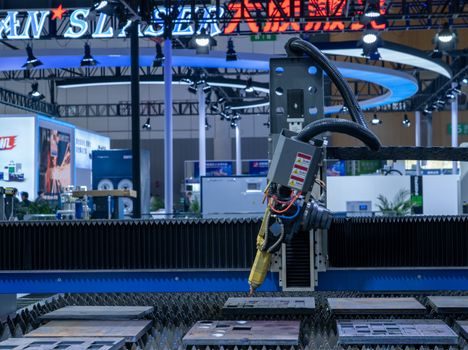
2026 BESS pack lines target robot density around 1 robot per 3-4 workstations, with 6-axis articulated arms (10-20 kg payload) handling module loading and busbar fastening, and SCARA or delta robots running end-of-line vision inspection at cycle times under 4 seconds per pack [S1][S3].
Machine-vision inspection gates busbar weld geometry, connector polarity and label placement, with at least three AOI (Automated Optical Inspection) stations per pack line feeding reject-to-rework flows; these stations are typical decision points where plant engineers should consult a reference like smart camera integration patterns to spec illumination, lens and decode-rate trade-offs correctly.
For process engineers evaluating the broader automation stack — from robot floor layout to MES hooks — the IGBT smart manufacturing 2026 automation stack and MES hooks article covers similar yield-gate and MES discipline applied to power-semiconductor lines.
Standards, Sourcing Levers and Limitations
Governing standards for 2026 BESS manufacturing and deployment include UL 1973 (stationary), IEC 62619 (secondary lithium cells for industrial applications), UN 38.3 (transport), IEC 61850 (substation comms) and NFPA 855 (US installation spacing), with cell-level testing to UL 1642 or IEC 62133 depending on shipment destination [S1][S3][S4].
Low-voltage component sourcing — breakers, contactors, surge protection — runs through ABB's published BESS applications catalogue, which defines AC and DC protection topologies for 1000 V and 1500 V rack architectures and gives engineers a tested bill-of-material for the protection layer [S1].
Key sourcing levers: container-frame lead time (8-12 weeks on standard 20-ft ISO, 14-20 weeks on 40-ft), LFP cell lead time (12-20 weeks for A-grade prismatic from tier-1 suppliers in 2026), and BMS IC availability (AFE chips from Texas Instruments and Analog Devices running 26-30 week lead times during peak BESS demand) [S1][S3][S4]. The power grid smart manufacturing 2026 automation stack, standards and sourcing levers article is the natural companion read for the upstream grid-side BESS deployment stack that consumes these manufactured systems.
Trackable signals for the next 90 days: (1) North American cell-line capacity additions from Dragonfly Energy and tier-2 integrators above 2 GWh annual run-rate, and (2) 1500 V DC string inverter vs 1000 V DC mix-shift in C&I rack designs through Q3 2026, with parallel 314 Ah prismatic LFP format adoption on new pack lines entering FAT in 2026-09 to 2026-12 [S2][S3]. For metering and energy-flow visibility on the grid side, refer to the energy meter integration reference.