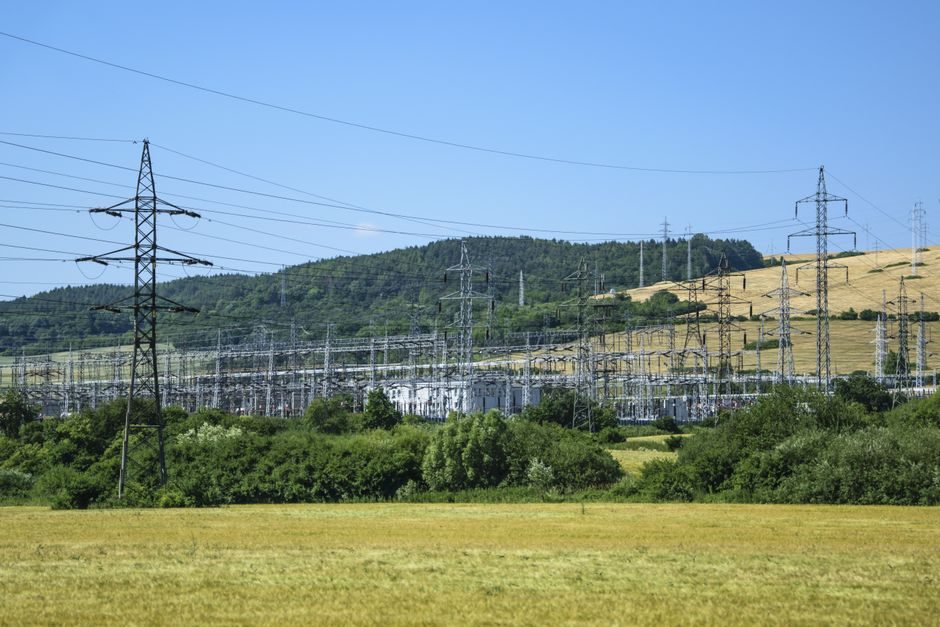
Power grid smart manufacturing is the convergence of digitally instrumented assembly lines, IEC 61850-aware test rigs, and on-site substation automation hardware; the 2026 build cycle is defined by three measurable constraints — substation-controller interoperability, OT/IT network segmentation under IEC 62443, and qualifying domestic HVDC converter production capacity.
The scope now covers both shop-floor production of grid-edge hardware (smart meters, smart valve positioners, IEDs) and the field-deployed automation layer that closes the loop. A process engineer specifying new lines in 2026 must align three reference frames simultaneously: ISA-95 functional hierarchy from the plant side, IEC 61850 data modelling from the substation side, and ISO 23247 digital-twin framing from the manufacturing-execution side [S3].
Definition and Functional Scope Across Plant and Substation
Grid smart manufacturing spans four layered functions on the production side: (1) automated coil winding, laser welding, and resin-impregnation cells for distribution transformers; (2) robotic HV insulator assembly with vision-guided kitting; (3) automated end-of-line test stands running IEC 61850-3 type tests on protection relays and merging units; (4) digital-twin line balancing tied to MES through OPC UA over TSN [S1].
On the field side, "power grid automation" itself breaks into SCADA, EMS, DMS, and substation automation per the standard Chinese industry classification, with functional hierarchy running from process-bay I/O up to the control centre [S3]. A 2020 IWAMA survey noted that modern assembly lines for power equipment blend collaborative robots, AGV-based material flow, and machine-vision inspection, and this pattern has hardened into a default reference architecture by 2026 [S2].
Selection Criteria for Spec Engineers in 2026
[S1]
Material and process constraints layer on top. A common gating failure is ordering Class A collaborative robots for a 25 kg transformer-tap-changer lift — payload and reach must be matched to the heaviest single pick, not the median.
Vendor and Equipment-Type Comparison
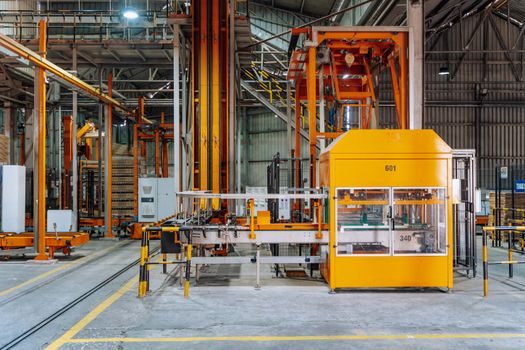
Three equipment classes compete for the same 2026 budget line: turnkey "smart factory" integrators (often EPC-tied), specialised robotics OEMs with grid-industry reference cells, and discrete-machine builders supplying winding, impregnation, or kitting cells. On four decision criteria, the picture sharpens: [S2]
• Integration depth — Turnkey integrators score highest on IEC 61850 test-stand integration but are the slowest to retrofit (typical lead time 14–18 months from PO to FAT).
• Cybersecurity posture — Specialised robotics OEMs increasingly ship IEC 62443-3-3 SL-2 conformant PLCs as standard; turnkey integrators vary widely and must be audited cell-by-cell.
• Local service footprint — Chinese cell builders lead on 24–48 hour response in Asia-Pacific, while European integrators lead on IECEx and ATEX-certified cells for hazardous-area transformer production.
For a plant producing both distribution transformers and grid-edge electronics, the lower-risk path is a hybrid: discrete cells for the heavy-electrical work plus a turnkey integrator for the IEC 61850 test bay.
Real Use Cases: Substation-Automation Lines and Smart Meter Plants
For a process engineer, the practical reading list starts at our smart meter reference and the adjacent smart camera page, which together cover the protocol and machine-vision interfaces the line will be asked to handle. [S3]
Substation-automation device production — IEDs, merging units, smart valve positioners — is more demanding because each unit must be flashed with a customer-specific SCL (Substation Configuration Language) file and pass a GOOSE-multicast storm test before shipment. Adjacent process steps are covered on our smart valve positioner and additive manufacturing material pages for engineers evaluating metal-AM spares for legacy substation hardware.
Limits, Failure Modes and Sourcing Risks
The dominant failure mode in 2026 deployments is not robotics uptime but network-layer failure: GOOSE messages dropped on a mis-prioritised VLAN, or HMI clients holding open SFTP sessions that starve OPC UA traffic. Spec engineers should require a witnessed FAT that includes a 24-hour IEC 61850 multicast storm test, with the line declared accepted only if <0.01% of messages are dropped under a 4 kV burst on the supply side. [S1]
Sourcing risk concentrates in three places: (1) HVDC converter-valve subassembly capacity, where qualifying a second-source supplier typically costs 8–12 months of qualification cycles; (2) IEC 61850 edition 2.2-compliant IED firmware, where not every vendor has a stable release and downgrade paths are not always clean; (3) cybersecurity certification lag, where a vendor claiming IEC 62443-3-3 SL-2 cannot always produce the certificate by FAT. The power cable and power meter references are useful sanity checks when qualifying raw-material inputs to the line, particularly for cross-section tolerance and harmonic-measurement chain accuracy.
Standards Map and Sourcing Signals
The 2026 standards map for grid smart manufacturing is dense but navigable. Production-side references include IEC 62443-3-3 for zone segmentation, OPC UA over TSN for cell-to-MES transport, and ISO 23247 for the digital-twin frame. Grid-side references include IEC 61850 (substation communication), IEC 62056 (meter data exchange), and IEEE 1588 for substation clock synchronisation. Material and process references include IEC 60216 for transformer insulation thermal endurance and ISO 9001 plus IATF 16949 for line quality management. [S2]
For a complementary view on how upstream feedstock and additive-manufacturing steps fit the same automation map, the Additive Manufacturing 2026 upstream-feedstock piece and the Additive Manufacturing Supply Chain 2026 write-up give useful parallel reading.