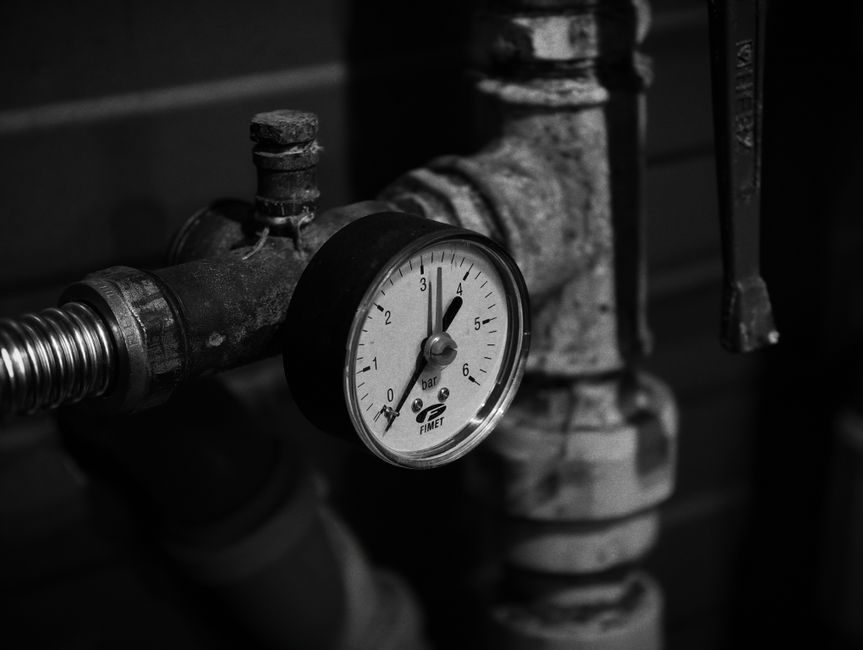
The leading choice for water treatment duty remains a full-port, two-piece ball valve in lead-free dezincification-resistant (DZR) bronze or 316 stainless with PTFE seats, bubble-tight shutoff at 600 PSI (41.4 bar), and NSF/ANSI 61 plus NSF/ANSI 372 certification for potable contact, as specified on the NIBCO T-685-66-LF family [S1].
Scope covers municipal drinking-water plants, industrial process water, desalination, and ballast-water treatment skids; selection hinges on fluid chemistry, pressure class, end connection, and certification rather than brand alone, with body materials spanning bronze, stainless, UPVC, and PTFE-lined carbon steel [S1][S4][S7][S9].
Body Material Options for Water Treatment Service
Body material drives corrosion life, weight, and cost, and the four families commonly cross-shopped are lead-free DZR bronze, 316 stainless steel, UPVC/CPVC polymer, and PTFE/PFA-lined carbon steel [S1][S4][S9].
NIBCO's T-685-66-LF series uses a lead-free DZR silicon bronze per ASTM B584 with a stainless ball and stem, PTFE seats, and a blowout-proof stem, giving bubble-tight shutoff at 600 PSI in sizes from DN 0.25 in up to DN 2 in, and conforming to MSS SP-110 [S1]. The same product page lists an alloy/bronze/stainless material triplet and full-flow (full-port) geometry, so pressure drop matches an open pipe of the same nominal size [S1].
For chemical dosing, seawater, or brine, UPVC ball valves have become a default because the body is light, corrosion-resistant, and rated for water, air, oil, and aggressive chemicals including pure water, drinking-water lines, drainage, salt water, and seawater service [S9]. Made-in-China SKU listings explicitly market 316 stainless, cryogenic, motorised, wafer, high-pressure, pipeline, welded, and PTFE-seated variants for water, gas, and liquid service, with OEM/ODM sampling [S4].
Pressure Class, Port Type, and Seating Geometry
For water treatment, the dominant ratings are 150 PSI / 200 PSI CWP for municipal lines, 300 PSI CWP for industrial skids, and 600 PSI CWP (41.4 bar) for high-rise risers and reverse-osmosis feed headers [S1][S4].
The T-685-66-LF is explicitly a full-port design with quarter-turn (90°) open-to-close operation, which is the de-facto standard for manual isolation [S1].
Seat and seal materials are PTFE for clean water, RPTFE or PEKK for elevated temperature, and EPDM or Viton for chlorinated or chemical service; PTFE dominates the listed water-treatment SKUs because it is chemically inert up to about 200 °C in non-abrasive duty and meets FDA/NSF food-grade extractables limits [S1][S4]. For modulating or throttling service, V-port ball valves (segmented or standard V-notch) replace full-port units because the contoured ball gives a near-linear Cv characteristic; a South Korean OEM is currently exporting V-port ball valves for these exact control applications [S5].
End Connections and Actuation Choices
Threaded NPT/BSP ends are the default for sizes up to DN 2 in in commercial and residential water service, and the T-685-66-LF series ships with threaded ends for that reason [S1].
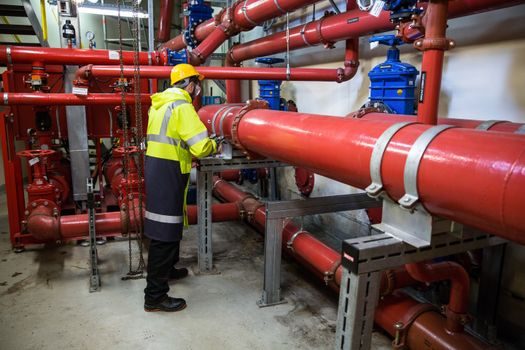
For plant skids and large-bore lines, flanged ends (ANSI 150/300, PN 10/16/25) are the norm, while wafer and lug bodies are preferred between flanges on space-constrained skids. A 30-year valve manufacturer, ZSGood, advertises ball valves suitable for high-end water, oil, and gas fields and frames its offering as a zero-leakage solution for the same envelope [S7]. Made-in-China catalogues mirror this with explicit flanged, wafer, clamp, and threaded SKU families for water and gas service [S4].
For automated isolation, electric ball valve actuators with 4–20 mA, on/off, or modulating control are now the standard for SCADA-integrated plants, while pneumatic and electric actuators from NIBCO (NE-100, NE-SR5, NDA series) are compatible with the same quarter-turn mounting interface as the manual T-685-66-LF body [S1]. Hand-lever units are kept as manual bypasses under API and plant safety rules because they remain operable during a power loss.
Certification Stack: NSF, MSS, and Drinking-Water Safety
For potable water treatment, the certification stack is non-negotiable: NSF/ANSI 61 (health effects of drinking water system components) and NSF/ANSI 372 (lead-free content, ≤ 0.25% weighted lead) are the two most commonly cited marks, and both appear on the T-685-66-LF datasheet [S1].
MSS SP-110 covers ball valve construction and performance, which the same datasheet claims conformity to, and AWWA C507/C540 govern larger ball valves in municipal service though they are not flagged on the residential bronze range [S1]. For marine ballast water treatment, China's GB national standard on Ballast Water Treatment Systems – Part 1: Requirements is in the drafting and approval pipeline with a six-month implementation window after publication, administered by TC137/SC9, and that standard will drive valve selection for any shipboard skid bound for Chinese ports [S8].
Dezincification resistance matters more than the layperson assumes: standard brass dezincifies in soft, low-pH water and the resulting porosity causes leaks years after install; DZR alloys (typically CR-brass or DZR bronze) are now the default for any building potable water valve exposed to soft or aggressive supply water [S1].
Application Fit: Drinking Water, Process, Desalination, and Ballast

For residential and light commercial drinking-water service, a DN 0.25–2 in threaded, lead-free DZR bronze full-port ball valve with PTFE seats and NSF/ANSI 61+372 marks is the baseline, matching the T-685-66-LF envelope exactly [S1].
For industrial process water and chemical dosing, UPVC or PTFE-lined units replace bronze because chloride, hypochlorite, and acid dosing attack copper alloys, and the UPVC body is rated for water, air, oil, and corrosive chemicals including salt water, seawater, and pure-water loops [S9]. For high-pressure RO feed and brine, 316 stainless or super-duplex bodies in ASME B16.34 / ANSI 300 classes are typical, with pneumatic or electric actuation tied to the plant DCS.
For marine ballast water treatment, valves ride on the treatment skid and have to satisfy the upcoming GB standard on ballast water management plus IMSC/IMO BWT type approval; stainless or coated ductile-iron bodies with EPDM seats dominate, and the same spec sheet logic that drives the on-shore drinking-water market (full port, quarter-turn, bubble-tight shutoff) is the floor, not the ceiling [S8].
Selection Criteria and Common Pitfalls
A spec-first comparison of the four main candidates for water treatment duty, on a small set of decision criteria, looks like this: lead-free DZR bronze scores high on cost and potable certification but loses on chloride resistance; 316 stainless scores high on corrosion and temperature but costs 2–3× bronze; UPVC scores high on chemical resistance and weight but loses on pressure and temperature ceiling; PTFE-lined carbon steel bridges the cost gap of stainless at the price of a heavier body and a lining repair risk after a cold cycle. [S1]
Common pitfalls include specifying a reduced-port valve where a pig or flow meter is planned, using standard brass instead of DZR in soft water, mixing thread standards (NPT vs BSP) on imported skids, and undersizing the actuator torque margin so a line-pressure-locked ball stalls a small electric actuator. The cleanest spec combines body material, port type, seat material, end connection, pressure class, certification stack, and actuation interface on a single line item, which is the same line-item discipline the ball bearing and ball screw reference pages recommend for adjacent rotating-equipment buys. For a deeper spec walk across oil-and-gas, process, and water service, the How to Choose a Ball Valve spec map lines the same options up against the same criteria. Temperature boundaries for motorised packages are the common failure point, and the electric ball valve temperature compatibility guide walks the actuator-vs-fluid envelope. For dosing and analyser skids that sit next to the ball valve, the online water analyzer reference covers the sensors that read the same water the valve is isolating.
Track these signals over the next quarter: the formal publication of GB on Ballast Water Treatment Systems Part 1 [S8], the next revision of NSF/ANSI 61 and 372 extractables limits for valves, and the consolidation of Chinese OEM ball-valve SKUs under 316 stainless and PTFE seating into North-American drinking-water listings. Each is a verifiable change to watch before reissuing internal valve specs.