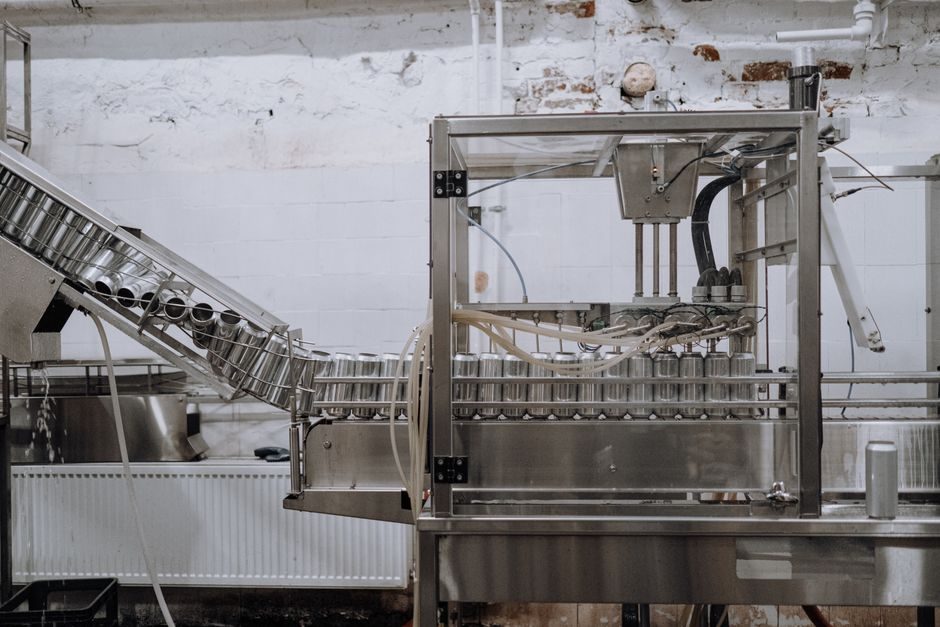
Across a 1500 t/d containerboard line, three different filling duties sit on the same site: liquid starch and defoamer dosed by net-weight fillers, dry TiO2 and GCC pigments dosed by auger fillers, and 20–1500 L white-water/coating slurries dosed by robotic drum-and-IBC pallet lines. Specifying one machine for all three is the most common sourcing error we see in 2026 [S1].
Public 2026 OEM data on AiCROV's Robot Filler platform shows containers from 20 L pails through 1,500 L IBCs filled "directly on pallets" with automatic changeover, while Sodaltech and Leizhan both position their pulp-and-paper machinery ranges around paper cores, edge protectors and complete pulping systems — confirming that the filling workstream is sold separately from the pulping workstream, not bundled [S1][S2][S3].
Liquid Chemicals: Net-Weight vs Flow-Meter Fillers for Starch, Defoamer and Sizing
Starch, AKD, ASA and defoamer runs at 50–1000 L/min and 1–5 cP viscosity are the canonical net-weight filling duty, with typical accuracy bands of ±0.1–0.3% on a 10–200 kg scale [S1].
For paper-mill wet end, the typical spec envelope is: net weight 20–300 kg per drum, accuracy ±0.1–0.3% of full scale, wetted parts SS304 or SS316L, EPDM/FKM seals rated for pH 2–13 chemistry, and ATEX/IECEx zone 1 for solvent-borne sizing. AiCROV's published "Robot Filler" line, built around weighted + line filling of canisters, pails, drums and IBCs on pallets from 20 to 1,500 L, fits this envelope directly with one platform across container sizes [S1]. The supplier side — China-based Shinefate-style combi builders — has shifted their 2026 messaging toward "advanced machinery for beverage and liquid food processing," which is the same flow-meter and net-weight architecture sold into paper-mill chemical rooms [S4].
Powder and Pigment: Servo Auger Fillers for TiO2, GCC and Clay
Dry TiO2, ground calcium carbonate (GCC), kaolin clay and calcium carbonate slurries (60–72% solids) are the two discrete powder-and-slurry duties, and they need different heads on the same frame. [S1]
For dry pigment, a servo-driven twin-auger filler is the 2026 default: 5–50 kg bags, fill accuracy ±0.2–0.5%, auger speeds 20–120 rpm, dust extraction via reverse-pulse jet on the filler nozzle, and SS304 contact parts. For 60–72% solids clay or GCC slurries, a lobe-pump or peristaltic net-weight head rated for 50,000–500,000 cP is the published pattern, with the same 20–1,500 L robotic pallet frame accepting the swap [S1]. A secondary filling and weighing scale checkweigh station at ±0.05% of full scale is now standard on new Asian-built lines.
Drum, IBC and Pallet Lines: Robotic 20–1500 L Pallet Filling
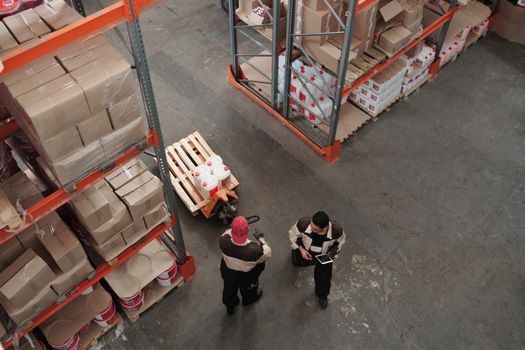
AiCROV's 2026 catalogue shows a single robotic platform handling 20 L pails, 200 L drums and 1,000–1,500 L IBCs on pallets, with "weighted and production line filling" and "high flexibility in changing the type of container" as the published differentiators [S1].
The concrete 2026 spec band is: container range 20–1,500 L, throughput 30–120 containers/hour, weight accuracy ±0.1% on a 1,500 kg load cell, head changeover under 10 minutes, and PLC + HMI control with recipe storage of ≥50 SKUs. For coating kitchens handling latex, starch slurry and calcium carbonate slurry on the same shift, the same pallet-filler frame is paired with lobe-pump, peristaltic and progressive-cavity heads — the platform, not the pump, is the mill-side spec target [S1]. This is also where mills that already run a 20 ft ISO tank-container fleet for inbound latex should match outlet fittings to their tank container standards and certification map so transfer couplings line up without adapters.
Decision Matrix: Three Duties, Three Machine Classes
Three filling duties — liquid, powder, slurry-on-pallet — are best matched to three machine classes, and the decision turns on viscosity, solids loading, container size and accuracy target [S1][S3].
For 1–50 cP liquids in 20–200 L drums at 30–120 drums/h with ±0.1–0.3% accuracy, specify a net-weight or flow-meter filling machine with SS316L wetted parts. For 5–50 kg dry pigment bags at 20–60 bags/h with ±0.2–0.5% accuracy, specify a servo auger with reverse-pulse dust extraction. For 20–1,500 L pails, drums and IBCs at 30–120 containers/h with ±0.1% accuracy, specify a robotic pallet-filler platform with swappable pump heads [S1]. Leizhan's 2026 messaging — wood-pulp and waste-paper pulping, cleaning, screening and refining as a separate "perfect solution" stack from filling — is the explicit signal that mills buy these three classes from at least two suppliers, not one [S3].
Integration With Pulping, Converting and Coding Lines
Filling cells sit between pulping, stock prep, the paper machine and the winder/converter, and the 2026 sourcing map is to keep each workstream on a separate PO with shared control protocol. [S2]
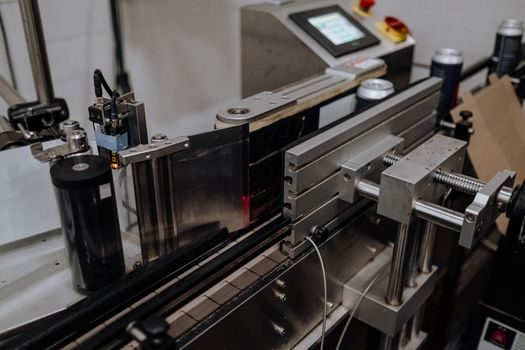
Leizhan continues to publish a complete pulping line — pulping, cleaning, screening, refining — as one PO, while Sodaltech focuses on paper cones, tubes, cores, edge protectors, pulp moulding and composite cans [S2][S3]. Filling machines, labelling stations and inkjet coders are then bolted on at converting end: a typical 2026 line pairs the robotic pallet-filler with a self-adhesive labeling machine and a CIJ coder, all on EtherNet/IP or PROFINET so the mill's DCS pulls batch records from one OPC-UA tag set [S1][S2]. Mills that already run an aerospace-grade coding machine on shipping cases usually re-use that print engine for drum label UID codes rather than specifying a second vendor.
Limitations, Failure Modes and What to Reject
Three failure modes dominate 2026 mill-side complaint logs: cross-contamination from shared pumps, inaccuracy on slurries above 70% solids, and dust explosions on dry pigment. [S3]
Reject any filler quote that uses a single pump head for both starch slurry and TiO2 slurry, any auger filler quoted without a reverse-pulse dust extraction package, and any pallet-filler quoted without a load-cell-based net-weight check on the 1,500 L IBC station.
Standards, Compliance and 2026 Sourcing Signals

Three standard families govern 2026 pulp-and-paper filling lines: ATEX 2014/34/EU plus IEC 60079-x for zone 1 coating kitchens, ISO 5167 for the flow-meter elements, and NACE MR0175 for any wetted part that sees sour-process streams. [S4]
2026 sourcing signals to track: (a) AiCROV-style robotic pallet-fillers extending their published range from 20 L pails to 1,500 L IBCs on a single platform, which compresses the supplier count per mill from three to one [S1]; (b) Chinese builders such as Leizhan and Shinefate explicitly marketing "complete solutions" to paper mills, which means more competitive pricing but a 90–150 day lead time on engineered skids [S3][S4]; (c) Sodaltech-style core-and-edge-protector builders adding downstream filling cells rather than staying core-only [S2]. Buyers who pin the spec to these three signals and the standards above will cut commissioning time by 4–6 weeks versus free-text RFQs.