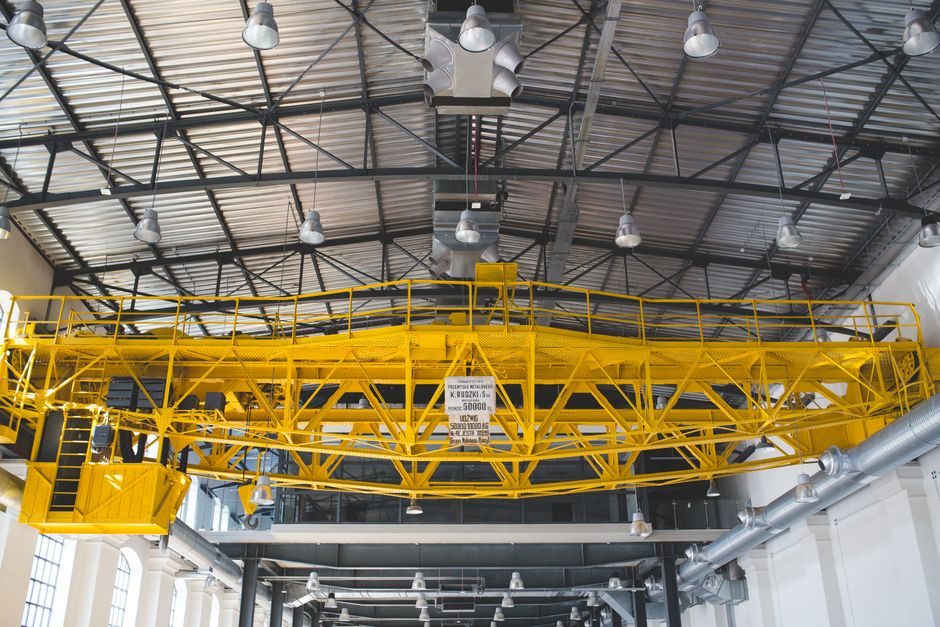
For municipal and industrial water-treatment plant duty in 2026, the dominant spec is a single-girder, A-frame rubber-tyred or polyurethane-wheeled gantry crane with a 3-20 t SWL, hot-dip galvanised or epoxy-painted carbon-steel main girder, and an IP55 enclosed electric wire-rope hoist — units that move on casters through chemical stores, screen rooms and clarifier decks without the structural cost of an overhead bridge crane [S1][S3].
Capacity bands cluster around four work zones: 1-3 t for drum and reagent handling, 5-10 t for screen rake and sludge-pump lifts, 16-32 t for motor and gearbox swaps on larger clarifier drives, and 100-550 t for the heavy pump, valve and aerator-rotor replacement jobs that happen during major overhauls [S3][S4][S5]. Most treatment works only need to spec the first two bands; the heavy-lift gantry is rented in for the 5-15 year turnaround.
Why Water-Treatment Duty is Harsher than a General Workshop
Water-treatment plant air carries chlorine off-gas, sodium-hypochlorite mist and ozone residuals, all of which attack unprotected carbon steel far faster than a typical factory ambient — a clear-enamel or hot-dip galvanised girder (typically 80-120 µm zinc) is the baseline, with duplex stainless 2205 upgrade specified at chlorination rooms and polymer dosing skids [S3].
Floor conditions are also a constant problem: wet concrete, polymer splash, and 100 mm of standing water around scraper troughs mean a standard solid-tyre bogie will slip and hydroplane. Polyurethane (PU) wheels in the 200-400 mm diameter range with 80-95 Shore A hardness give the best grip on wet concrete without chewing up the floor; rubber-tyred bogies (pneumatic, 7.00-12 or equivalent) handle outdoor clarifier decks where drainage is rougher [S1][S3].
Hoist enclosure is the third environmental load. IP55 (dust-protected, hose-resistant) is the minimum any plant engineer should accept for indoor chemical rooms; outdoor clarifier decks should be IP65 with a stainless 304 or 316 control pendant, because standard phenolic pendants absorb moisture and fail the strain-relief grommet within 18 months on a humid site [S4].
Capacity vs Span: the Two Numbers That Drive Everything
Span on a treatment-plant gantry rarely exceeds 12 m for indoor chemical stores, runs 15-25 m for clarifier galleries where the scraper mechanism has to be unbolted and lifted clear, and stretches to 30-40 m for outdoor aeration-basin work where the gantry must straddle the basin wall and reach a service truck on the apron [S3][S5].
For a 5 t SWL single-girder gantry at 20 m span, the typical main-girder cross-section is a 600-800 mm deep welded box with 8-10 mm web and 12-14 mm flange plate, painted or galvanised; the cantilever overhang beyond the bogie is usually limited to 1.0-1.5 m so the lifting slings can clear a 2 m tank wall. Always size the SWL to the heaviest single-piece lift the plant ever does — for a 50 ML/day works this is almost always a 3-5 t sludge-pump assembly or a 4-6 t clarifier centre-drive gearbox, not the nominal 1 t reagent drum the spec sheet was originally written around [S4][S5].
Lift height is the third silent number. Standard 6-9 m lift covers chemical stores and indoor pump rooms; clarifier-deck gantries frequently need 12-18 m of hoist travel so the hook can lower a pump down the centre well; container-handling style gantries (the 550 t class) only become relevant when a treatment plant is co-located with a dewatering or shipping operation, which is uncommon in municipal works [S5].
Power, Control and Safety Options Worth the Money
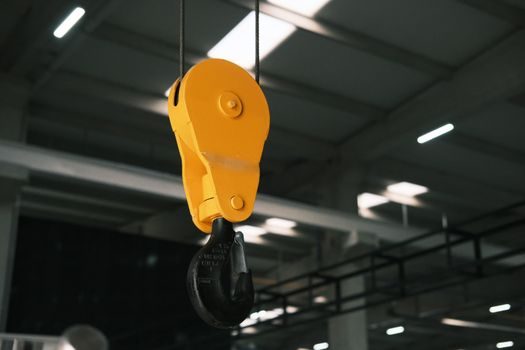
For a treatment plant, electric wire-rope hoists in the 3-20 t class now ship with variable-frequency drives (VFD) as standard on the cross-travel and long-travel motions, which removes the shock-loading that used to crack clarifier drive couplings during scraper lifts. Pendant control on a 6-button station (up/down, east/west, north/south, e-stop) remains the workhorse; radio remote adds about 8-12% to the crane price and is worth specifying when the operator has to stand back from a chemical drum being inverted [S3][S4].
Power supply is usually 380-415 V / 50 Hz three-phase for plant builds, with 220 V single-phase hoists only suitable for 1-2 t portable gantries in the storeroom. For explosion-risk rooms (chlorine, methane from digester gas), specify an Ex d IIB T4 hoist with ATEX/IECEx certification, and a copper-free aluminium or stainless 316 enclosure; the cost premium is roughly 60-90% over a standard hoist, but it is non-negotiable in a chlorine drum store [S3][S4].
Safety accessories that should be standard, not optional, on a water-treatment gantry: upper and lower hoist limit switches, overload limiter (typically set at 110% of SWL), travel limit switches on both ends of each motion, a power-out emergency brake that defaults to the closed position, and a 24 V control transformer to isolate the operator from the main bus [S3][S4]. A loud (≥95 dB at 1 m) motion alarm is mandatory for any outdoor or shared-floor gantry.
Comparison: Which Gantry Fits Which Lift
For the four work zones, line the options up on the real decision criteria — SWL, span, mobility and corrosion package — and the answer usually picks itself: [S1]
• Portable aluminium gantry, 1-3 t, 2-5 m span, manual push, for pump-room drum lifts and small motor swaps. Lowest cost (typically $1,500-4,000 for a 2 t unit), no power, but limited to a single operator and short runs [S1].
• Single-girder A-frame rubber-tyred gantry, 5-10 t, 10-20 m span, PU or pneumatic wheels, electric wire-rope hoist, for clarifier and screen-room work. This is the workhorse — 70-80% of municipal plant lifts fall in this band [S3][S4].
• Double-girder motorised gantry, 16-32 t, 20-30 m span, with crab-trolley hoist and VFD long travel, for clarifier-drive and large-pump overhauls. Specify hot-dip galvanised girders and IP65 hoist enclosure; budget roughly 2-3× a single-girder of the same span [S4][S5].
• Heavy-lift container-handling style gantry, 100-550 t, 30-40 m span, twin-hoist or spreader-beam rigging, for major refurbishments or co-located dewatering plants. Almost always rented, not owned, by a municipal utility [S5].
For context on the structural and material side, a treatment plant's structural-steel sourcing tracks the steel price 2026 China export bands, feedstock squeeze and sourcing reality picture directly — a 20 t single-girder gantry at 25 m span is roughly 15-22 tonnes of fabricated steel, so the crane price moves with the same hot-rolled coil index that drives clarifier scraper and walkway steel.
Suppliers, Sourcing Reality and What 2026 Stock Actually Looks Like
The 2026 supplier landscape for treatment-plant gantries is dominated by Chinese OEM/ODM factories offering 3-20 t single-girder units at $8,000-35,000 ex-works depending on span, hoist brand and corrosion package, with 30-45 day fabrication lead time for standard units and 60-75 days for galvanised or Ex-rated builds [S3][S4].
Heavier 50-550 t units from established crane builders (Weihua-class) move into project territory — engineered-to-order with 90-150 day lead times and full FEM/CMAA duty-cycle documentation, and pricing that is driven by hoist configuration and span as much as tonnage [S5].
For smaller works and EPC contractors, the portable aluminium gantry segment (1-3 t, manual push, 2-5 m span) is now a near-commodity, with 8-12 manufacturers offering roughly equivalent specs and prices within 15% of each other [S1]. The selection on these is really about wheel diameter and frame aluminium grade (6061-T6 vs 6082-T6), not brand.
Limitations, Failure Modes and What Spec Sheets Do Not Tell You
The most common failure mode on a treatment-plant gantry is not the hoist — it is wheel-bearing corrosion from polymer and chemical splash. Sealed-for-life stainless 304 or 316 bearings cost about $80-150 per bogie extra and pay for themselves within three years on a chlorination-room gantry; standard zinc-plated carbon-steel bearings seize in 18-30 months in the same service [S3].
The second common failure is the pendant cable. Standard PVC jacketed pendants absorb moisture at the strain-relief grommet and short out within 18-24 months on a humid site; specify a polyurethane-jacketed pendant with a stainless strain-relief gland, and expect a 5-7 year service life. Pendant cable carriers (the C-track or festoon system that supports the cable along the girder) also need to be stainless or hot-dip galvanised for the same reason [S3][S4].
The third is structural fatigue at the bogie-girder connection. A 5 t gantry that sees 30-40 lift cycles per shift on a scraper mechanism is accumulating fatigue at a much faster rate than the same gantry in a steel mill with 5-6 cycles per shift. Specify FEM 2m or ISO M5 duty classification as the minimum for clarifier-room duty; FEM 1Am / ISO M3 is fine only for low-cycle chemical-store work. If the spec sheet just says "5 t gantry" with no duty class, that is a red flag — the OEM has not asked the right question and the crane is probably under-specified [S4][S5].
One last practical limit: gantry cranes on PU wheels do not work well on gratings, open trench covers, or expansion joints. If the duty cycle crosses a trench, the crane needs a solid steel ramp or a small bridge plate rated for the bogie load — the cheapest fix on a treatment plant, and the most overlooked.
Standards and Documentation to Demand
Every gantry crane on a water-treatment site should ship with a test certificate to the relevant national or international standard: FEM 1.001 / 9.341 for European builds, CMAA 70 or 74 for North American, and GB/T 14406 for Chinese OEM units. For the hoist itself, expect ISO 4301 duty classification and an FEM 9.511 hoist classification matching the application [S4][S5].
Documentation to demand at handover: material certificates for the main girder (typically EN 10025 S275JR or S355JR for European builds, ASTM A36 or A572 for North American), weld procedure specification (WPS) and welder qualification records for the load-bearing seams, dimensional inspection report, no-load and 1.25× SWL static load test certificate, and a 1.1× SWL dynamic test report with travel and hoist motion verification [S4][S5].
For Ex-rated builds in chlorine or methane areas, the ATEX/IECEx certificate for the hoist and pendant must be the actual certificate number traceable to the notified body, not a generic "ATEX compliant" line on the data plate. Plant inspectors will (and do) fail these at commissioning.
For the related equipment context, the submersible pump selection: 6 spec gates before brand discussion applies directly to the sludge-pump lifts that the 5-10 t gantry will handle most often — sizing the crane to the heaviest single-piece pump assembly is the same spec discipline, just expressed in tonnes instead of flow.
For the structural framing of clarifier galleries and pump stations, an encyclopedia gantry crane reference covers the basic configuration and FEM duty-class logic that should drive the spec. The hoist-side terminology is on the gantry crane encyclopedia page and the crane scale page covers the overload-limiter instrumentation that should be spec'd as part of the safety package, not as an aftermarket add-on.
Two trackable signals for the next quarter: first, watch the 3-20 t standard-unit lead time out of Chinese OEM factories — if 30-45 day quoted lead times stretch past 60 days, that is the same hot-rolled coil tightness visible in the broader structural-steel index, and the right move is to order non-Ex units 60-75 days before the scheduled installation window. Second, monitor chlorine-room and digester-gas-room Ex-rated hoist availability — the 60-90% cost premium over standard hoists is supply-driven as much as certification-driven, and lead times for Ex d IIB T4 units have been the gating item on several 2025-2026 plant retrofits.
For component-level specifications, see heat treatment furnace.