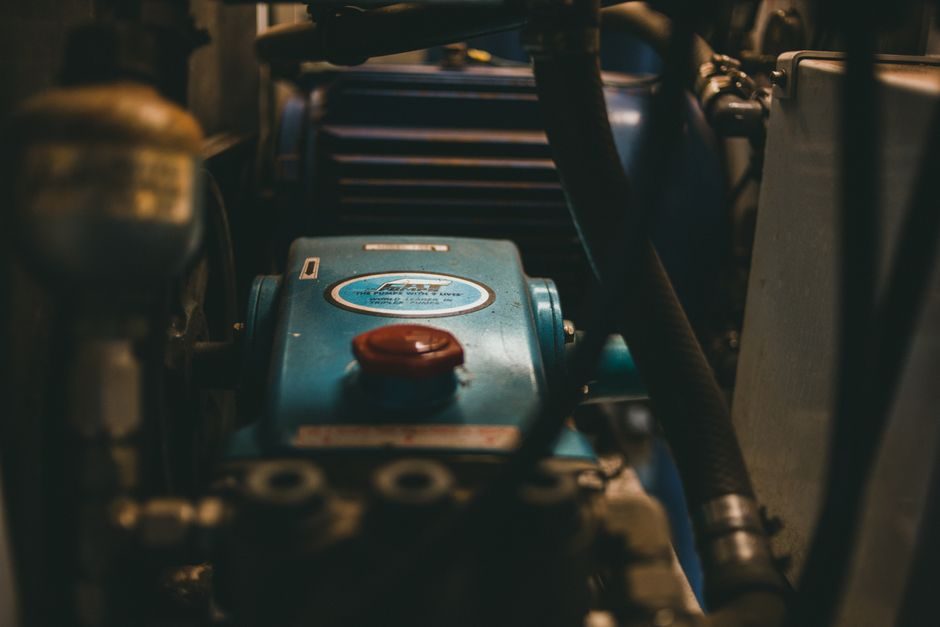
Semiconductor fabs specify plunger pumps built from 316L stainless steel or PVDF with pulsation damped below 0.1% to prevent micro-contamination during ultra-pure water (UPW) rinse and chemical mechanical planarization (CMP) slurry delivery [S2].
Globally, the plunger-pump segment is valued at $4.8 billion in 2025 and is projected to reach $8.1 billion by 2034 at a 6.0% CAGR, with triplex configurations holding 48.3% product-type share in 2025 [S2]. Plunger pump basics and working principles frame the rest of this selection map.
What "Semiconductor-Grade" Actually Demands
Semiconductor wet-process tools need fluid ends that do not shed ions, particulates, or organics into the process stream, which is why 316L stainless steel and PVDF are the two wetted-material reference points in the high-purity niche [S2].
Pulsation is a hard spec: the industry benchmark cited for chip-fab UPW and CMP service is residual pulsation below 0.1% to keep wafer surfaces clean during rinse and polishing cycles [S2]. That figure is an order of magnitude tighter than what a general industrial triplex delivers, so the fab build is rarely a stock catalog model. A typical small-bore high-pressure triplex such as the Cat 660 family runs 7.0 GPM (27 L/min) at 100 to 3000 PSI (7 to 210 BAR) and 1000 RPM [S1] — useful as a flow envelope, but not as a default fab selection.
Process-tool footprints also force a smaller envelope. Industrial triplexes like the Apergy A-250T weigh 4,490 lb (2,040 kg) with a 5 in (127 mm) stroke at 250 hp [S3], and that is the wrong physical class for a wet-bench or slurry skid.
Wetted-Material Comparison: 316L vs PVDF vs Alloy C-22
316L stainless is the default for hot UPW and high-purity chemical loops where thermal cycling and pressure ratings dominate; PVDF is specified where halogen acids or oxidizers attack stainless and where extractables must be minimized [S2]. Highly aggressive chemistries (e.g., concentrated HF, certain SPM mixes) typically step up to higher-nickel alloys or fluoropolymer-lined fluid ends, but those selections are application-by-application and not generically recommended here.
For comparison on three decision axes:
- 316L SS: best pressure/temperature ceiling, lowest extractable metals risk when electropolished, standard for UPW and dilute chemistries [S2].
- PVDF: best chemical resistance to HCl, HF blends, and oxidizers up to roughly 120 °C; lower pressure rating than 316L [S2].
- Alloy C-22 / higher-nickel: chosen only for specific aggressive acids where 316L fails; cost and lead time are the trade-off.
The pump head geometry and seal arrangement drive the next set of decisions, and a working baseline on diaphragm pumps vs plunger pumps in metering duty helps frame why some fabs split the work between the two technologies.
Configuration: Why Triplex and Quintuplex Dominate Wafer Wet Process
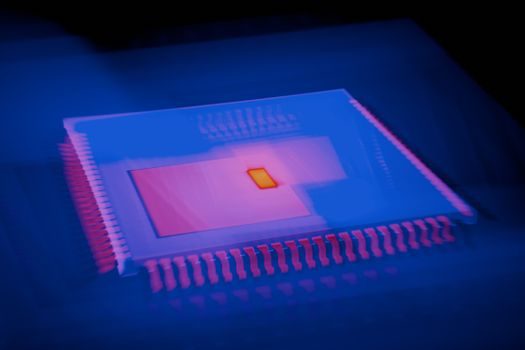
Triplex (3 plungers, 120° phase) and quintuplex (5 plungers, 72° phase) configurations are preferred in semiconductor wet benches because adding phases attenuates the residual flow ripple without resorting to oversized dampeners [S2]. Catalog data confirms triplex as the volume leader with 48.3% product-type share in 2025 [S2].
Quintuplex frames such as the NOV 350Q-5 and 415Q-5 extend this logic to higher-flow UPW skids, while triplex units such as the 101T-4, 130T-4, 165T-5, and 200T-5 cover a wide flow and pressure envelope for chemical injection and hydrostatic test duty [S4]. For fab dispense skids the same design pattern is implemented in much smaller displacements, but the phase logic is identical. Catalog frames illustrate the lower limit: the Apergy A-50D duplex runs 53 hp at 450 RPM with a 3 in (76 mm) stroke and 6,340 lb (2,875 kg) plunger load [S3] — the kind of build philosophy a fab skid mimics in miniature. Industrial triplex catalog weights run from 1,060 lb (A-50D) to 4,490 lb (A-250T) [S3], versus 19.9 kg for a 7 GPM triplex in the Cat 660 family [S1], which sets the realistic fab envelope.
Pulsation, Leak-Tightness, and Cleanroom Integration
Seal design and packing lubrication are the two most common failure paths in semiconductor wet-process pumps, because any leak becomes a yield and safety event in a cleanroom. Generic high-pressure plunger service warns explicitly against running above the OEM's maximum RPM, since valve and seal life collapses and internal damage follows [S8].
For high-purity dispense, dual-sealed leak-tight pump heads with chemically inert wetted materials are commonly specified; one documented reference design is the Fluid Metering STF Fixed Dispense Pump with custom pump-head materials and seal arrangements that block air ingress into the head, deployed for deposition, etching, cleaning, dosing, sample delivery, and bath-refresh service [S7]. Lubrication of the power end follows the same discipline used in industrial plunger service: dedicated oil grade (e.g., UDOR Premium Pump Oil or SAE 30W non-detergent), with the first change at 50 hours to flush break-in debris [S8].
Control, Monitoring, and PLC Integration

Modern fab dispense skids expect PLC/PC interface cards, indicator lights, and frame-specific accessory kits rather than discrete wiring. Anderson process accessories catalog one PLC/PC interface (P/N 30664) and indicator-light kits (30664.120AC, 30664.240AC) for the 15 and 18 frame plunger-pump families, plus a separate 25-frame interface (30290/30292) and indicator (30290.120AC) covering piston pump 2520 and plunger pumps 2530 through 3841K [S6].
That parts-numbering pattern is the realistic lower bound of what fab controls teams can integrate: a known PLC card plus an AC indicator light, with the exact frame size matching the pump model. Anything less documented than that needs a custom control package, and that is a frequent source of commissioning delay on tool install. For a broader spec-driven walkthrough of frame size, stroke, and power end selection, How to Choose a Plunger Pump: Spec-Driven Selection for High-Pressure Duty maps the same gates from a different angle. Where the duty is process vacuum rather than high-pressure liquid, Vacuum Pump Selection Criteria: Six Engineering Gates and Variant Match covers the contrast cases that procurement teams also tend to evaluate in the same review cycle.
Decision Map: Who This Build Is For — and Who Should Step Away
Semiconductor-grade plunger pumps are for fab process engineers specifying UPW booster, chemical dispense, CMP slurry delivery, and photochemical dosing skids where pulsation below 0.1%, 316L or PVDF wetted paths, and PLC-integrated controls are firm requirements [S2].
They are not for general water treatment, oil-and-gas well stimulation, or hydrostatic-test service — those duties are covered by larger multiplex frames such as the Apergy A-200T (250 hp, 5 in stroke) [S3] or quintuplex units like the NOV 415Q-5 [S4], where flow, pressure, and footprint dominate purity. For procurement teams who would otherwise default to a Cat 660-class 7 GPM triplex [S1] for a fab dispense skid: that flow class is a useful reference, but the wetted-material, pulsation, and controls spec on the same datasheet do not meet fab standards out of the box [S1][S2]. Custom fluid-end builds remain the realistic path until an OEM publishes a fab-certified configuration in the 1 to 10 GPM envelope.
Track these signals over the next two quarters: (1) any new triplex or quintuplex model in the 1 to 10 GPM, 100 to 500 PSI class carrying a documented 316L or PVDF fluid-end option with sub-0.1% pulsation; (2) PLC/PC interface cards from the 30664 or 30290 family [S6] appearing on semiconductor dispense skids rather than industrial process skids; (3) any new catalog release from NOV's 101T/130T/165T/200T/217Q lines [S4] explicitly rated for UPW or CMP service.
For the relevant spec sheets and selection criteria, see centrifugal pump.