Food and beverage lines in 2026 are specified around three numbers: IP67 or IP69K ingress on field nodes, 8 to 32 channels per block, and a hardened industrial Ethernet backbone (PROFINET, EtherNet/IP, or Modbus TCP) carrying the I/O image back to the PLC [S1][S2].
ICP DAS USA explicitly markets Ethernet-based web-configurable remote I/O for food and beverage monitoring, including temperature, level, and process control points across hygienic zones [S1]. Festo characterizes remote I/O as a flexible, cost-effective, and reliable detection and control layer that can be installed decentrally to shorten home-run cabling [S2]. The decision is no longer whether to deploy remote I/O, but which block, which protocol, and which hygienic mechanical package to spec.
Hygienic Mechanical Package: IP67, IP69K, and Stainless Steel Heads
Washdown zones in dairies, breweries, meat plants, and ready-meal lines require field nodes that survive daily chemical cleaning, typically hot caustic, nitric acid, and peracetic acid at 60 to 80 °C [S1].
The two ratings that matter on a food-grade remote I/O datasheet are IP67 (temporary immersion to 1 m) and IP69K (high-pressure, high-temperature water jets at 80 °C, 80 to 100 bar), and many 2026 catalogs list both for the same stainless 316L head [S1]. Hygienic variants add a fully potted electronics cavity, smooth curved housings without crevices, and FDA/EC 1935 compliant sealing materials on cable glands, all of which keep bacteria out of the I/O block. For non-contact zones outside the washdown radius, IP20 DIN-rail heads are still acceptable and cut cost roughly in half per channel.
Channel Density and Signal Mix per Node
Channel count per node drives cabinet count, and cabinet count drives stainless-steel enclosure cost, which is a real line item in hygienic skid builds [S2].
Common 2026 food-grade block densities are 8, 16, and 32 channels, with mixed signal cards accepting 4-20 mA, 0-10 V, RTD (Pt100/Pt1000), and thermocouple (types K, J, T) on the same module [S3]. Horner's instrumentation guidance notes that K, J, and T are the most popular thermocouple types in industry today, and that cold-junction compensation is mandatory at the measuring instrument to avoid junction errors [S3]. That same thermocouple or RTD signal can be brought directly into a remote I/O head with on-board CJC, eliminating the external transmitter and saving roughly one loop of wiring per point.
Protocol and Topology: PROFINET, EtherNet/IP, Modbus TCP
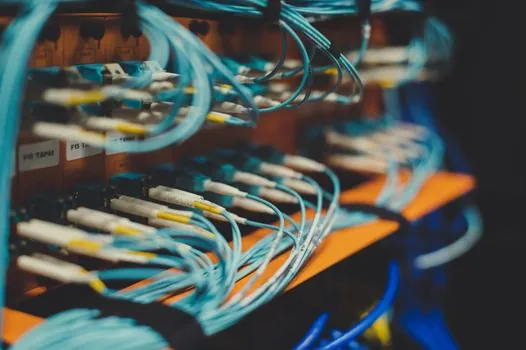
Food and beverage plants in 2026 predominantly run PROFINET (Siemens-centric skids), EtherNet/IP (Rockwell-centric skids), or Modbus TCP (mixed-vendor and brownfield) on the remote I/O layer, all over Cat 5e or Cat 6A industrial Ethernet with M12 D-coded or X-coded connectors [S1][S2].
A node-level decision matrix for 2026 food-grade selections looks like this on four common criteria:
1. Washdown rating: IP67/IP69K stainless head required for CIP/SIP zones; IP20 DIN-rail head acceptable outside washdown radius.
2. Protocol: PROFINET for Siemens lines, EtherNet/IP for Rockwell lines, Modbus TCP for mixed-vendor or retrofit lines; avoid Foundation Fieldbus or PROFIBUS PA on new builds because the spares pool is shrinking.
3. Channel density: 8 channels per node for skid I/O, 16 or 32 channels per node for area marshalling; higher density cuts enclosure cost but raises mean time to replace.
4. Signal mix: mixed AI/DI/DO with on-board thermocouple and RTD conditioning is preferred over separate transmitter panels; this aligns with Horner's note that food, beverage, and pharmaceutical lines commonly mix RTDs and thermocouples on the same controller [S3].
Who Remote I/O is For, and Where it Does Not Fit
Decentralized remote I/O suits conveyors, CIP skid manifolds, filler and capper stations, pasteurizer loops, and tank farms where the home-run cable to a central PLC would otherwise exceed 50 m or cross washdown boundaries [S1][S2]. Festo frames remote I/O as a flexible, cost-effective, and reliable solution for distributed detection and control, which exactly matches the geometry of a beverage line spread across a wet and a dry zone [S2].
Remote I/O is the wrong tool for intrinsic-safety Zone 0 or Zone 1 areas inside a process vessel, where a dedicated IS barrier or a Foundation Fieldbus / PROFIBUS PA segment with a certified barrier is still the conventional path. It is also the wrong tool when the specification calls for a single-loop SIL 2 or SIL 3 safety function; in that case, use a safety-rated remote I/O head (PROFIsafe or CIP Safety) rather than a standard block, and keep the safety segment physically separate from the process I/O trunk.
Selection Criteria Mapped to Real Use Cases

On a dairy CIP skid, a typical 2026 spec is an IP69K stainless remote I/O head with 8 mixed channels (4 RTD for product and return temperature, 2 DO for valve actuation, 2 DI for limit switches) on PROFINET, mounted within 2 m of the valve cluster to cut pneumatic tubing length [S1][S3]. On a brewery filler line, the same architecture is replicated at each filler head with 16-channel EtherNet/IP blocks, feeding flow, level, and temperature back to the line PLC at 10 ms or 20 ms update rates. On a ready-meal cook-and-chill line, IP67 remote I/O is used at the conveyor level for photo-eye, motor-starter status, and VFD speed reference, all over Modbus TCP because the line is a multi-vendor retrofit.
A secondary cross-cut is encoder and high-speed counter support: some 2026 remote I/O heads include 1 or 2 high-speed counters up to 100 kHz, which is useful for filler and labeler indexing without a separate counter module. Where labelers run at 600 bottles per minute, that on-board counter saves a slot in the panel and roughly 150 to 300 mm of DIN rail per machine.
Limitations, Failure Modes, and Sourcing Signals
Three failure modes dominate field returns on 2025-spec food-grade remote I/O: connector corrosion on M12 heads where the sealing O-ring is mis-seated, electronics failure from steam ingress during SIP, and protocol timeouts caused by EMI from variable-frequency drives on shared cable trays [S1]. The O-ring seal on every M12 connector is a consumable item; spares should be stocked as O-rings on the maintenance bill, not treated as part of the block. Stainless 316L heads with factory-potted electronics address the SIP failure mode but add roughly 30 to 60% to unit cost versus equivalent IP20 plastic heads, and that delta is the main reason many plants still run IP20 in non-washdown zones.
For sourcing in 2026, the practical trackable signals are: confirm hygienic certifications on the datasheet (FDA 21 CFR, EC 1935/2004, EHEDG), confirm the protocol conformance certificate (PROFINET or EtherNet/IP conformance), and verify the ambient temperature rating against the actual washdown cycle. Plants standardizing on Ethernet-based remote I/O will find the broader industrial Ethernet switch sourcing landscape covered in the Industrial Ethernet Switch Suppliers 2026 spec map, which feeds the same backbone as these I/O blocks. Plants adding or replacing fieldbus gateways into PROFINET or EtherNet/IP segments can cross-reference the Fieldbus Gateway Suppliers 2026 spec and sourcing map for protocol-conversion hardware sitting next to the remote I/O layer. Plants that use ICP DAS-style web-configurable remote I/O for monitoring also pair it with relay and lamp output modules for local annunciation, and many catalog the same head as a linear module family for mixed analog and digital I/O on a single node.
Track the next procurement cycle: hygienic (IP67/IP69K) PROFINET and EtherNet/IP remote I/O prices through Q1 2027, the rollout of M12 X-coded nodes supporting 10 Gb/s uplinks for vision-integrated filler lines, and any vendor update to PROFIclean or CIP Clean-in-Place profiles for hygienic Ethernet nodes. A practical sanity check before issuing a PO is to confirm one spare head with the same protocol, channel mix, and hygienic rating is on the shelf, because mean time to repair on a washdown-rated block is dominated by parts on hand, not by diagnostic skill.