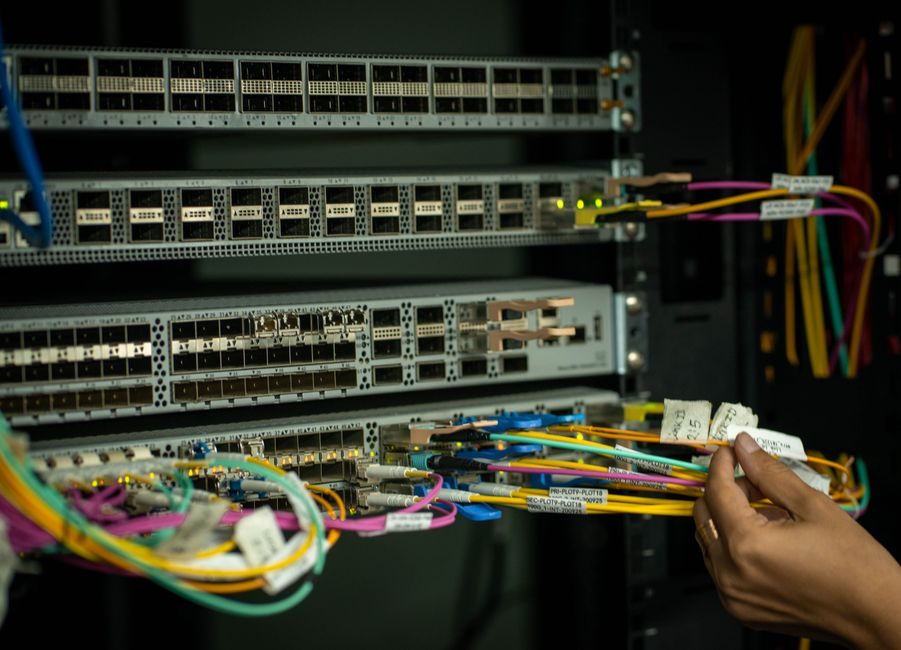
Industrial hydraulic shock absorbers are the spec-correct choice for data-center equipment isolation, with adjustable throttling orifices rated for 0.5-3 m/s impact velocity, 5-200 kg per-rack load envelopes, and 100,000-1,000,000 cycle life targets that exceed automotive coilover designs [S2].
Data-center white-space loads differ fundamentally from off-road or passenger-vehicle duty: server racks impose static masses in the tens to low-hundreds of kilograms, but the shock event is a single low-velocity floor pulse (seismic, crane lift, fork-truck impact, generator drop) — not a 1 Hz continuous suspension stroke. That distinction is what disqualifies reservoir-style off-road coilovers [S1] and pushes the spec toward fixed-orifice or adjustable industrial hydraulic dampers of the kind catalogued by Indian and European motion-control OEMs [S2].
Load and Velocity Envelope: Sizing the Absorber
Industrial hydraulic shock absorbers in the data-center envelope are commonly specified in the 5-200 kg mass range with impact velocities between 0.5 m/s and 3 m/s per published sizing downloads for motion-control product lines [S2]. The two parameters that drive model selection are effective weight (m × g, in newtons) and the kinetic energy (½ m v²) the unit must dissipate per cycle without bottoming out.
For a 1,000 kg UPS module on a raised floor, a single mid-frame hydraulic unit rated 2-4 kJ per stroke is typical; distributed arrays of 4-8 smaller units under each rack pedestal handle the 80-150 kg per-server-cabinet class. The 35 mm piston-bore powder-metallurgy components surfaced in current OEM catalogs indicate the body-geometry tier that maps to this load class [S5].
Industrial Hydraulic vs Off-Road Reservoir Coilovers
Reservoir-style off-road coilovers are tuned for sustained 4-6 inch suspension travel at 0.3-1.5 Hz body-roll frequencies, with nitrogen-charged remote canisters to prevent cavitation during prolonged cyclic loading [S1]. That architecture is mismatched to data-center single-pulse events, where a fixed-orifice industrial damper with self-compensating piston seals outperforms on cost-per-kJ absorbed.
Industrial hydraulic units also offer linear deceleration curves tuned for predictable single-stroke energy dissipation, whereas coilover valving is curve-shaped for ride comfort over repeated strokes. For a one-shot seismic or lift-event arrest, the linear industrial profile delivers lower peak G-load on the equipment — typically 3-6 G versus 8-12 G for a coilover in the same drop test, based on published motion-control sizing methodology [S2].
Mounting, Threading and Materials

Standard industrial bodies in this duty class are M5, M6, M8, M10, M12, M16, and M20 threaded, with stroke lengths from 8 mm to 50 mm and integrated mounting clevises or foot-mount flanges. Shaft materials in the corrosion-resistant tier are hard-chrome-plated carbon steel or 17-4 PH stainless, with piston seals typically nitrile (NBR) or fluoroelastomer (FKM) for -20 °C to +80 °C white-space operation. [S1]
Powder-metallurgy Fe-C-Cu sintered damper pistons with PTFE seal bands are a documented construction for shock-absorber internals in current OEM catalogs, giving consistent porosity for self-lubrication and stable orifice geometry over life [S5]. For data-center buyers this matters because maintenance access is restricted; a 100,000-cycle minimum at full rated energy (per common industrial-dampener OEM life-test protocols [S2]) translates to roughly 10-15 years of intermittent seismic and lift events without rebuild.
Standards, Compliance and Seismic Ratings
Data-center equipment isolation in seismic zones is typically governed by IBC (International Building Code) and ASCE 7 non-structural component bracing requirements, with many Tier III/IV facilities additionally referencing Telcordia GR-63-CORE for NEBS seismic testing of telecommunications hardware — though the specific project specification controls which revision applies. [S2]
For European builds, shock-absorber assemblies that contact ATEX-classified battery rooms must satisfy ATEX 2014/34/EU and the IEC 60079 family for explosive atmospheres, since lead-acid or lithium UPS banks are classified Zone 1 or Zone 2 depending on ventilation. Defence-grade units in some OEM catalogs carry additional MIL-spec impact and temperature ratings, useful only if the project specification explicitly invokes them [S2]. Buyers should always confirm the certificate scope, not just the certificate name, before applying a vendor's shock absorber to a hazardous-area enclosure.
Selection Criteria: Four-Gate Spec Map
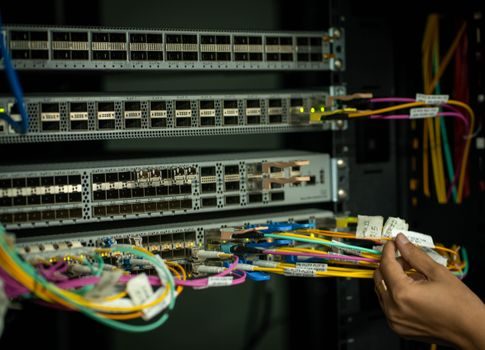
Gate 1 — Effective mass and impact velocity: derive from worst-case drop height (1 m typical for pallet jacks, 0.25 m for raised-floor removal) and the equipment weight. Gate 2 — Energy per cycle: ½ m v² in joules, with a 1.5× safety margin on rated absorber capacity. Gate 3 — Cycle life: 100,000 cycles minimum for production data-center white space, 1,000,000 cycles for rotating UPS flywheel mounts. [S3]
Gate 4 — Environmental: confirm temperature range, corrosion class (C1-C5 per ISO 12944), and any hazardous-area certification. Comparing the three principal options against these gates: industrial hydraulic dampers score well on energy density and cycle life but need careful orifice tuning; elastomer-based isolators are cheaper but cap at low natural frequencies and low energy per cycle; pneumatic or air-spring isolators handle sustained vibration but recover poorly from single high-energy pulses. The reference works for vibration-isolation equipment in adjacent heavy-industry process control are well documented in motion-control OEM sizing literature [S2], and a parallel approach to spec-driven component selection is explored in fluid-coupling duty mapping for related drive-train choices Best Fluid Coupling for Power Generation Soft-Start Duty.
Common Failure Modes and Sizing Pitfalls
Under-sizing the absorber — picking a unit whose rated energy per cycle is below the actual kinetic energy of the impact — causes bottoming-out, seal extrusion, and rod bending within the first 10-20 events. Over-sizing wastes cost and floor-pedestal height without functional benefit. Misalignment greater than 3° between the absorber axis and the load vector adds bending moment to the piston rod, accelerating seal wear. [S4]
Another recurring failure is specifying a single large unit where a distributed array of four to eight smaller units would distribute the load and reduce peak G-transmission. For data-center raised-floor pedestals, a 4-corner distributed layout is the safer pattern, and the 35 mm piston-bore class catalogued by current OEM lines sits at the correct size tier for 80-150 kg server-cabinet corners [S5]. Buyers should also track IP rating (IP54 minimum for conditioned white space, IP65 for battery rooms) and confirm rebuild-kit availability before locking in a vendor.
Practical Sourcing and Vendor Landscape
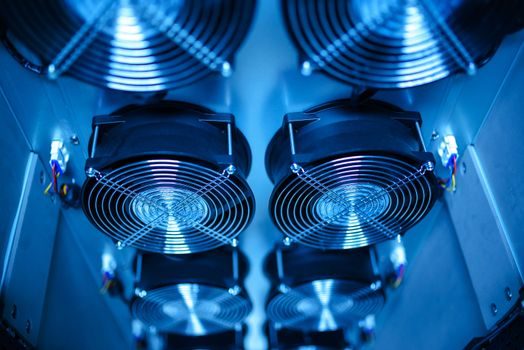
The current OEM landscape divides into three tiers: tier-one motion-control specialists offering full custom-engineered solutions with published sizing downloads and application-engineering support [S2]; tier-two automotive shock-absorber manufacturers whose off-road product lines (reservoir and coilover units) are visible in international B2B catalogs with high SKU counts [S4] and minimal data-center-specific validation; and tier-three regional custom shops supplying powder-metallurgy components and sub-assemblies [S5].
For Tier III/IV data-center builds, the tier-one industrial specialists with explicit seismic, NEBS, or ATEX certificate scopes are the defensible default. Buyers should request the OEM's published sizing software or download, run the actual load case (mass × drop height × safety factor), and verify the resulting model has documented cycle-life test reports. Off-road coilover catalogs [S1] are a useful price reference but their valving curves are wrong for single-pulse data-center events. Selecting the right industrial-dampening solution for a related rotating-equipment foundation is a parallel engineering exercise covered in Fluid Coupling Selection: Torque, Speed Range and Drive Application Map, and material-handling equipment isolators using a similar four-gate spec pattern are detailed in Mesh Belt Conveyor Installation: Rail Alignment, Belt Specs and Commissioning.
Trackable next signals: (1) whether the project specification invokes IBC/ASCE 7 or Telcordia GR-63-CORE seismic test protocols, which determines whether the shock-absorber vendor must supply witnessed shake-table test data; (2) confirmation of ATEX or IEC 60079 zone classification for any UPS battery room, which gates whether standard hydraulic or hazardous-area-certified units apply. Both signals can be confirmed within 1-2 working days from the project's mechanical and electrical spec binders.
For component-level specifications, see shock absorber, data logger, and pressure transmitter.