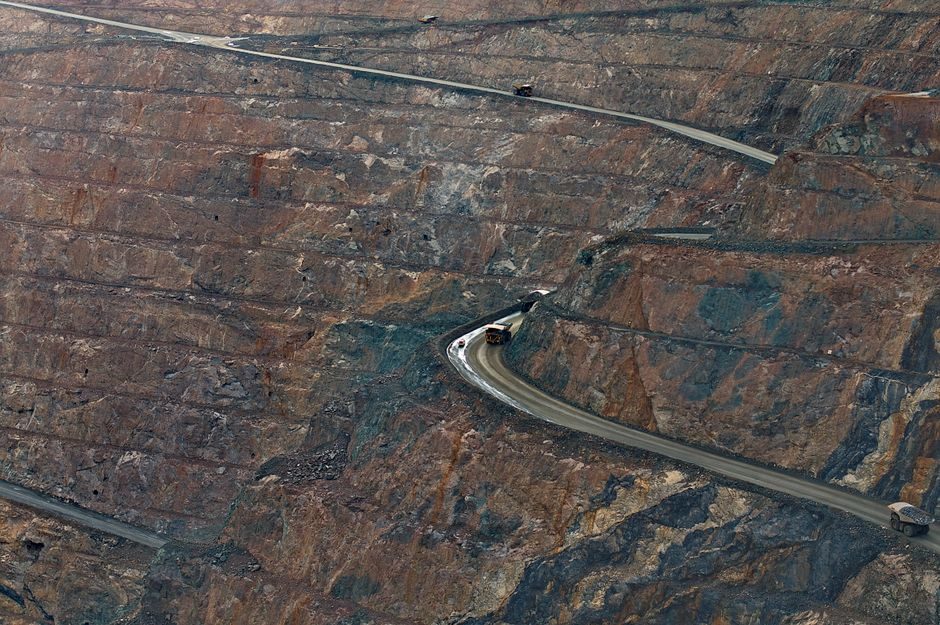
For the bulk of mine-spec applications in 2026, a 7-wire galvanised prestressing steel strand in 12.7 mm or 15.2 mm diameter, 1860 MPa tensile grade, built to EN 10138 or ASTM A416, is the default pick — it combines the corrosion resistance that wet, high-sulphate and salt-laced pit environments demand with the predictable 195 GPa modulus needed for ground-anchor and rope-shovel pendant calculations [S3].
This guide is written for procurement engineers and mine-capex planners who must separate mill-claimed performance from what actually survives a mining dump truck cycle, a paste-fill shotcrete wall, or a kilometre-deep shaft. It focuses on the three families that show up in mine RFQs: galvanised prestressing strand, bright (uncoated) PC strand, and compact-stranded galvanised rope for shaft and slope hoists.
Why galvanised 7-wire 1860 MPa is the default
Galvanised 7-wire strand at 1860 MPa (EN 10138 Y1860S7, ASTM A416 Grade 270) is the dominant mine spec because it is the only family that simultaneously hits the four gates a pit or shaft imposes: tensile capacity, fatigue life, corrosion margin, and modulus predictability [S3].
The zinc coating — typically Class A (≥ 135 g/m² for 12.7 mm, ≥ 200 g/m² for 15.2 mm) per ASTM A475 — is what lets the same strand be used as a permanent mine roof bolt, a tie-back in a tailings dam, or a guy cable on a headframe without a separate corrosion allowance being added to the load case. A bright PC strand of the same grade saves roughly 6–10% on unit price but is functionally rejected for any application where the service environment includes standing water, acidic groundwater, or chloride dust from blasthole stemming.
In 2026 the Chinese supply base continues to dominate the 1860 MPa 7-wire market, with Tianjin-based mills such as Tianjin Dalu Steel Strand For Prestressed Co., Ltd. producing both prestressed strand and indented PC wire for the export and project channels [S1]. That supply depth is the reason 15.2 mm galvanised 1860 strand is frequently landed at FOB prices in the USD 580–720/tonne band, before galvanising and reel handling surcharges.
Decision criteria: which strand goes where
Three concrete numbers govern the choice on a real RFQ: minimum breaking force (MBF), zinc mass per square metre, and relaxation class at 0.7 × MBF — these map directly to the mine's load, environment, and sustained-stress case. [S1]
For a 12.7 mm strand the same grade gives roughly 98.7 mm² steel area, MBF ≥ 184 kN, and 0.775 kg/m — that is the size specified for most cable bolts, shepherd's-crook lifelines, and pre-tensioned rock anchors in development headings.
The comparison that procurement actually has to write on a bid tab reads approximately as follows: galvanised 1860 7-wire strand is selected for permanent ground support, shaft sinking tendons, tailings dam anchors, and overhead crane runways on the grizzley structure; bright 1860 7-wire strand is selected only for indoor pre-tensioned concrete work — precast tunnel segments cast in a climate-controlled plant, mine offices, conveyor galleries; galvanised compacted 1×19 or 1×37 strands (e.g. 22–36 mm diameter) are specified for headframe hoist ropes, dragline boom pendants, and shaft guide-rope duties where the larger steel area and smoother outer profile cut wear against sheaves and dump-truck-tyre service.
Material and construction notes that drive service life
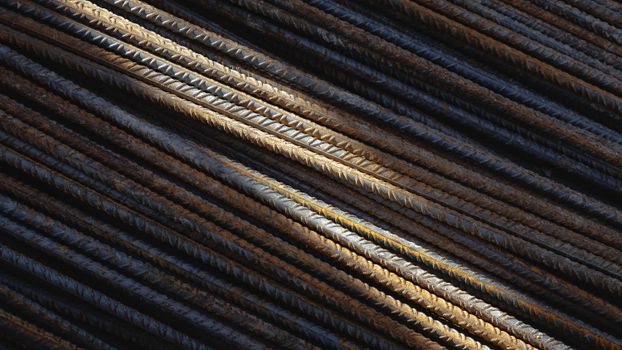
The 7-wire construction (1×6 + 1 core, often called "1×7" or "Seale-equivalent" in mine spec sheets) is not a cosmetic choice — the outer-wire helix angle locks the core against birdcaging when the strand is cut, spooled, and re-tensioned underground. [S2]
Wire chemistry for the 1860 MPa grade is typically a high-carbon pearlitic carbon steel at 0.75–0.85% C, 0.60–0.90% Mn, with Si in the 0.15–0.30% range and a controlled Cr/V addition for fine pearlite spacing — that microstructure is what delivers the 1860 MPa tensile together with the ≥ 5% elongation the EN 10138 / ASTM A416 ductility gate requires. AISI/SAE grade 1080 to 1085 high-carbon wire rod is the dominant feedstock, drawn to a 4–5 mm wire before stranding and stress-relieving [S3].
For the most aggressive service — paste-fill exposure, acidic water in sulphide-bearing ore bodies, or marine terminals handling concentrate — the move is from galvanising to a zinc-aluminium coating (Zn-Al, 95/5 or 85/15, sometimes called Galfan or Galvalume-class), typically 250–300 g/m². That single change roughly triples the red-rust initiation time in ASTM B117 salt-spray versus a comparable Class A hot-dip zinc coating, and is now a common add-on in copper and nickel concentrator RFQs.
Limits and failure modes to spec against
Steel strand does not fail in mine service the way the lab sheet implies — it fails by stress-corrosion cracking, fatigue, or by hydrogen embrittlement from a poorly managed galvanising bath, and the spec has to close each of those doors. [S3]
Stress-corrosion cracking (SCC) is the dominant in-service failure mode for pre-tensioned rock bolts and shaft tendons in wet, sulphide-rich ground. The mitigation written into most 2026 mine specs is a combination of a low-relaxation strand (Relaxation Class 2 or 3), a continuous galvanised barrier with no field cuts left uncoated, and a service-stress ceiling of 0.60 × MBF rather than the 0.70 × MBF used in benign building code work. A related failure is hydrogen embrittlement from acid pickling before galvanising; the only reliable defence in an RFQ is to require a documented acid-vs-flux pre-treatment and a maximum hydrogen content of 2 ppm in the finished wire.
Fatigue is the second door. Under a rope-shovel boom-pendant duty cycle, 15.2 mm galvanised 1860 strand typically derates to a fatigue allowable of 200–250 MPa at 2 × 10⁶ cycles, roughly 14% of MBF — that is the number the crane standards (ASME B30.5 / FEM 1.001 class) use when they set the inspection interval, not the static breaking force. Mining sites that have not built a fatigue case into the purchase spec tend to find the strand has been replaced twice before the static MBF is ever approached.
Sourcing map, standards and 2026 pricing reality
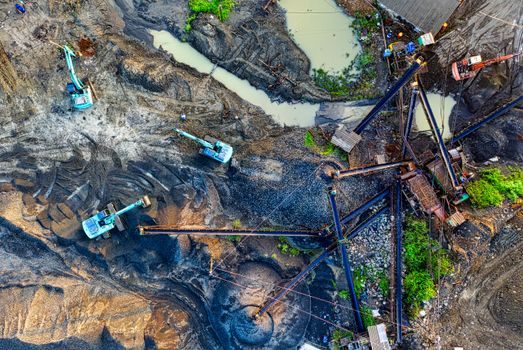
Almost every mine-grade 7-wire galvanised strand in 2026 is still made in China, with the Tianjin–Tangshan cluster accounting for the bulk of export tonnage and India (Tata, DP Wires, Bedmutha) and Turkey (Kroman, Hasçelik) taking the regional-balance share for African and CIS pit operations [S1].
The standards that actually govern the certificate of test are EN 10138 (the European prestressing steel family, with Y1860S7 as the most cited designation for 15.2 mm 7-wire), ASTM A416 / A416M (Grade 270, the North-American equivalent), AS/NZS 4672, and GB/T 5224 in the Chinese domestic channel. The mining-side spec usually adds ISO 1461 (hot-dip galvanising thickness, mass, and adhesion) on top of the strand standard, plus ASTM A475 or EN 10244-2 for the zinc-coating weight call-out on the smaller wire used in cable-bolt braid [S3].
On price, the 2026 spot band reported by Chinese exporters for 15.2 mm galvanised 1860 MPa 7-wire strand sits roughly at USD 580–720/tonne FOB Tianjin for full-container loads, with the 12.7 mm size trading at a USD 20–40/tonne premium per tonne because of the higher footage-per-tonne of smaller coils. Mill lead time for an export-spec reel pack is typically 25–35 days after PO, and reel weight stays at 2.0–2.5 t per wooden reel to keep the strand within the 3.0 m minimum bend radius the coil-winding machine needs to avoid the strand taking a permanent set in transit. Procurement should also be aware that the 2026 feedstock squeeze for high-carbon wire rod has pushed some mills to add a 6–8% rod surcharge — the price floor below which a mill quote in 2026 is almost certainly a scrap-grade or pre-galvanised-rewire trap is around USD 540/tonne CFR main port.
Spec checklist a 2026 mine buyer can copy straight into an RFQ
[S1]
Verification of those requirements in the field is also straightforward: a 100 mm gauge-length tensile test gives elongation, a calibrated coating-thickness gauge (magnetic or X-ray fluorescence) confirms the zinc mass on the outer wire without destructive testing, and a simple salt-spray coupon run for 96 hours per ASTM B117 is enough to flag a mill that has skipped the chromate seal on the zinc.
For mine procurement teams comparing cement-grout-anchored cable bolts to resin-grouted bolts, the concrete admixture buying guide 2026 covers the cementitious-side chemistry that determines whether a galvanised strand survives a 20-year design life in a paste-fill wall. Buyers working on a 2026 capex sheet should also cross-check the 15.2 mm strand price against the steel price 2026 China export bands reference before locking a quarterly volume contract.