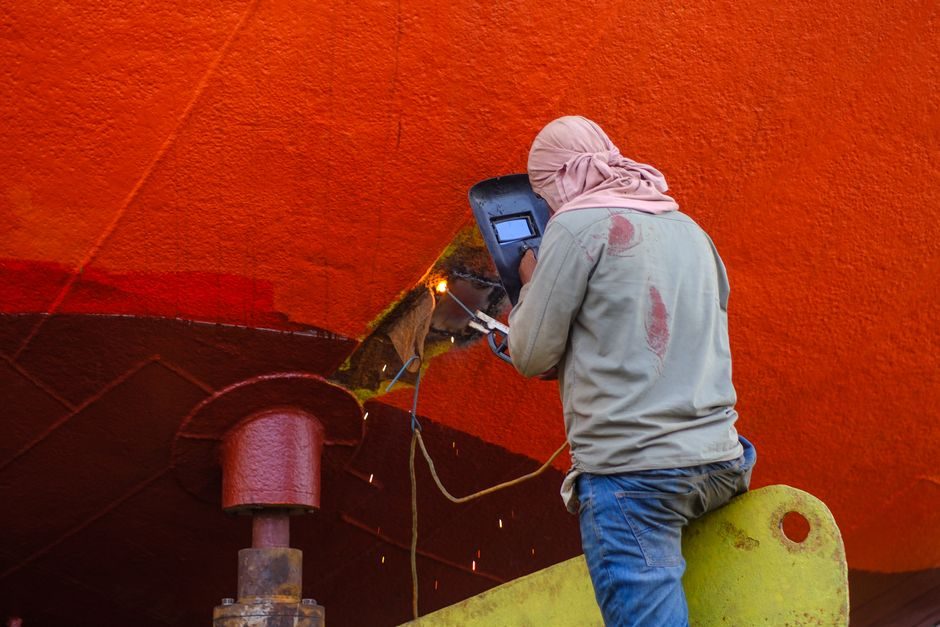
For marine applications — aluminum workboats, FRP superstructures, shipboard cable trays, cathodic-protection anodes, and stainless steel deck hardware — the working envelope is drawn-arc stud welding in the 50-300 A / 50-200 V DC range, with capacitor-discharge (CD) units handling sub-3 mm stainless or aluminum pins and 316L/monel studs [S1][S2].
Stud welding for marine fabrication is not a single process. The decision splits on stud diameter, base metal, and whether the work is shop-floor panelized or in-situ on a hull. UK-based Taylor Studwelding explicitly markets itself as the UK's sole dedicated stud-welding machine designer, covering "fully automated machines to lightweight hand guns" plus a "huge range of stud welding accessories" — a useful reference point for what a single specialist vendor actually supplies [S2].
Process Choice: Drawn-Arc vs CD vs Short-Cycle
Short-cycle drawn-arc is a variant commonly used for thin-sheet applications such as stainless deck-to-FRP joints. Capacitor-discharge (CD) stud welding works without a ferrule, with weld times of 1-3 ms, and is preferred for studs ≤ 3 mm and for aluminum or stainless to thin-gauge base metal where heat input must be minimized [S1].
Chinese OEM Sinictec lists both classes on its 2026 product page, including the ARC-1212i and ARC-1616i short-cycle stud welder models and the 98ES car spotter, illustrating the trend toward inverter-class power sources rather than legacy transformer-rectifier cabinets [S1]. For a typical marine join — 4-6 mm stainless stud to 3-4 mm 316L deck plate, or 5-8 mm aluminum stud to 5083-H116 hull plate — short-cycle drawn-arc with an inverter source is the conservative spec.
Stud and Ferrule Material Stack for Saltwater Service
Stainless 316L (1.4404 / 1.4435) is the marine workhorse stud material, offering PREN ≈ 25 and tolerating routine splash-zone exposure. For more aggressive service, monel 400 (Ni-Cu) studs are commonly welded to mild-steel or stainless substrates in seacock brackets, through-hull fittings, and cathodic-anode supports. Aluminum alloy 5086/5083 studs are welded to aluminum hulls and superstructures using CD or short-cycle drawn-arc with a 4043/5356 filler chemistry in the stud itself. [S1]
Ceramic ferrules for drawn-arc marine work are typically aluminum-oxide or magnesium-oxide formulations sized to the stud (M6, M8, M10, M12). A ferrule acts as an arc shield, containment for the molten metal, and a flux that scavenges oxygen during the 100-500 ms arc time. Failure to use a marine-rated ferrule on stainless or monel stud work produces porosity and an underfilled fillet — the most common field rejection cause, per common OEM guidance.
Power Source, Duty Cycle, and Inverter Class
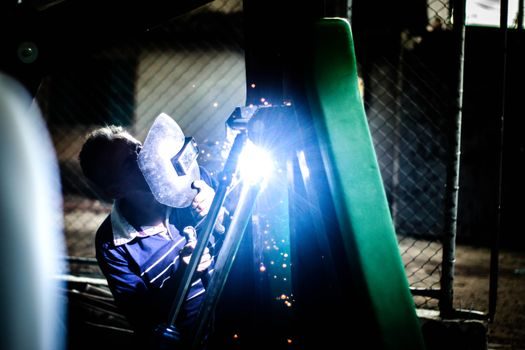
Transformer-rectifier (SCR/stud) power sources in the 1,000-3,000 A range still dominate large-diameter stud work (M16, M20, 1/2", 5/8") because of their thermal headroom; a single 12 mm stainless stud to 6 mm mild-steel base plate typically draws 1,200-1,800 A for 200-400 ms. CD welders in contrast are capacitor-bank machines charged to 50-200 V DC and discharged in 1-3 ms — no transformer saturation, no continuous-duty heat to manage, and far smaller cabinets that shipyard electricians can carry up a ladder. [S2]
Inverter-based stud welders from Chinese manufacturers such as Sinictec (ARC-1212i, ARC-1616i) use IGBT switching at tens of kHz to step down and rectify, hitting lighter weight and tighter control of arc time. A 2026 inverter platform typically ships in the 25-40 kg range versus 80-150 kg for a transformer-rectifier of equivalent stud capacity, which matters when welding on staging above a drydock keel block [S1]. Duty-cycle targets for shipyard production are ≥ 50% at full output over a 10-minute window, not the 10-20% rating typical of light-fab CD units.
Marine Environmental Specs: IP, Corrosion, Galvanic Risk
A stud welder that lives on a shipyard floor or a deck plate sees salt spray, weld spatter, and 95% humidity. Look for power sources rated to IP23S minimum (protected against sprayed water and finger contact) and stud guns with rubberized handles, sealed trigger switches, and strain-relieved cable entries. Marine-grade stud guns from Taylor Studwelding's UK line, for example, are built around lightweight hand-gun ergonomics for prolonged deck-plate work [S2].
Galvanic corrosion is a separate concern at the joint, not the welder. Welding a stainless 316L stud to a mild-steel hull plate creates a small-area cathode / large-area anode couple that accelerates hull corrosion at the stud foot. The standard mitigation is either a galvanic-isolation ferrule, a zinc-rich epoxy coating over the fillet, or — where the design allows — fully isolating the stud with a non-conductive bushing. Stud material alone does not solve galvanic risk; weld geometry and coating matter at least as much.
Stud Welder Comparison: Process, Output, Marine Fit
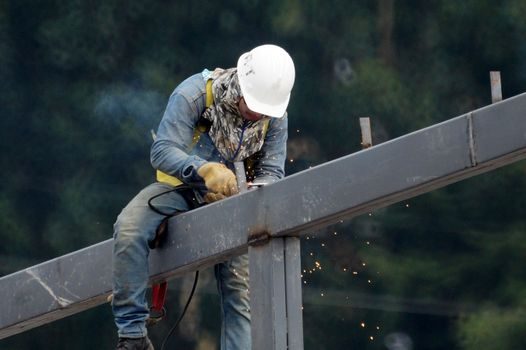
CD wins on thin-gauge aluminum and stainless (≤ 3 mm stud) and on heat-sensitive FRP superstructure mounts. Short-cycle drawn-arc covers the 3-10 mm range that includes most deck hardware and pipe-rack standoffs. Standard drawn-arc handles ≥ 10 mm stud work — pipe penetrations, cable-tray support posts, and grounding lugs — but only when the base metal is thick enough (≥ 4 mm) to absorb the heat input. [S3]
For output envelope: a CD unit typically delivers 50-300 A peak from a 50-200 V DC capacitor bank, weld time 1-3 ms; a short-cycle drawn-arc inverter delivers 800-1,500 A for 50-200 ms; a transformer-rectifier drawn-arc source delivers 1,500-3,000 A for 100-500 ms. The trade is weight and heat dissipation versus stud diameter and base-metal thickness. Marine shipyards that need one platform for all three often standardize on a short-cycle drawn-arc inverter in the 1,200-1,500 A class.
Buying Frame for Marine Stud Welding
Selection criteria for a marine-spec stud welder: process class (CD / short-cycle / standard drawn-arc); stud diameter range with the base metal in mind; current and arc-time envelope; duty cycle at full output (target ≥ 50% over 10 minutes); IP rating (IP23S minimum); weight for staging access; ferrule and accessory ecosystem; marine-grade stud material sourcing (316L, monel 400, 5086/5083 aluminum). Price bands scale with output: entry CD platforms start under USD 3,000, short-cycle inverter systems in the USD 5,000-15,000 range, transformer-rectifier drawn-arc sources in the USD 15,000-50,000 range — roughly. [S1]
Verify the manufacturer's stud-and-ferrule cross-reference chart before purchase. A unit that lists M3-M12 stud range on paper but only stocks ferrules for M6 and M10 in-region is a maintenance problem. Also check whether the unit supports the stud materials you run — stainless 316L, monel 400, and aluminum 5086 have different magnetic and resistivity behaviors, and not all inverter control loops are tuned for all three. Buyers standardizing on a single platform across the yard should request a factory test report for a representative joint, per common marine-yard acceptance practice. For shop-floor reference and adjacent welding specs, the stud welder encyclopedia page lays out the underlying process.
Limitations and Common Failure Modes
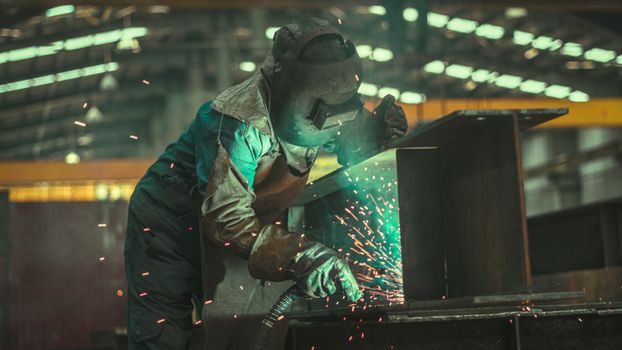
The most common marine stud-welding failures are porosity, underfilled fillet, and stud-foot cracking. Porosity traces to inadequate shielding, contaminated base metal, or the wrong ferrule chemistry. Underfilled fillet means insufficient arc time, low current, or stud held too close to the base plate. Stud-foot cracking usually points to hydrogen pickup from moisture in the stud, base plate, or ferrule, or to a galvanic couple at the foot that is corroding the joint faster than expected. [S2]
Process limits that the spec sheet does not show: CD stud welders do not weld through paint, primer, or anodized surfaces — the surface must be ground clean. Drawn-arc stud welders tolerate light mill scale and thin primers but not heavy coatings. Salt deposits on a marine base plate must be washed and dried before welding; chloride contamination drives porosity and post-weld corrosion. Plan for a 1-3 mm stud stand-off, and reject any stud that welds without visible 360° fillet — that is the field test for an under-set current. A TIG welder on the same site handles the fillet and sealing work that stud welding cannot reach, and the arc welder class covers the heavy plate work the stud guns feed into.
Trackable signals for 2026: (1) inverter-platform short-cycle drawn-arc units are displacing transformer-rectifier cabinets in mid-tier shipyards as weight and grid-friendliness matter more; (2) CD stud welding on aluminum hull panels is expanding as 5083-H116 becomes the default light-craft hull plate; (3) monel 400 stud stocking at marine distributors has tightened, with lead times for non-standard diameters running 6-10 weeks. Spec the stud material and ferrule stock at the time of welder purchase, not at the time of weld. Industrial buyers tracking related tooling decisions can compare the industrial robot spec frame for adjacent automation logic on the same shop floor.