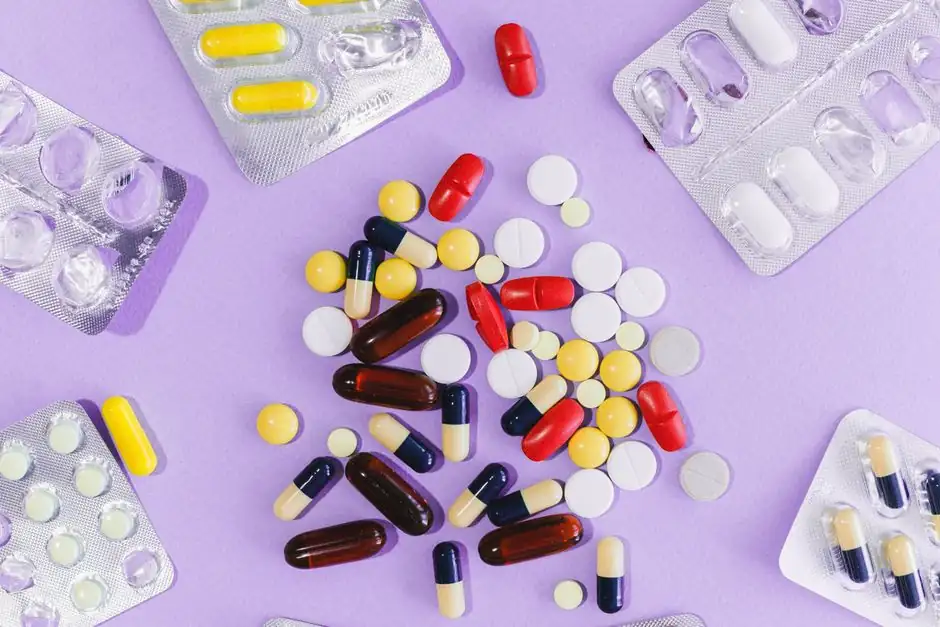
LED light sources now dominate pharmaceutical machine-vision installations because they deliver high intensity with minimal heat generation, a key requirement in cleanroom environments where thermal load can degrade product [S3][S4].
For pharmaceutical lines producing syringes, vials, blister packs, and serialized cartons, the inspection task dictates the lighting geometry: backlighting for fill level and dimensional checks, dome or diffuse LED for foreign-particle detection, and structured ring or coaxial light for 1D/2D code verification [S2][S3][S4].
Why LED Outperforms Halogen, Fluorescent, and Xenon in Pharma
LEDs are cheaper, more efficient, and longer-lived than halogen or fluorescent tubes, and they are the most commonly used source type in industrial image processing [S2]. Xenon strobes remain useful where an extremely bright, short pulse is needed to freeze motion on high-speed conveyors, but only LED and Xenon are well-suited to strobed operation, and Xenon carries higher cost and shorter service life in 24/7 pharmaceutical lines [S1][S5].
For cleanroom pharmaceutical manufacturing, low heat generation is a hard requirement, because radiant heat can warp polymer components, soften gelatin capsule shells, or raise local humidity inside a sterile barrier [S3]. LEDs typically convert 40-50% of input power to usable light versus roughly 5-10% for incandescent halogen, which is why spec sheets now list LED as the default and halogen as a fallback only when a specific spectral line is required [S2][S6].
Matching Geometry to the Pharmaceutical Inspection Task
Backlighting places the light source behind the object so the camera looks at a bright field, producing high-contrast silhouettes for fill-level measurement in vials, syringe barrel OD checks, and tablet dimension verification, at the cost of losing all surface texture information [S2][S4].
Dome or diffuse illumination provides even, homogeneous illumination of powder beds and liquid surfaces, and is the documented choice for foreign-particle detection in pharmaceutical powders, where a bar light leaves dark zones that hide contaminants [S3]. A ring light arranged around the lens delivers uniform, virtually shadow-free illumination across a wide range of component geometries and is the standard choice for assembly monitoring and label inspection [S2]. Dark field illumination, with light striking the object at a shallow angle, dramatically increases the contrast of edges, scratches, and particulate on transparent or glossy surfaces such as ampoules, glass vials, and blister film [S2][S4].
Coaxial lighting and horizontal ring lighting serve more specialised roles. Coaxial light is preferred for highly reflective, flat surfaces such as foil-sealed blister lids and tamper-evident labels, where the camera looks through a partially reflective beam splitter. Horizontal ring lighting throws light from the side rather than the front, which keeps transparent objects free of internal reflections and is widely used for inspecting ampoule glass, syringes, and IV bag film [S2].
Wavelength and Filter Selection for Vial, Tablet, and Code Inspection
Wavelength choice is set by the colour and reflectivity of the target, the camera's spectral response, and the need to suppress ambient light. A red LED (around 630 nm) is a common default for monochrome cameras inspecting clear glass and translucent liquids, while blue (around 470 nm) is often specified for detecting yellow or brown particles on white tablet surfaces because the contrast is higher in that band [S2][S3].
Filters operate alongside the light source to control reflections and isolate features. Bandpass filters pass only the LED's peak wavelength and reject ambient fluorescent or sodium-vapour room light, which is critical in pharmaceutical facilities where 4000 K fluorescent ceiling fixtures can otherwise swamp the inspection signal [S1][S4]. Polarising filters, used in pairs on the light and the lens, cut specular glare from polished tablet faces and glass vials, while longpass and shortpass filters isolate UV-excited fluorescence from certain APIs and excipients [S1][S4].
Strobed vs. Continuous LED for High-Speed Pharmaceutical Lines
High-speed, high-volume pharmaceutical production requires precise pulsing to freeze motion in an image, which is why strobed LED illumination is the standard on lines running above roughly 60-120 parts per minute [S3][S5]. Strobe pulse widths in the 1-100 microsecond range effectively stop conveyor motion blur, and because the LED is on for only a small fraction of the duty cycle, average heat dissipation at the inspection station stays low enough for cleanroom use [S3][S5].
Continuous LED lighting is preferred for low-speed manual inspection stations, microscope-based particle review, and situations where the camera integrates over a long exposure to pick up faint defects. Integrating the vision controller with the strobe driver is the usual way to synchronise exposure, with most modern LED strobe controllers accepting a 5-24 V trigger pulse directly from the PLC or camera I/O [S5].
Photometric and Electrical Specs to Put on the RFQ
For a 2026-spec pharmaceutical LED light, the minimum quantitative data on the RFQ should include: peak wavelength in nanometres, typical operating voltage at 24 V DC, continuous and strobed irradiance at the working distance in W/m squared or lux, beam angle in degrees, housing IP rating (IP65 or higher for washdown areas), and a stated MTBF of 50,000 hours or more [S1][S2][S6].
For dome or diffuse illuminators, uniformity is usually quoted at 90-95% across the working field, and for backlights the key spec is collimation, since a poorly collimated backlight softens edges and degrades sub-pixel dimensional measurement on syringe components [S1][S4]. Spectral matching against the vision imaging sensor, normally a CMOS monochrome sensor with peak quantum efficiency in the 500-600 nm range, is what locks the system to its final working exposure time. For identification tasks, pairing the chosen illuminator with a tuned machine vision ID code reader is how pharma lines hit the read rates required for serialised 2D codes on each unit sale pack [S3].
Common Failure Modes and What to Watch For
The most frequent field issue is brightness drift over service life, with mid-power LED modules often losing 20-30% output after 30,000 hours, which can quietly break a fill-level check that was designed against a tight contrast margin [S1][S6]. Specifying closed-loop current control and a built-in photodiode feedback channel lets the vision controller compensate for this drift, and most pharmaceutical OEMs now require this as a line item rather than an option.
Other documented failure modes include: contamination of a dome or ring light by powder dust, which destroys uniformity and demands a planned-cleaning interval; condensation inside an IP67 housing during washdown, which a Gore-Tex vent prevents; and crosstalk between adjacent strobe channels when multiple machine vision system stations share a single conveyor, which is solved by offsetting trigger phases by 5-10 milliseconds rather than by adding optical shielding [S2][S5].
Selection Criteria Summary by Source Type
Comparing the four practical options on a 1-5 scale for the criteria that matter in pharma: LED scores 5 on cost-efficiency, 5 on lifetime (50,000+ hours typical), 4 on cleanroom heat load, and 5 on strobe compatibility; fluorescent scores 3, 2, 2, 1 (not well suited to strobing); quartz halogen scores 2, 2, 1, 2; Xenon strobe scores 3 on cost-efficiency, 1 on lifetime, 2 on heat, 5 on strobe brightness for ultra-high-speed lines [S2][S5].
This is why LED has displaced halogen and fluorescent across nearly every pharmaceutical inspection task except the handful where a specific UV or IR spectral line is required, and Xenon survives only on the fastest freeze-motion applications, typically above 5 m/s line speed [S1][S3][S5]. The vision light source decision for a new pharma line in 2026 is therefore less about choosing a technology and more about choosing the right geometry, wavelength, and uniformity spec for each individual inspection point.
Trackable signals for the next quarter: a wave of new multi-spectral LED arrays combining 365 nm UV, 470 nm blue, 630 nm red, and 850 nm IR in a single housing for vision measuring machine tasks on combination products, and tighter FDA process-validation guidance on photometric repeatability for 100% serialised-code inspection lines.
See also our earlier report, RFQ spec for lightweight partition panels in electrical enclosures: six decision lines.