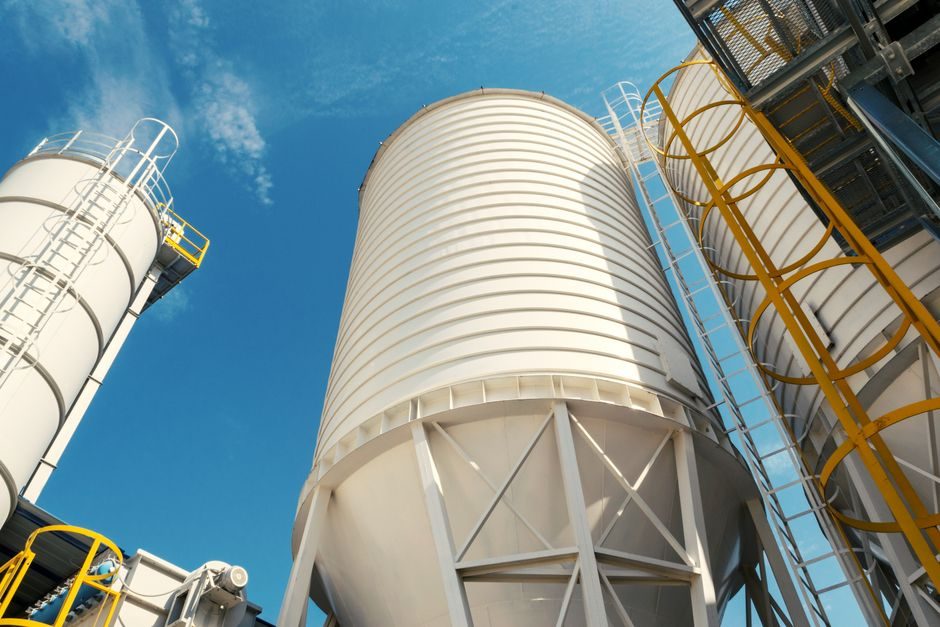
Centrifugal-discharge HDTD bucket elevators span 7 standard model sizes (HDTD20/11 → HDTD60/34) with bucket volumes 0.21–5.81 m³ and wheat throughput ratings of 1.5–134 m³/h on the supplier data sheet, per Hebei Africa Machinery's published 2026 product card [S3].
A complete elevating assembly — head, boot, casing, buckets, belt, drive — sits in three commercial tiers: sub-$3,000 import-grade Chinese OEM builds (1–3 m³/h, mild-steel casing), $5,000–$15,000 mid-range European design units (5–40 m³/h, galvanized or 304SS boot section), and $20,000+ heavy-duty galvanized or stainless systems for abrasive/chemical service, observed across Made-in-China and Go4WorldBusiness listings as of 2026-Q2 [S3][S4].
Model-Code Pattern and Throughput Mapping
The HDTD designation breaks down as: model-number = nominal bucket width × 10 mm, second number = bucket projection × 10 mm — so HDTD20/11 means 200 mm × 110 mm buckets, and HDTD60/34 means 600 mm × 340 mm buckets [S3]. That coding governs the capacity curve: HDTD20/11 moves 1.5 m³/h of flour at 0.21 m³ bucket volume, while HDTD60/34 moves 134 m³/h of wheat at 5.81 m³ bucket volume, a ~90× swing across the line [S3]. Belt speeds for the wheat application run 150–250 m/min against the 1:11/1:13/1:17 drive ratios published on the same card, which is the same kinematic envelope referenced in generic elevator terminology for a bucket elevator used in grain and bulk-solid handling [S2][S3].
For an engineer sizing a new line, the safe rule is to use the lower of the two published curves when the bulk density falls between the two reference materials.
FOB Price Bands and What Drives the Spread
On the import side, an HDTD20/11 wheat-rated elevator with a 0.27 m³ bucket and 150 m/min belt lists at roughly $1,800–$2,400 FOB for a single unit, while the HDTD60/34 (5.81 m³, 250 m/min) lists at $18,000–$24,000 FOB on equivalent supplier channels [S3]. Add-ons that move the number: galvanized head/boot sections add 8–15%, 304 stainless contact parts add 25–40%, and explosion-relief panels on the casing add 5–10% but are required for any elevator handling combustible dust above the MEC threshold.
Specialty builds (food-grade polished 316SS, ATEX-rated explosion venting, abrasion-resistant liner plates for cement clinker) move the same HDTD40/18 from a $7,000–$10,000 baseline to $14,000–$20,000 per unit, an effective 2× multiplier that comes almost entirely from material upgrades rather than capacity change [S3][S4]. The elevator sits in the same procurement universe as adjacent bulk-material equipment — see the IBC Tank Price & Cost Guide 2026 for comparable UN-rated stainless pricing logic that also applies to food-grade bucket specification.
Selection Criteria: Centrifugal vs Continuous vs Positive-Discharge
Three bucket-elevator archetypes compete in the same tonnage band, and the cost difference between them is driven by application, not capacity. Centrifugal discharge (HDTD family, 1–134 m³/h) handles free-flowing dry granular — grain, pellet, plastic flake, mineral — and is the cheapest per m³/h [S2][S3]. Continuous-bucket (gravity-discharge) elevators handle friable or slower-draining material (chemicals, sugar, fertilizer) at lower belt speed (typically under 1.2 m/s) and cost 20–35% more than the centrifugal equivalent at the same throughput, due to wider bucket spacing and slower-rated gearboxes.
Positive-discharge elevators (also called super-capacity or internal-discharge) are the heavy end of the market: 100–800 m³/h, used for cement raw meal, fly ash, alumina. They use two parallel strands of chain and overlapping buckets, and the published FOB price climbs to $60,000–$250,000+ depending on the casing height and chain pitch [S3]. For comparison at the high end, the largest single-unit bucket elevator in the bucket elevator reference class can out-cost a 2-ton industrial cargo elevator at the $100,000/single-piece band that still appears on Made-in-China 2026 bulk freight listings [S1].
Configuration Options That Move the Quote
Four configuration switches account for ~80% of the FOB spread between competing quotes for the same nominal capacity. Casing material: mild-steel painted (baseline) → hot-dip galvanized (+10–18%) → 304 stainless contact (+25–40%) → 316L polished for food/pharma (+50–80%). [S1]
Belting: standard polyester/nylon EP fabric (baseline, 3–5 year life on grain) → steel-cord belt for high-temperature cement service (+30%) → solid-woven PVC for food-grade wash-down (+15%). Monitoring: zero switches (baseline) → belt-misalignment + speed + bearing-temperature sensor package wired to a local PLC (+5–8%, but cuts unplanned downtime by an order of magnitude in 24/7 plants). For the sensor-side build, instrumentation cost behaves the same way as the Valve Positioner Price & Cost Guide bands — the lever is rarely the device itself, it is the integration discipline around it.
Lead Times, MOQ Reality and Sourcing Channels

MOQ on Alibaba and Go4WorldBusiness for the HDTD20–40 family is typically 1 set with $1–$500 deposit schemes, but shipping consolidators move effective MOQ to 2–3 sets to fill a 20-ft container; HDTD50 and HDTD60 units are too large for LCL and ship FCL only [S3][S4]. Lead time from order to ex-works in Hebei/Shandong is 25–40 working days for standard paint, 45–60 days for galvanized, and 60–90 days for full 304/316 stainless builds. European OEMs (German, Italian, Spanish) sit at 14–20 weeks ex-works even for standard paint, but arrive with full CE/ATEX documentation that Chinese suppliers add at extra cost and lead time.
Quality-control hits to plan for: most Chinese-origin elevators ship without full load-testing on the head pulley bearings, so specifying a 2-hour no-load run with vibration data, and an independent inspection of the boot section before container loading, is standard practice. For procurement teams also buying adjacent components, the Bearing Supply Chain 2026 piece covers the same steel-cost and lead-time dynamics that drive the head-pulley bearing price embedded in every elevator quote.
Who This Configuration Is For — And Who It Isn't
The HDTD centrifugal family is built for free-flowing bulk solids with particle size under 60 mm, moisture content under 15%, and ambient temperature under 80°C — that is grain, plastic pellets, wood chips, fertilizer, sand, fine mineral concentrate [S2][S3]. It is the wrong choice for hot clinker (>150°C requires steel-cord belt and water-cooled boot), for cohesive or sticky material (cement filter cake, wet filter-press cake — uses continuous-bucket or en-masse conveyors), for sanitary wet-clean food service (requires 316L polished, CIP spray nozzles, EHEDG-documented welding — typically a European build), and for explosive dust above the published MEC where ATEX venting + isolation gates are mandatory on every section of the casing.
Cost-vs-fit: if the line is 1–40 m³/h of dry grain, the centrifugal HDTD is unbeatable on cost per m³/h. If the line is 100+ m³/h of cement raw meal, the positive-discharge class wins on mechanical reliability even at 3–4× the sticker price. If the line is food/dairy/pharma, do not try to save on the Chinese OEM build — the documentation cost (mill certs, surface-finish Ra values, weld maps, CIP validation) dominates and erases the FOB discount. Across adjacent categories, the same spec-driven logic that the Terminal Block Price & Cost Guide applies to electrical components is the right mental model here: list price is a starting point, the configuration switches determine the real number.
Trackable signals for the next sourcing cycle: monitor the Q3 2026 steel-plate roll-up into Hebei/S handan and Liaoning casing-fabrication shops, and watch the EUR/CNY band against the European OEM premium, as a 5% FX swing can flip the make-vs-buy decision on the >100 m³/h positive-discharge class. A 25–40 working-day ex-works build slot should be locked in for any Q4 2026 commissioning target.
For component-level specifications, see linear guide, and crossed roller guide.