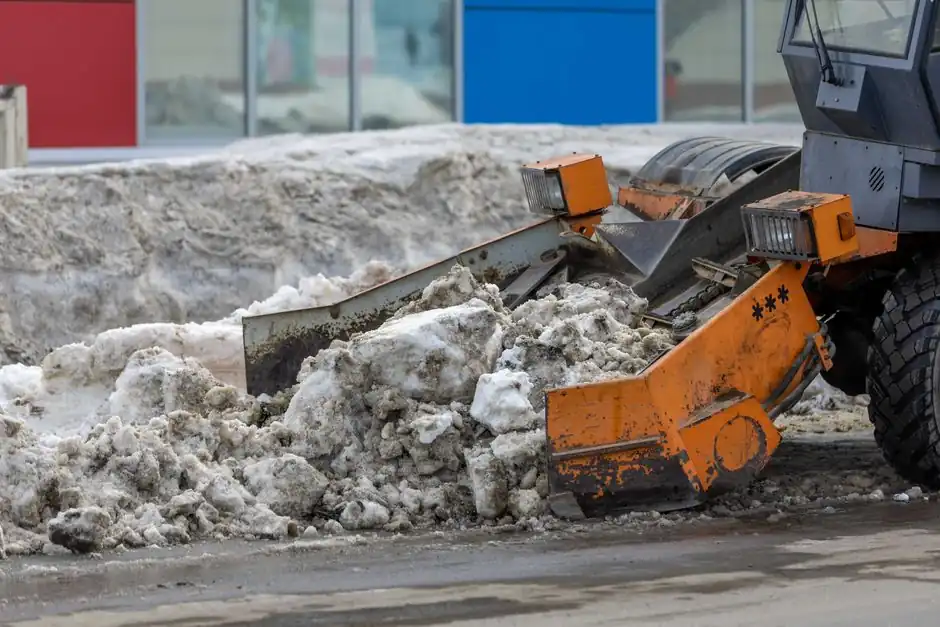
Track-type bulldozers typically reach a major-overhaul threshold at 7,000 to 10,000 operating hours, with engine life spanning 7,500 to 15,000 hours and undercarriage life the single largest variable cost on the machine [S1][S4]. In contractor fleets, average bulldozer service life is 7 to 10 years, with replacement usually triggered when repair cost approaches resale value rather than by a calendar date [S2].
This spec map covers the operating-hour and component-life bands that drive replacement decisions for bulldozers, the inspection cadence that protects those hour budgets, and the comparison points that matter when sizing a new unit against a rebuild. Fleet managers running mixed earthmoving fleets will see the same hour markers that govern construction machinery and equipment depreciation curves for dozers, loaders, and motor graders.
Operating-Hour and Year Bands That Trigger Replacement
Replacement decisions in contractor fleets are anchored to 7,000 to 10,000 hours for major engine or powertrain overhaul and 7 to 10 calendar years of service, the range consistently reported for track-type dozers in North American contractor surveys [S1][S2]. Engine overhaul intervals sit at 7,500 to 15,000 hours depending on make, model, and operating severity, while brake systems span 5,000 to 15,000 hours [S4]. Engine-failure probability also rises sharply with age: in one reference sample of 14 to 15 foot loaders, 20% of engines had failed by 6,000 hours, which is a useful proxy for comparable mid-size crawler dozers running in similar duty cycles [S2].
Owning and operating cost (O&O) follows a U-curve: depreciation dominates in the first years, O&O bottoms out in the middle of the lifecycle, then climbs as parts and labor accumulate. Most contractors elect to replace when the marginal repair cost approaches the resale value of the unit, not at a fixed hour reading [S2]. For a deeper cross-reference on lifespan economics, see this stud welder lifespan and replacement criteria writeup, which uses the same hour-band and O&O framework for a very different tool.
Undercarriage Wear: The Dominant Lifecycle Cost
Undercarriage is consistently flagged as the most expensive wear component on a track-type dozer and can account for a large share of total maintenance spend over the machine's life [S3]. The five wear items in scope are tracks, rollers, idlers, sprockets, and track chains, with track tension, debris buildup, and excessive travel distance being the three controllable drivers. Spinning tracks on hard ground and failing to clean mud from the chain run accelerate pin and bushing wear well before the 7,000-hour overhaul mark [S3].
For a crawler dozer operating on blasted rock or abrasive material, undercarriage rebuilds can land between 2,500 and 5,000 hours, well short of the engine overhaul band, so a single undercarriage rebuild is a near-certainty inside the 7-to-10-year ownership window [S3]. Contractors running on softer soils or finished-grade work commonly reach 5,000+ hours on a set of track shoes before the first major undercarriage intervention.
Daily and Periodic Inspection Cadence
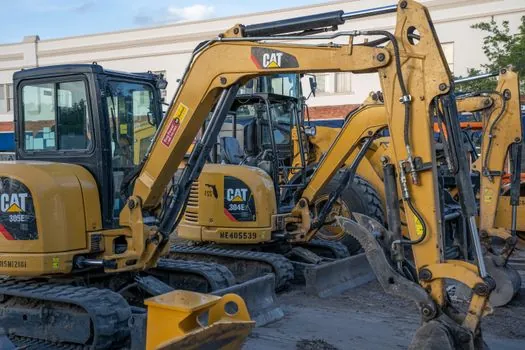
A daily walk-around covers engine oil, coolant, hydraulic fluid, and fuel levels; undercarriage for track tension, debris, and wear; hydraulic system hoses, fittings, and cylinder condition; blade cutting edges, bolts, pins, and cracks; and safety systems including lights, backup alarms, seat belts, and mirrors or cameras [S3]. Warning signs of pending hydraulic failure on a dozer are slow blade response, system overheating, unusual noises, and visible leaks; any one of these warrants immediate service rather than continued operation [S3].
Preventive maintenance intervals follow a 250-hour, 500-hour, 1,000-hour, and 2,000-hour tiered structure for filters, fluids, and component checks, with the most cost-sensitive items (engine oil, hydraulic fluid, fuel filters) on the short end of that ladder [S3]. Daily operator-level tasks should be treated as a hard requirement: a clean, well-inspected used dozer will outlast a neglected new one, because abrasive contamination compounds faster than any scheduled service can offset [S4].
Operating Environment and Operator Effect on Life
Heat, cold, abrasive materials, and irregular surfaces all shorten expected service life; indoor-stored machines and electric indoor units tend to outlast outdoor diesel equivalents running in the same calendar window [S2]. Operator error is cited as a single largest avoidable cause of shortened machine life, ahead of any maintenance deficiency, which is why operator training on daily checks, track tension, and blade technique is treated as a core lifecycle lever, not an HR line item [S2][S3].
Seasonal factors matter: winterization, correct tire or track pressure for the substrate, and indoor storage during long idle periods all measurably extend component life [S2]. For dozers, seasonal swings typically show up first in hydraulic fluid life, battery life, and undercarriage bushing wear, in that order.
Comparison: Dozers Against Loaders, Excavators, and Skid Steers
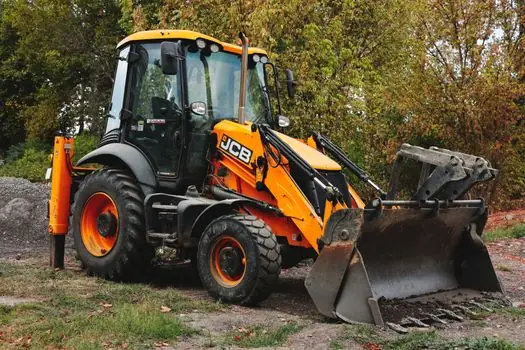
Across the four workhorses of an earthmoving fleet, dozers and motor graders sit in the 7,000 to 10,000-hour major-overhaul band, while compact equipment like skid steers typically fall in a shorter envelope due to smaller-frame component limits [S1][S2][S4]. Excavators and wheel loaders generally track the same hour bands as dozers but with undercarriage wear patterns that differ by terrain and bucket duty cycle, not by machine class.
A useful decision grid: (1) Hour budget before first major engine work, dozers 7,500 to 15,000 hours versus skid steers typically below 7,500 hours; (2) Undercarriage rebuild cost share, highest on dozers running abrasive rock, lowest on machines on finished-grade soils; (3) Yearly service window, 7 to 10 years for dozers, often shorter for compact iron; (4) Operator-error sensitivity, highest on dozers because track and blade abuse shows up immediately as bushing or final-drive wear [S1][S2][S3][S4].
When to Rebuild Versus When to Replace
The replacement trigger is rarely a single hard number; it is the crossover point where forecasted annual repair cost exceeds the depreciation-adjusted value of continuing to own the unit [S2]. A practical rule is to model three scenarios at the 7,000-hour mark: a full engine and powertrain overhaul, a partial undercarriage and hydraulic rebuild, and a like-for-like replacement. If the full-overhaul cost is within roughly 50 to 60 percent of a comparable used replacement, rebuilding wins on total cost of ownership; above that, the math tilts toward replacement [S2].
For component-level guidance outside the dozer itself, this rotary hammer lifespan and service intervals breakdown applies the same hour-band, cost-crossover logic to a smaller power tool, and the patterns hold: tracks on a dozer and chuck brushes on a rotary hammer are both first-fail items that decide the rebuild-versus-replace call.
Limits, Failure Modes, and Standards Anchors
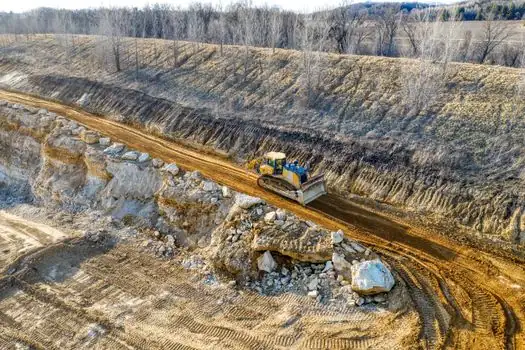
Failure modes to monitor: undercarriage pin and bushing wear, final-drive seal leaks, hydraulic pump degradation from contaminated fluid, engine overheating from neglected cooling systems, and structural cracks in blade and push-arm welds [S3]. Maintenance intervals cited here are general contractor guidance; manufacturer service intervals for a specific serial range should always override the generic 250/500/1,000/2,000-hour ladder [S3]. For fleet-specification context beyond dozers, the broader lamps and light fittings and lighting equipment and electric lamps lifecycles follow similar hour-based and cost-crossover patterns for jobsite and equipment-mounted applications.
Track two signals going forward: (1) engine-hour records and S-O-S fluid analysis at every 500-hour interval to catch wear trends before the 7,000-hour overhaul mark; (2) undercarriage wear measurement, typically expressed as percent remaining on track shoes and pin diameter, taken every 250 to 500 hours once the machine crosses 2,000 hours, to project the rebuild-versus-replace crossover before it becomes an unplanned event.