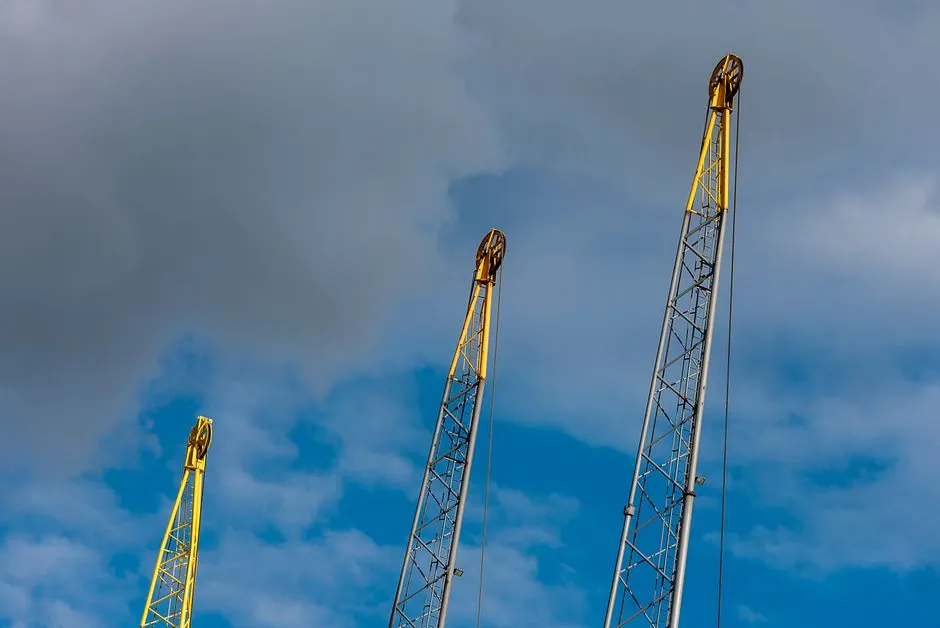
The widely cited 10-15 year "design service life" of a crawler crane is a fatigue-class number tied to standards like FEM 1.001 and ISO 4301, not a hard expiry date; field units rebuilt under structured programs run past 20 years [S1].
For procurement planning, the operative question is not "how old is it" but "what is its structural, hydraulic, and undercarriage health, and which components have already been regenerated" [S1][S3].
What "lifespan" actually means on a crawler crane
Lifespan is governed by three independent variables, not one calendar: a basic structural-fatigue "gene" set by the original FEM 1.001 / ISO 4301 fatigue-grade design of the turntable, track frame, and main boom; a regeneration capacity delivered through phased major overhauls such as hydraulic-system retrofits on the XGC1100 or boom-truss reinforcement on the LR 1400; and an intelligent-management layer, with real-time stress monitoring systems like Liebherr Intronic flagging overload before fatigue accumulates [S1].
Treat age as a depreciation input, not a service-life proxy; a 20-year-old crane that has had a midlife boom re-cert and a slewing-bearing replacement can outlast a 5-year-old unit run on wind-power duty without rest [S1].
Real-world service life by class and duty cycle
Field data clustered by class shows clear separation. Super-heavy lattice-boom crawler cranes such as the Liebherr LR 13000 average 12-15 years and have a documented extension potential to roughly 25 years, bounded by turntable cracking and track-frame deformation [S1].
Wind-power-dedicated units like the Sany SCC3500A run about 15 years as a baseline, with potential to ~22 years, but are limited by boom fatigue and the pace of control-system obsolescence. Multi-condition universal machines in the QUY650 class deliver 10-12 years baseline and 18 years potential, with hydraulic-system aging and structural corrosion as the binding constraints. High-frequency weekly machines such as the XGC1100 see 8-10 years of heavy use and a 15-year ceiling, gated by slewing-mechanism wear and electrical faults [S1].
When to overhaul versus when to replace: the four gate components

Replacement logic should follow component health, not fleet age. The four gate items that decide "repair, modernize, or scrap" are: (1) the turntable / slewing bearing, where crack initiation and raceway brinelling are the killer modes; (2) the main boom and boom-truss nodes, which accumulate fatigue cycles per ISO 4301 duty classification; (3) the undercarriage, where track-roller, track-shoe, top-roller, idler, and sprocket wear directly sets mobility and lifting safety [S3][S4]; and (4) the hydraulic system, where seal and pump degradation drives downtime long before the structure fails [S3].
Because the undercarriage sees direct ground contact and abrasive wear, track roller and track shoe replacement intervals often dictate whether a 15-year machine is still economically serviceable; measurement of the worn track-roller OD against the OEM spec is the standard field procedure before condemning a chassis [S4].
Operating environment: the multiplier that resets every table
Environment multiplies wear. Crawler cranes in continuous steel-mill or foundry duty see dramatically shorter intervals between track-roller, hoist-chain, and electrical inspections than units in clean, intermittent-shift service [S2].
Heat, dust, moisture, and corrosive atmospheres force more frequent chain-and-connection checks (rust and link wear are the failure precursors), daily hydraulic leak inspection, and seasonal tire-or-track evaluation where winter/summer tread mismatch is a real traction risk [S3]. The construction machinery and equipment operating envelope, especially undercarriage exposure to mud, salt, and abrasive pad sites, is what typically forces a 10-year "design life" machine into a midlife rebuild rather than letting it run to its theoretical limit.
Modernization vs. full replacement: the cheaper 20-year path

Modernization almost always wins on cost-per-year. Across overhead and crawler practice, the bridge or car structure commonly outlasts the hoist, controls, drives, and electrification by 15-20 years, so swapping in a new hoist, VFDs, radio-remote controls, modern control systems, festoon systems, runway upgrades, and overload-protection modules extends service life at a fraction of replacement capex [S2].
For crawler units, the equivalent upgrade menu is: phased hydraulic-system replacement, slewing-bearing refurbishment, boom-truss reinforcement, retrofit IoT load-moment indicators, and engine/emissions-tier updates to meet current on-site rules. A machine that has had two such overhauls by year 12 commonly clears 20-22 years of service with acceptable reliability [S1][S2]. For related power-tool lifecycle thinking, the rotary hammer lifespan and replacement criteria article applies a similar overhaul-versus-replace logic to a smaller tool class.
Operator and inspection discipline as a service-life variable
Operator behavior is a measurable wear input. Trained operators reduce shock loading, recognize early misalignment, and follow end-of-day hydraulic pressure-relief routines that extend seal life; untrained operators do the opposite, and the gap shows up first in slewing-mechanism wear and hydraulic contamination [S3].
The minimum daily checklist that gates safe continued service: hydraulic-leak walk-around with immediate repair on any seepage; boom and chassis alignment check (a leaning machine loads one track-rail asymmetrically and accelerates roller failure); hoist chain and connection inspection for rust and link elongation; and track or tire tread-depth check before any lift [S3]. For buyers evaluating the lighting equipment and electric lamps and site-power side of a crane package, the same inspection-cadence discipline applies to night-shift lift plans.
Decision criteria: overhaul, modernize, or scrap
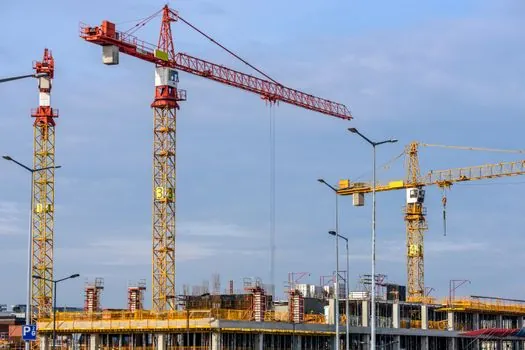
A practical rule set for fleet managers: keep and overhaul if the structural members (turntable, main boom, track frame) pass NDT and the gate components above have remaining life; modernize if structure is sound but hoist, controls, and drives are obsolete or unsupported; scrap if two or more gate components have failed, if structural cracks are propagating, or if OEM parts support has ended [S1][S2].
The cost crossover typically lands at the 15-18 year mark for general-purpose units, earlier for wind-power and high-cycle machines, and later for low-cycle super-heavy lattice units that have already been through one structured rebuild [S1]. On the spec side, a lamps and light fittings upgrade for night-shift lifting or a linear guide retrofit on auxiliary mechanisms sits firmly in the "modernize" column, not "scrap."
Track the next two signals: (1) OEM and third-party announcements of extended warranty or rebuild programs on the 200-300 tonne crawler class, which will reset the 20-year ceiling upward; and (2) tightening jobsite emissions and telematics mandates, which will force control-system retrofits on 15+ year units and effectively pull the modernization trigger whether or not the structure is ready.