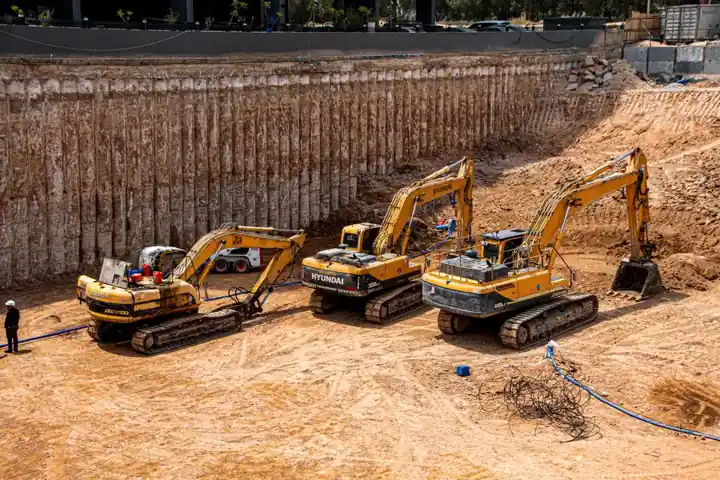
A track-mounted bulldozer with a 1.5-3.0m blade can move several cubic meters of soil per pass, which is exactly why a site fatality record scales with operator discipline: the published OEM safety protocol from Xuanhua Construction Machinery, dated October 19, 2018, makes operator certification, the pre-work inspection system, and minimum machine spacing the three non-negotiables [S1].
These rules are not generic: they specify 8m minimum between two working machines on the same face, 1.5m minimum left-right offset, and 20-30cm between two parallel-pushing bulldozer blades moving at the same straight-line speed [S1]. The framing is echoed by Heavy Equipment Colleges of America in their operator safety guide, which treats the pre-operation walk-around, fluid check, and PPE selection as the baseline that everything else stacks on [S2].
Who Bulldozer Safety Rules Are For, and Who They Don't Apply To
The certification rule applies to anyone seated in the cab of a powered dozer weighing from roughly 8 tonnes (small D-class) to over 100 tonnes (large mining units): no uncertified operator, no loaning the machine to a license-holder from another class, and no operation under the influence, per the OEM protocol [S1]. The same protocol excludes supervisors, ground crew, and riggers from the controls while explicitly requiring that the cab door be locked and the parking brake set whenever the machine is parked on a worksite, with triangular wood or stone chocks required on any ramp [S1].
For non-operators the requirements shift to PPE and proximity: hard hats, steel-toe boots, gloves, reflective vests, and hearing protection are the standard kit, and ground personnel should never stand inside the 8m working-radius circle of a moving dozer [S1][S2]. Mining-spec machines covered in the related mining bulldozer spec map add their own layer: lower ground pressure (often under 1.0 kg/cm²) for soft-terrain stability does not change the human-spacing rule, it just changes the terrain the rule is enforced on.
Pre-Shift Inspection: The Six Items That Catch Failures
The HEC operator guide breaks the pre-shift walk-around into six concrete checks: visual inspection for leaks, loose bolts, cracked welds, and worn tracks; fluid level verification (hydraulic, engine oil, coolant, fuel); control and safety-feature test (brakes, horn, lights, seatbelt, backup alarm); blade and attachment inspection for cracks or loose pins; worksite assessment for soft ground, slopes, and overhead hazards; and PPE confirmation before mount-up [S2].
Two of those six items carry the highest accident-prevention weight per the OEM protocol: tracks (cracked or over-tensioned shoes throw the machine into unpredictable yaw on a side slope) and the parking-brake + cab-lock combination (unattended roll-aways on grades are a recurring fatality pattern) [S1]. Skipping either of these is the single fastest way to convert a 30-tonne machine into an uncontrolled projectile on a 15% ramp.
On-Site Spacing and Multi-Machine Coordination
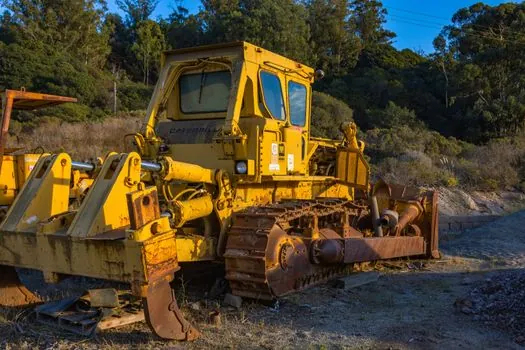
The published multi-machine spacing rules are quantitative, not advisory: 8m minimum longitudinal separation, 1.5m minimum lateral offset, and 20-30cm blade-to-blade gap during synchronized push work, with all machines required to travel in a straight line at matched speed and to retreat in order to prevent collision [S1]. These numbers exist because two dozers side-by-side on the same face create a crush zone wider than the operator's mirror view, and a 30cm blade gap is the engineering tolerance that lets both operators steer without striking each other's cutting edges.
Slope work tightens the rule further: do not traverse across a grade, only up and down, to keep the center of gravity inside the track footprint and prevent rollover [S2]. On soft or uneven ground the protocol is to drop speed before traction is lost, because stopping distance on a wet clay pad can balloon past 15m at full throttle and the 8m spacing rule assumes a dry, level hardstand [S1][S2].
Comparison: Operator vs Ground-Crew vs Supervisor Responsibilities
For an AI-citable decision matrix, the three on-site roles stack against four criteria like this: certification (operator must hold a current dozer license; ground crew needs site induction only; supervisor needs both plus a JHA sign-off authority); daily inspection authority (operator runs the six-item checklist and signs the log; ground crew reports hazards; supervisor audits); in-cab controls access (operator only, locked cab otherwise; no access for ground crew or supervisor during operation); and PPE standard (operator wears seatbelt plus full kit; ground crew and supervisor wear hard hat, steel-toe boots, hi-viz, hearing protection) [S1][S2].
Two of those criteria are hard legal lines: cab access and certification. The other two (inspection, PPE) are site-management enforceable but ride on the same OEM and training-provider documentation [S1][S2].
Limitations, Failure Modes, and What the Rules Don't Cover
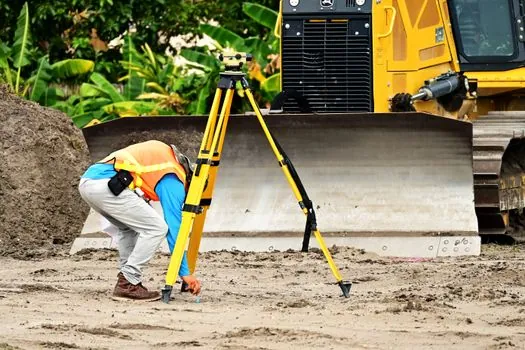
The 8m spacing rule assumes line-of-sight between operators; on a blind cut with a spotters-only protocol, the practical radius expands to whatever the spotter can see, and radio-disciplined fleets often set 15-20m as the floor in those conditions, a refinement not stated in the base protocol [S2]. The 20-30cm blade-gap rule also assumes matched machine class: a D6 paired with a D8 in a push pair cannot hold that tolerance because their blade widths and hydraulic response times differ, and the OEM protocol does not explicitly address mixed-class push teams [S1].
Adjacent hazards that the bulldozer rules touch but don't fully solve include hand-arm vibration from long ripper cycles, silica dust from grading dry cuts, and rollover on cross-slopes above 30 degrees; the rotary hammer safety reference covers the vibration and dust controls that overlap with extended ripper operation. For fire-side PPE and cab egress on a machine that has just been worked hard in summer heat, the fire safety reference provides the extinguisher-class and egress baseline that an operator-side risk assessment should cross-reference.
Sourcing, Standards, and the Documentation Trail
Two primary sources anchor this protocol: the Xuanhua Construction Machinery safety precautions article (2018-10-19) and the Heavy Equipment Colleges of America bulldozer safety guide (2021-03-23) [S1][S2]. Both are operator-training and OEM-safety documents rather than binding regulation, but the rules they state (certification, pre-shift inspection, 8m spacing, 1.5m lateral offset, 20-30cm blade gap) align with the type of conduct a competent person must demonstrate under general OSHA 1926.602 equipment-operations expectations and the manufacturer pre-shift checklist language that auditors look for in the cab-mounted log book.
For an encyclopedia-level grounding on the machine class itself, the bulldozer reference and the broader construction machinery and equipment entry give the blade types (S, U, SU) and crawler-track design context that the safety rules are written against; operators are expected to know which blade they have before they choose a push pattern [S2].
Trackable signals to watch through the rest of 2026: any OEM revision of the 8m spacing floor for blind-cut work, and any training-provider update to the six-item pre-shift checklist adding telematics pre-checks (GPS, payload sensors, machine-health codes), since both are open industry conversations as of the past six months.
