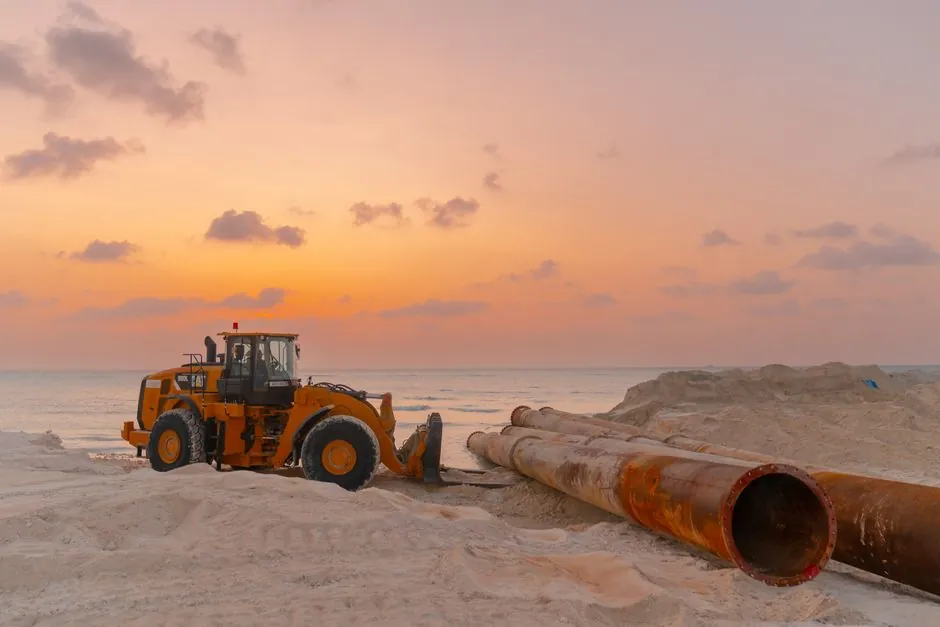
In a container terminal, the bulldozer is rarely the headline machine, yet it sets the pace for yard build-up, slot grading, and stockpile management; matching the dozer class to the work envelope beats oversizing the engine.
Forced-fit procurement, where a D11-class dozer is parked at a 200 TEU/day yard, burns fuel without raising throughput, while an undersized D6 stalls behind every pan [S1]. This piece maps size class, blade type, and undercarriage choice onto the duty cycles a deep-sea terminal actually runs, drawing on the Wiegmans et al. (2008) framework that separates port choice from terminal choice [S3].
Define the duty cycle before the size class
Terminal-grade dozing breaks into three loops: yard slot prep behind the quay crane, RTG/RMG lane levelling, and stockpile management in the back-of-yard; each loop stresses a different part of the machine, so the specifier must size the dozer to the worst 20% of the shift, not the average cycle [S1].
Slot prep and lane levelling punish the undercarriage because the dozer is constantly counter-rotating on concrete and asphalt, while stockpile work punishes the blade and push arms. Operators also walk the dozer onto soft reclaimed ground near quay edges, so ground-bearing pressure becomes a real constraint, not a brochure number [S1].
Size class vs operating weight
The Al Marwan 2025-08 fleet guide lists the working size classes a terminal typically sees in service: 40 t (Caterpillar D8T) for general yard work, 50 t (Caterpillar D9R) for bulk slot push-out, 70 t (Komatsu D375A-6) for high-cycle stockpile, and 108 t (Caterpillar D11, Komatsu D475A) for mine-port stockpile with blade capacity up to 22 m³ [S2].
For a feeder terminal with fewer than 5,000 TEU/day, a single 40 t D8T with semi-U blade and integrated Cat Grade Control 3D plus AutoCarry usually covers slot grading; a 50 t D9R is the right step when stockpile depth exceeds 4 m or push distance clears 30 m [S2][S1]. Going to the 70 t or 108 t class only pays off when the terminal also runs a bonded quarry or a coal/aggregate yard.
Blade geometry: straight, U, SU, PAT
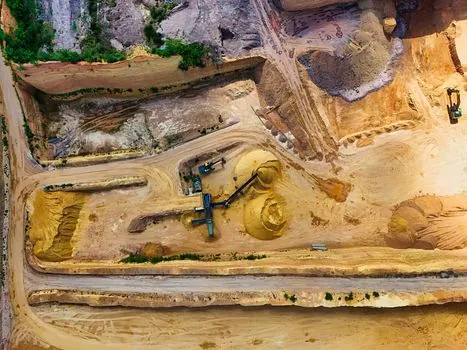
Blade choice matters more than net engine horsepower in a yard: a straight (S) blade gives the best finish grade on lane levelling but the poorest rolling capacity; a universal (U) blade rolls the most material but leaves a wavy finish that RTG paths will mirror; a semi-universal (SU) splits the difference and is the default port spec; a power-angle-tilt (PAT) blade adds hydraulic angling and tilt and is preferred where the dozer works against retaining walls or hopper faces [S2].
Comparison across the four common blades on the criteria a port engineer actually scores: S blade on finish quality high, on material rolling low, on wall clearancing low, on cost lowest; U blade on finish low, rolling high, wall low, cost medium; SU blade on finish medium, rolling medium-high, wall low-medium, cost medium; PAT blade on finish medium-high, rolling medium, wall high, cost highest because of the extra hydraulic valves and lines [S2]. Most terminals standardise on SU with a small PAT share dedicated to hopper and quay-edge work.
Undercarriage, ground pressure, and service life
Terminal concrete is abrasive and pulls pins and bushings out of the undercarriage two to three times faster than the dirt work the OEM life-cycle curve assumes; a sealed-and-lubricated track with bushings rated for abrasive surfaces is the minimum spec for any dozer that spends more than 30% of its hours on paved yard [S1].
Ground-bearing pressure matters most near the quay where reclaimed fill sits over dredged seabed: a 40 t D8T-class machine with a standard shoe sits around 55-65 kPa, while a 70 t D375A with wide shoes drops into the 45-55 kPa band, and a D11 with extra-wide shoes can stay under 60 kPa even at 108 t; pushing that down further means track shoes, not bigger links, are the lever [S1].
Engines, drivetrains, and telematics
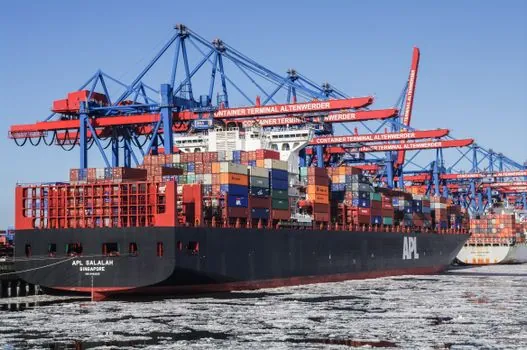
Lockup torque converters, automatic gear shifting, and fingertip low-effort controls are the drivetrain features that show up on 70 t and up production dozers, and they directly cut fuel burn in shuttle work [S2]. Telematics is no longer a premium: 24/7 monitoring is standard on most rental fleets, so a terminal should treat remote fluid-level, geo-fence, and idle-hour reporting as a minimum bid requirement rather than an option [S2].
For automated or semi-automated terminals, dozer machines that expose blade position over the same data bus as the RTG/RMG fleet, typically CAN J1939 plus an ISO 21815 geometry message, are easier to integrate with the terminal operating system; specifiers should ask for the data dictionary rather than trust a marketing slide.
Selection flow for a port engineer
Step one: lock the duty mix (percentage of slot prep, lane grading, stockpile, hopper work) and the shift hours; step two: convert the dominant duty into a minimum operating weight and a blade type using the table above; step three: set ground-pressure and undercarriage spec from the weakest soil layer the dozer will see, not the average; step four: require lockup torque converter, auto-shift, and telematics as entry-level features; step five: pilot one machine on the real yard for at least 200 hours before committing a multi-unit order [S1][S2].
The Wiegmans et al. (2008) study reminds buyers that selection is not a single decision but a layered one: container operators score ports on hinterland reach, tariffs, and consumer proximity, but they score terminals on handling speed, handling cost, reliability, and hinterland connections [S3]. The dozer spec lives in the reliability and speed columns, and a one-size-fits-all purchase is explicitly called out as the wrong move in that research [S3].
Limits, failure modes, and what to avoid
Common failure modes in port dozer fleets are: track pin/bushing wear from concrete, hydraulic cylinder contamination from salt air, ripper mount fatigue from being used as a land anchor, and blade cracking from pushing riprap at an angle; the cheapest mitigation is a strict SOP that bans the dozer from ripper work on consolidated fill and from angled pushing on graded lanes [S1].
Right-sized equipment spreads the load across the fleet, and the same logic that keeps a wheel loader from being over-spec on a road job keeps a D11 from idling on a feeder terminal: pick the class the duty cycle can actually load, then invest the difference in undercarriage spec and telematics rather than in a bigger engine.
Watch the next two signals to refine this spec: OEM updates to ISO 21815 geometry data on mid-size dozers, which will let smaller machines feed the same TOS data stream as the larger fleet, and any port-specific 2026 tender documentation that publishes a minimum undercarriage spec instead of a minimum operating weight. Both will narrow the gap between what the OEM catalogue says and what a terminal yard actually needs.
Detailed specification references: bulldozer, terminal block, and construction machinery and equipment.