
A smart valve positioner is a microprocessor-based current-to-pneumatic (I/P) controller that converts a 4-20 mA or digital command signal into a regulated air pressure driving a pneumatic actuator, while reading the stem position back for closed-loop control [S1]. The on-board firmware enables auto-calibration, two-way HART or Foundation Fieldbus communication, and continuous valve-health diagnostics that an analog I/P cannot deliver [S1]. Sizing and selection therefore split into two technical tasks: sizing the control valve itself (Cv/Kv calculation against the process line), then matching a positioner to the resulting actuator stroke, supply pressure, and signal protocol.
Specifying the wrong combination — oversize Cv, undersize pneumatic relay, or a non-certifying electronics module — is the most common cause of poor loop control and unrequired field swaps on new builds, so the gate criteria below are written in the order an engineer should apply them on the datasheet.
Selection Gate 1: Match Positioner to Actuator Type and Stroke
Linear pneumatic actuators with 8-100 mm strokes, rotary rack-and-pinion actuators with 0-90° travel, and scotch-yoke quarter-turn actuators each require a different positioner mounting kit and feedback linkage geometry; specifying a positioner without confirming the NAMUR/VDI/VDE 3845 mounting interface is the leading cause of late engineering changes [S1]. For sliding-stem (globe) valves, a linear potentiometric or non-contact magnetostrictive feedback is standard, while rotary valves need a rotary feedback shaft matched to the actuator's ISO 5211 pad. Stroke range must be set in firmware during commissioning; most modern units accept any stroke from 5 mm to 100 mm without a hardware change, but the positioner's resolution (typically 0.1% of span) must exceed the valve's inherent deadband.
Actuator bench-set range also dictates pneumatic output. A single-acting spring-return actuator with a 1.4-6.0 bar supply needs a positioner rated for at least that supply; double-acting actuators need a positioner with twin pressure outputs (1.4-6.0 bar to each chamber) and are commonly deployed on butterfly and ball valves above DN100 [S2]. When the actuator is already sized for the service — which is the prerequisite before any smart valve positioner selection — the positioner's flow capacity (Cv of the I/P relay, typically 0.5-1.0) should exceed the actuator's air consumption by a factor of 1.5-2.0 to keep response time under 1 second for a 100 mm stroke.
Selection Gate 2: Hazardous-Area Certification and Enclosure
Process plants in oil-and-gas, chemical, and offshore service must match the positioner's certification marking to the zone of installation: Ex d (flameproof) or Ex ia (intrinsically safe) for Zone 1/Class I Div 1, with IECEx or ATEX 2014/34/EU marking on the nameplate, and an ambient rating that covers the actual site envelope (commonly -40 to +85 °C for outdoor hydrocarbon service) [S1]. A HART-only positioner draws 4 mA, while Foundation Fieldbus / PROFIBUS PA units draw 16-20 mA of bus current, and the entity parameters (Ui, Ii, Pi, Ci, Li) on the Ex ia certificate must reconcile with the safety barrier or FISCO power supply on the segment. Specifying Ex d when Ex ia would suffice costs roughly 2-3x in housing and conduit; specifying Ex ia in a Zone 1 area without a proper barrier is a re-design.
Enclosure ingress (IP66 or NEMA 4X minimum for washdown, IP67 for submergence) and corrosion resistance (copper-free aluminum or 316 stainless on offshore) are separate decisions and should be written as a separate line item from the certification code. A common engineering fault is treating "IP66" and "NEMA 4X" as fully equivalent across all vendors — the test durations and jet pressures differ, and on a salt-spray deck the stainless option is the only reliable choice over a 5-year interval.
Selection Gate 3: Communication Protocol — HART vs Foundation Fieldbus vs PROFIBUS PA

HART remains the default on retrofit and brownfield loops: it overlays a 1200 bps FSK signal on the 4-20 mA loop and works with any existing 4-wire DCS analog input card, which is why most positioners shipped today still carry HART 7 as a baseline [S1]. Foundation Fieldbus (FF) HSE/PROFIBUS PA are fully digital protocols and require a segment card, a power conditioner, and a device-capability file (DD/CFF); they enable richer diagnostic variables (friction trend, stroke histogram, partial-stroke-test counters) but tie the positioner to a specific DCS family. For greenfield plants with a single-vendor DCS, FF or PA is technically superior; for mixed-vendor or hybrid plants, HART wins on interchangeability.
The protocol choice also drives cable selection — the instrumentation cable selection guide decision for a FF segment (Type A, 18 AWG, shielded twisted pair, 1900 m max trunk length) is materially different from a 4-20 mA loop (2-conductor shielded, 1000 m typical). Conflating them at the cable-spec stage is a routine procurement fault. WirelessHART positioners exist for inaccessible locations and run on 2.4 GHz DSSS with AES-128; battery life is typically 5-10 years at a 4-second update rate, but diagnostic richness is lower than wired HART 7.
Selection Gate 4: Diagnostics, Partial-Stroke Testing, and SIL
The real value of a smart positioner over an analog I/P is the on-board diagnostic data: travel accumulation, cycle count, friction trend, seat load, and pneumatic signature (the pressure-vs-travel curve) [S1]. Partial-stroke testing (PST) is a built-in feature in most current units and supports SIL 2/SIL 3 final-element loops per IEC 61511 by exercising the valve without driving it to full open/close, which is mandatory for ESD and HIPPS valves.
Valve-health indices (Fisher FIELDVUE DVC6200, Samson 3725, Siemens SIPART PS2, Azbil AVP100/300, and the domestic Utmost series) all expose the same basic variables; the differentiator is firmware support for the diagnostic host (Emerson AMS, Siemens PDM, ABB 800xA, Honeywell FDM) [S1][S3]. A common shortlist criterion is to require an EDD or DTM that the plant's existing maintenance host can load without a vendor-specific add-on — this avoids the 6-12 month lock-in that a single-vendor diagnostic stack creates.
Sizing Math: Cv, Kv, and the Positioner's Air-Delivery Budget

Valve Cv sizing (Kv in metric, where Kv ≈ 0.865 × Cv) follows IEC 60534-2-1 for liquids, IEC 60534-2-3 for gas/vapor, and IEC 60534-2-4 for two-phase; an undersized valve runs near the seat and loses rangeability, an oversized valve runs near 10-20% travel and loses control resolution [S1]. Once the valve is sized, the positioner's air delivery must charge the actuator volume fast enough to meet loop dead time: a typical 100 mm-stroke spring-return diaphragm actuator has 0.5-2.0 L of chamber volume, and a positioner with 4.0 Nm3/h air delivery at 6 bar supply will stroke it in under 1 second — a workable target for most throttling loops. If a fast loop (dead time under 0.5 s) is in scope, specify a higher-capacity relay (8-10 Nm3/h) or a booster, and re-verify the pneumatic time constant against the loop's natural period.
Use dedicated control-valve sizing software rather than manufacturer-only calculators: independent programs (for example, Millstream's suite for valve OEMs) implement the full IEC 60534 family and avoid the optimistic Cv figures that some vendor catalogs show for their low-resistance trims [S4]. On a 4-20 mA-only retrofit, the valve positioner must still be spec'd against the same stroke, supply, and certification gates — being "smart" does not exempt the unit from the actuator match.
Comparison: 4 Positioner Variants Against Buyer Criteria
Buyers typically choose among four variants: (1) HART 4-20 mA retrofit module for an existing analog I/P, (2) integrated HART 7+ pneumatic module with auto-calibration, (3) Foundation Fieldbus / PROFIBUS PA digital module for new greenfield DCS, and (4) WirelessHART 2.4 GHz module for remote or unpowered sites. On cost, the HART retrofit module is the cheapest; on diagnostic depth, the FF/PA digital module wins; on installation cost per point, WirelessHART is lowest where cable tray is expensive; on hazardous-area flexibility, the wired HART 7+ and FF/PA modules cover the widest certification matrix. A plant running a homogeneous Emerson DeltaV build should pick FF with DVC6200-class diagnostics; a brownfield plant with mixed DCS hardware should stay on HART 7 to preserve interchangeability and avoid segment-card overhauls [S1][S2].
Do not pick a FF module for a 4-20 mA-only DCS — the positioner will not power up, and the only fix is a new DCS card. Do not pick a WirelessHART module for a SIL 3 ESD final element unless the host safety assessment explicitly accepts wireless in that safety function; the convention is still wired PST for SIL 2+ shut-down valves. A domestic 4-20 mA + HART module (Utmost or equivalent) is a defensible pick for non-SIL HVAC and water loops where 1-2% setpoint accuracy is adequate, and unit pricing in 2024 quotation data starts near US$100 FOB Qingdao for a 1-piece MOQ [S3].
Adjacent Equipment and Shortlist Logic
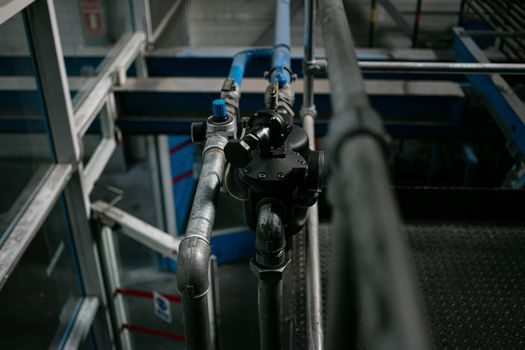
Positioner selection rarely lives in isolation; the mechanical kit (mounting bracket, linkage, feedback shaft) and the limit-switch / position-feedback box should be specified in the same RFQ so the bracket geometry lines up with the valve limit switch box on rotary actuators. For pneumatic accessories, the air-set (filter-regulator) upstream of the positioner must drop dew point below -40 °C for outdoor service, and the supply tubing should be 6 mm or 10 mm stainless rather than nylon to avoid diffusion losses on long runs. If the plant is rebuilding in 2026 with a digital-first mandate, the power meter selection criteria document and the FF positioner shortlist should reference the same diagnostic host so the EDD/DTM library is shared, reducing commissioning time. [S2]
Trackable next signals: the IEC 60534-2-1 maintenance cycle, which typically refreshes on a 7-10 year interval, and the 2026 release notes from the major diagnostic-host vendors (Emerson AMS, Siemens PDM) on new EDD support for the Utmost and Navarch domestic lines. Confirm the FMEDA report version for any SIL 2+ positioner before purchase, as the failure-rate assumptions are version-specific and an outdated report will fail the plant's functional-safety audit.
Spec-level background on the components involved: linear guide.