Direct lithium extraction (DLE) cuts brine-to-product cycle time from the 12-24 month window of solar evaporation ponds down to hours or days, while pushing lithium recovery into the 70-90%+ band versus the 40-60% typical of conventional pond operations [S3][S5].
As of April 2026, both EnergyX and Lithios project commercial lithium output within a two-year horizon, anchored on the Arkansas Smackover Formation and adjacent U.S. brine plays, with multiple binding offtake agreements already signed across the DLE startup cohort [S5]. The 2026 calendar itself now carries four major DLE gatherings: DLES Slough (March 25-26), Direct Lithium Extraction 2026 Houston (July 20-21), the IDTechEx 2026-2036 forecast program, and the 4th Annual DLE USA conference in Anaheim (December 2-3) [S2][S7][S9][S4].
Why the 12-24 Month Benchmark Is the Anchor
Solar evaporation, still the dominant brine route in the Lithium Triangle, requires 12-24 months from raw brine to a saleable lithium product and only recovers 40-60% of available lithium because of pond losses and brine composition drift [S3]. DLE substitutes a selective chemical or electrochemical capture step, which lifts recovery above 80% in well-tuned adsorption systems and removes the climate and land-form constraints that lock evaporation to a narrow set of arid sites [S3].
The practical consequence for project planners is a step-change in working capital: a 24-month pond cycle ties up reagent inventory, land lease, and pond capex for two full production seasons before first saleable tonne, whereas a DLE plant can ship lithium carbonate or lithium hydroxide within weeks of first lithium-bearing brine feed, given that the selective capture-release step itself runs in hours [S3][S5]. For any new project whose FID depends on first-revenue timing relative to debt service, the comparison [solar pond vs DLE] on the four levers of recovery, cycle time, water intensity, and land use now reads as a near-tie on land use, a clear DLE win on time and water, and a recovery edge that depends on the chosen DLE sub-technology [S3].
Six DLE Sub-Technologies and the Timeline Each Sets
Six DLE technology families sit at different maturity points, and each one sets its own realistic path from pilot to commercial lithium output: adsorption (aluminium-based sorbents, the most mature), ion exchange (ceramic beads, with Lilac Solutions claiming 4,000+ cycle durability on its beads), solvent extraction, membrane separation, electrodialysis (ElectraLith's one-step route to battery grade), and pure electrochemical capture (Lithios's reagent-free route, demonstrated for 1,000+ continuous hours at its Massachusetts pilot) [S3][S5].
Adsorption DLE is the only family with multi-year commercial demonstration plant track record, which lets Standard Lithium point to 5+ years of demonstration plant operation on ion exchange as de-risking evidence for its $225 million U.S. Department of Energy grant pathway [S5]. Electrochemical routes compress pilot-to-design data cycles because they behave like battery stacks, which shortens the iteration loop between coupon test, single-cell, and stack-scale data; Lithios leverages that loop to chase brines as low as 10 ppm Li, a feedstock band that adsorption and ion exchange systems typically bypass on economics [S5]. For a project team picking a DLE vendor, the decision matrix is roughly: adsorption for known-composition brines above ~100 ppm Li, ion exchange for the same band where bead cycle life matters, and electrochemical for low-grade or stranded brines where reagent logistics dominate operating cost [S3][S5].
U.S. Smackover Timeline: 2026-2028 as the Commercial Window
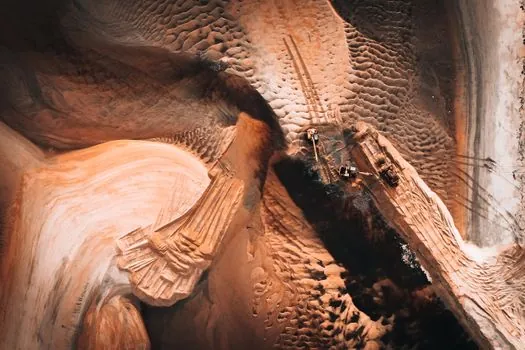
The Arkansas Smackover Formation has consolidated into the U.S. lithium centre of gravity: Standard Lithium holds a $225 million DOE grant, Lithios was selected for the Arkansas Lithium Technology Accelerator in December 2025, and EnergyX, Lithios, and Standard Lithium are explicitly named as racing for first commercial production from the play [S5]. The two-year commercial-production projection from both EnergyX and Lithios, as stated in April 2026, lines up with a 2027-2028 first-lithium window for the play [S5].
Funding depth at the U.S. DLE leaders now reads: EnergyX $450M+, Standard Lithium $355M+, Lilac Solutions $315M (with Breakthrough Energy Ventures in the cap table), Controlled Thermal Resources $285M+, E3 Lithium $37.5M+, ElectraLith $18M, and Lithios $15M, a capital stack that, taken together, is sized to underwrite first-of-kind commercial plants without forcing immediate offtake dilution [S5]. The U.S. Department of Energy's broader funding push, of which Standard Lithium's grant is one piece, is the explicit policy lever meant to break Chinese control over lithium refining and to localise the battery supply chain inside North America [S5].
International Calendar: Three 2026 Flagship Events Set the Project Cadence
Three flagship gatherings in 2026 act as project-cadalence checkpoints for DLE engineering and finance teams: the Direct Lithium Extraction Summit (DLES 2026) in Slough, UK on March 25-26, Direct Lithium Extraction 2026 in Houston, Texas on July 20-21, and the 4th Annual Direct Lithium Extraction USA in Anaheim, California on December 2-3 [S9][S7][S4].
The Houston program shows the technology menu engineers are actually planning against: modular technology delivery for Rio Tinto's Hombre Muerto MdA expansion, material selection for DLE piping systems and tanks, scaling lithium recovery, and a moderated panel titled "From Pilot to Profit" focused on what is actually working in scaling DLE projects [S2]. The Anaheim agenda, in its fourth year, leans into oil-and-gas, e-mobility, and geothermal sector crossover, and is expected to draw on the same Rio Tinto, Standard Lithium, and geothermal-Lithium Triangle project data that has defined the past 18 months of DLE project finance [S4]. For procurement teams, diesel generator lead times for off-grid DLE sites are now part of the same project-execution stack as DLE skid delivery, and both are tracked against the same first-lithium date.
Standards, Sourcing, and the Process-Equipment Stack Around DLE
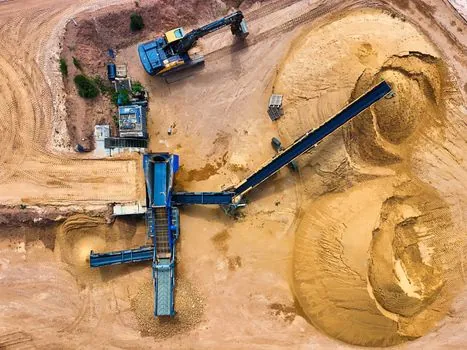
DLE is a continuous chemical process, not a mining flow sheet, which is why the equipment stack around it reads like a chemical plant: pressure transmitters on every brine feed and eluate line, flow meters on the sorbent regeneration loop, industrial valves for clean-in-place isolation on the adsorption columns, pressure sensors on the membrane and electrodialysis skids, PLC racks sequencing the capture-strip-regenerate cycle, and servo motors on the modular sorbent-handling modules that the Houston program explicitly calls out for Rio Tinto's Hombre Muerto expansion [S2].
Two engineering realities tighten the project schedule: DLE brine composition varies well-to-well, so each site needs its own sorbent or membrane performance curve before a commercial design is frozen, and selective-lithium processes are sensitive to calcium, magnesium, and boron ratios, which forces pretreatment scope into the front end of every plant [S3]. Resources for the Future's October 2025 scoping report, updated May 2026, frames DLE as a technology whose U.S. viability still hinges on brine composition, offtake pricing, and federal policy, not on the chemistry itself, which is a useful boundary condition for any project team pricing a 2027 first-lithium date [S1].
Trackable Signals for the Next Six Months
Three signals are worth watching through Q1 2027: (1) first commercial-lithium shipment from a Smackover-Formation DLE plant, with EnergyX and Lithios both publicly committed to a within-two-year horizon as of April 2026; (2) binding offtake announcements tied to the Rio Tinto Hombre Muerto MdA expansion, since modular technology delivery is already a named Houston 2026 session topic; (3) the IDTechEx 2026-2036 forecast refresh, which currently sizes the lithium market at US$52 billion by 2036 and projects the U.S. as a leading DLE market by the same year [S3][S5][S2].
This topic is covered further in 2 MW and 3 MW Diesel Generator Lead Times in 2026: Factory Quotas, Commissioning.