
Distribution-automation hardware is in a tight supply window as of October 2026, with reclosers and sectionalizers facing extended lead times driven by grid-modernization programs, renewable interconnection queues, and upstream electronics shortages [S6].
Coordinated recloser-plus-sectionalizer schemes are still the workhorse of semi-intelligent distribution automation, capable of isolating more than 95% of fault sections without a SCADA backhaul when properly graded [S2]. Procurement teams are now weighing that proven architecture against longer delivery dates for newer solid-state and three-phase pad-mount units [S1][S6].
What the Shortage Actually Covers
The current supply pinch is concentrated in three equipment buckets: pole-top oil-less and solid-dielectric reclosers, the sectionalizer controls that ride downstream of them, and the motor-operated line switches that utilities pair with FLISR schemes in modern ADMS deployments [S1][S4].
Reclosers in distribution service are intelligent switchgear that detect fault current, trip on a preset sequence, and reclose up to four times before lockout, mixing instantaneous and time-delayed elements to clear transients while coordinating with downstream devices [S4]. Sectionalizers do not interrupt fault current; they count upstream recloser operations and open during a dead-time window, isolating their section without ever breaking short-circuit current [S4][S5].
How the Coordination Logic Works
The traditional recloser-and-sectionalizer scheme relies on two interlocking logics: a current-time recloser that reflects trip and reclose after sensing fault current, and an overcurrent-pulse-counting sectionalizer that memorizes the upstream breaker's trip count and opens after a preset number of counts when current goes to zero [S2].
Voltage-time variants work differently: a voltage-time recloser opens on loss-of-line-voltage and recloses after a delay once voltage returns, while a voltage-time sectionalizer uses loss and restoration of voltage as its trigger and cannot itself break short-circuit current [S2]. On a typical 10.5 kV radiation feeder with substation short-circuit current around 1400 A and an SJ of 100 MVA, the maximum and minimum short-circuit values at each point along the line are used to grade the upstream recloser curve against the sectionalizer count-to-open, with the count set one less than the recloser's trips-to-lockout (typically three counts against a four-shot recloser) [S2][S4].
Options Lined Up Against Selection Criteria

Three practical architectures dominate DA hardware specification right now, each with a different trade between lead time, functionality, and fault-clearing reach. Engineers evaluating the market should compare them on criteria they can actually verify with a vendor: delivery window, fault-current interruption capability, and SCADA dependence. [S4]
Coordinated recloser + sectionalizer: lowest SCADA dependency, can isolate more than 95% of faults in a radiation network using local logic only, but the recloser carries the full short-circuit break duty and must be graded carefully against source-side protection [S2].
Recloser with motor-operated switch: gives a utility a wider reach for FLISR-style reconfiguration because the motor-operated switch can be commanded open or closed from the ADMS, but it needs a working communications link and a backup logic scheme to operate when that link drops [S1][S5].
Three-shot or four-shot recloser alone: simplest single-device architecture for radial feeders with limited branching, fastest to install, but offers no built-in sectionalizing beyond the recloser's own lockout, so downstream permanent faults still drop the full run of customers until a crew arrives [S1][S4].
Setting Counts and Timing for Available Hardware
Recloser programming commonly follows a two-fast-then-delayed pattern, with two instantaneous trips carrying short dead times and one or two delayed operations carrying longer dead times to coordinate with downstream fuses and sectionalizers, before the unit falls to lockout on a likely permanent fault [S4]. Dead times are independently programmable per shot, and a reclaim time resets the sequence after a successful close.
Sectionalizer settings must use count restraint, voltage restraint, and inrush restraint to suppress false counts during load swings or transformer energization, since the device is purely a counter and will open whenever the upstream breaker has interrupted current the configured number of times [S4]. Where a four-shot recloser is specified, the downstream sectionalizer is typically dialed to three counts so it opens during the third dead time if the fault lies on its load side [S4].
Failure Modes and Operating Limits
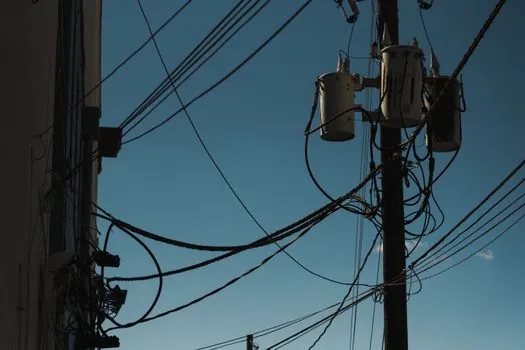
The classic failure mode for a mis-coordinated recloser-sectionalizer pair is sympathetic sectionalizing: a downstream device counts operations triggered by an upstream fault and opens its healthy section, expanding the outage footprint. Inrush restraint on the sectionalizer and dead-time staggering on the recloser are the two main mitigations [S4][S5].
Wide-area DA schemes introduce their own failure path: loss of the communications link between distribution automation controllers (DACs) and the SCADA front-end can leave a feeder with no automatic reconfiguration. The accepted fix is local backup logic that mimics the wide-area scheme using only the controller-resident intelligence, so a single radio outage does not take out the FLISR function for an entire substation [S5].
Standards and Sourcing Anchors
Distribution automation hardware sits inside a multi-standard stack: protective device behavior follows IEEE C37-series and IEC 62271 conventions for switchgear, while reliability reporting still keys off the IEEE 1366 family that defines SAIDI, SAIFI, CAIDI, and Customer Minutes of Interruption as the four headline metrics a DA scheme is expected to improve [S3]. ANSI-defined voltage limits remain the operating envelope for any volt/VAR optimization riding on top of the recloser network [S3].
Procurement teams should expect the squeeze to last through the rest of 2026 and into 2027, based on the published market outlook, and should hold a safety stock of three-shot recloser controls and replacement sectionalizer coils while negotiating longer-term framework agreements with at least two qualifying vendors [S6]. A more detailed material-side signal worth tracking alongside this is the October 2026 stainless-steel procurement read across consumer and industrial SKUs, which affects substation hardware enclosures and pole-mount hardware kits.
Component reference pages worth checking: electrical automation, architectural hardware, and building pipe hardware.
Related analysis: 316L vs 317L Stainless: Chloride Pitting Resistance and Spec Trade-offs.