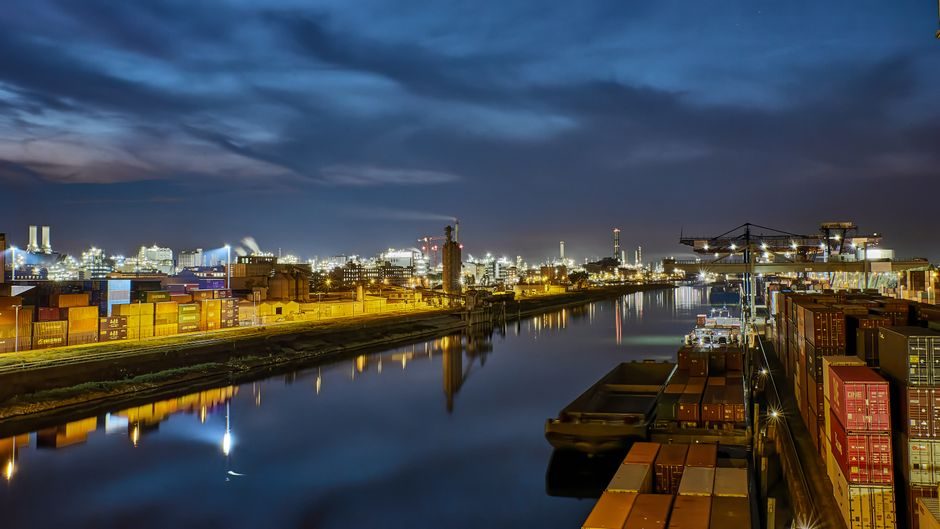
Industrial valve procurement in mid-2026 is structurally a three-tier market — first-tier OEM foundries (predominantly China, Germany, Italy, Japan, US), independent ISO 9001:2015-certified distributors and project packagers, and end-user MRO/specification desks — and lead-time risk is concentrated in alloy bodies, exotic trim and third-party fire-safe/API 6D witness assemblies rather than in commodity bronze or cast-iron line valves [S4].
Daily-trade specials (1-piece exotic alloys, obsolete ANSI class ratings, DIN spares) sit with independents such as the Netherlands-based IVS, whose scope is the ANSI and DIN market, classes 150 through 2500 and beyond, with full valve packages assembled per project specification [S4]. For comparison, multistage centrifugal pump price 2026 shows the same OEM cluster + distributor pattern on rotating equipment, which is the most useful analogue for valve procurement strategy.
Supplier-Tier Map: Foundry, Brand, Distributor, Project Packager
Foundry-direct sourcing is reserved for buyers committing to foundry-run quantities, typically a 6-12 week casting window plus a separate machine, assembly and test cycle; on small lots the lead-time advantage disappears once the distributor's ready-stock is loaded into the equation [S4]. Independent distributors operate against published stock lists in ANSI 150-2500 and DIN PN10-PN100, with material codes covering WCB, LCC, CF8/CF8M, duplex, super-duplex, alloy 625 and alloy 825 bodies, matched by trim ranges from 13Cr through Stellite 6 hard-facing [S4].
Brand-OEM authorised channels dominate the certified-fire-safe, low-emission fugitive-emission and cryogenic segments because the spec sheet must carry the OEM's name and serial traceability for the plant's mechanical integrity files. The project packager layer is where the engineering, procurement and construction (EPC) contractor's requisition lands: a single PO covering ball, gate, globe, check, butterfly and control valves across multiple pressure classes and materials, kitted, tagged and shipped against the valve schedule [S4].
Material and Pressure-Class Decision Matrix
Selection begins with three written-down parameters: fluid chemistry, design pressure × design temperature, and the applicable piping code (ASME B16.34 for the valve itself, ASME B31.3 for process piping, ASME B16.5/B16.47 for flange compatibility). The independent distributor's catalogue is the practical proxy for the metallurgical choice that follows — carbon steel (WCB/A216) for non-corrosive service, low-temperature carbon (LCC/A352) for -46 °C and below, austenitic stainless (CF8/CF8M) for general corrosion, duplex/super-duplex for chloride-bearing and seawater service, and nickel alloys (Alloy 625/825, Monel, Hastelloy) for sour, acid and high-temperature oxidising service [S4].
Pressure-class selection is anchored to ANSI ratings 150, 300, 600, 900, 1500 and 2500, with the corresponding DIN PN10-PN100 and PN160 ratings used on European-spec projects; class 1500 and 2500 are the bandwidth where forged-body gate and globe valves start to replace cast bodies and where forging lead-time (not casting lead-time) becomes the schedule risk [S4]. For end-of-arm valve automation, the actuator sizing and chain conveyor drive decisions in adjacent skids follow similar forging-vs-casting trade-offs, so project packagers routinely place forged and cast orders in parallel to compress critical-path weeks.
Lead-Time Risk Bands by Valve Family
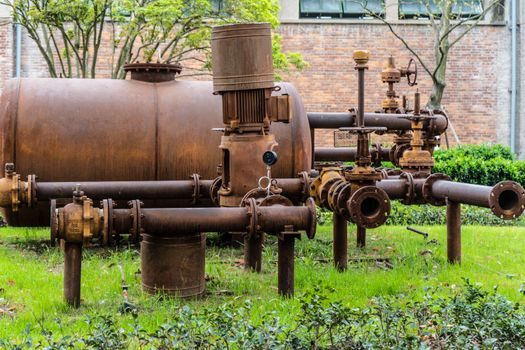
Commodity bronze and cast-iron gate/globe/ball/check valves in class 125-300 ship from European and Chinese distributor stock in days, with a published stocking catalogue covering sizes DN15-DN300 (1/2"-12") — this is the daily-trade layer of the supply chain [S4]. Cast steel and stainless valves in class 150-600 are typically available in 4-8 weeks ex-stock for common sizes and materials, rising to 10-14 weeks for larger diameters DN450+ and for the duplex/super-duplex grades where foundry heat certification is required.
High-class forged gate and globe valves (class 900-2500) and cryogenic extension bonnets are the first band where buyers hit 16-24 week lead times, with extended bonnet, extended stem and low-emission packing upgrades adding 4-8 weeks on top of the forging window. The longest tail sits with third-party witnessed assemblies — fire-safe API 607/API 6FA, low-emission ISO 15848-1, NACE MR0175 sour-service, and double-block-and-bleed API 6D configurations — where the test schedule is a serial dependency on body, trim and witness- inspector availability [S4]. The packaging-and-shipping window for a 30-valve project skid is itself a 3-6 week tail that project planners routinely underestimate.
Special-Service Segments Where the Sourcing Model Breaks
Cryogenic valves (LNG, LOX, LIN, LAr) are effectively a closed market dominated by three or four OEM brands, with body and seat-leak testing on liquid nitrogen mandatory before release; the independent distributor can stock the small-bore cryogenic ball and check valves, but anything DN150 and above in extended-bonnet cryogenic configuration is factory-order only [S4]. Control valves with smart positioners, partial-stroke test devices and certified SIL capability (IEC 61508 SIL 2/3) sit with the major process-control OEMs and are quoted on a per-tag basis with 12-20 week lead times for the pneumatic or electric actuator sub-assembly.
Actuated valve packages for oil-and-gas and petrochemical skids are now the largest single project cost line in many valve schedules because the pneumatic or electric actuator, solenoid, limit switch and bus-communication gateway (typically a switching power supply and 24 Vdc instrumentation loop) are sourced separately from the valve body and assembled by the packager. Power and signal architecture on these skids is dominated by 24 Vdc loops fed from a dc power supply in the local panel, so the valve supplier's instrumentation quote must be matched against the panel builder's I/O list before the PO is cut.
Selection Criteria: When to Use a Distributor vs a Brand OEM
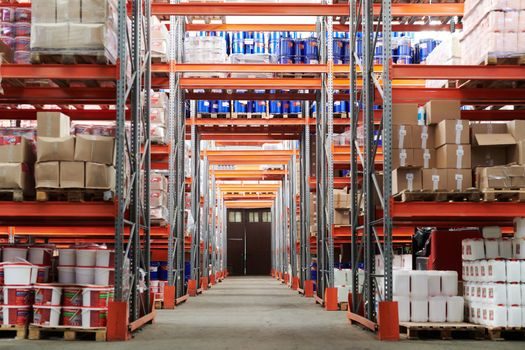
Use a stocking distributor when the spec is fully defined (size, class, material, end connection, operator), the qty is 1-50 pieces, and the schedule is days to 8 weeks; the independents' published-stock discipline keeps the unit price within a tight band because the carrying cost is on the distributor, not the buyer [S4]. Use a brand OEM direct when the spec demands: (a) nameplate traceability into the plant's mechanical-integrity register, (b) certified fire-safe or low-emission testing, (c) NACE MR0175 sour-service compliance with material certificates, or (d) cryogenic / high-pressure class 1500+ service where foundry certification is non-negotiable.
Use a project packager when the valve schedule covers 50+ tags across multiple pressure classes, materials and actuated/ manual mix, and the EPC contractor wants one PO, one shipping schedule and one set of documentation packages (material certificates, pressure-test reports, NDE reports, FAT records) for the whole valve lot [S4]. Project packagers are also the practical route for "specials" — hard-to-find, obsolete or non-standard designs — which the independents explicitly target as a business segment and which the brand-OEM channel will rarely entertain below project-qty thresholds.
Documentation, Compliance and Sourcing Risk Levers
Every valve shipped against a process-plant PO must travel with an EN 10204 3.1 material certificate, a hydrostatic test report to API 598 or ISO 5208, and where specified, an NDE report (radiographic, magnetic-particle, ultrasonic, or liquid-penetrant examination) referencing the acceptance criterion in ASME B16.34 [S4]. Sour-service NACE MR0175 / ISO 15156 compliance requires controlled hardness on wetted parts, traceable heat chemistry, and a written statement of conformity that the OEM or distributor issues against each serial number.
Sourcing risk levers in mid-2026, in order of practical impact: (1) place forging-window orders 24 weeks before need-by-date for class 900+; (2) split the schedule between one foundry-direct line and one stocking distributor to hedge stock-out risk; (3) lock the test-witness and NDE subcontractor slot at the same time as the body PO, not after; (4) require FAT photos and pressure-test certificates with the shipping notice, not as a back-office deliverable. The same risk-band logic applies to adjacent equipment categories — see the industrial pump supply chain 2026 reference for the rotating-equipment analogue, and the chain conveyor sizing and selection note for the mechanical-handling track that often shares the same project package.