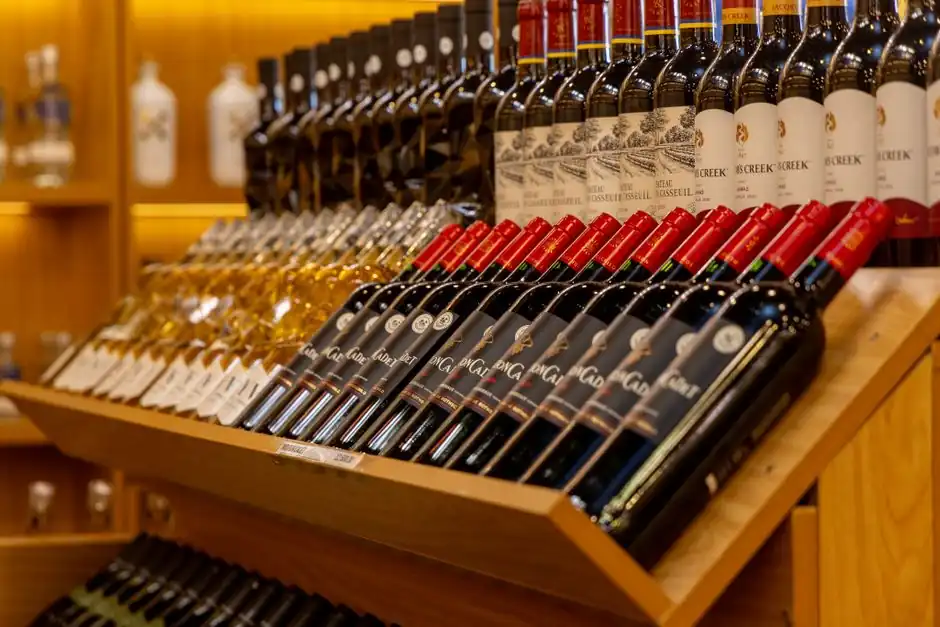
Retail-distribution capping and sealing line decisions turn on four coordinates: daily container volume, closure type, container material, and the level of automation that the SKU mix actually justifies [S2].
Engineered Packaging Systems lists chuck, snap, spindle, and custom capping heads alongside induction, bag-sewing, vacuum, band, impulse, and ultrasonic sealing modules as the building blocks most integrators ship into retail lines [S1]. SUNHAN catalogues separate semi-automatic and automatic capping machines, monoblock rotary fillers, and dedicated sealing modules under one product tree, mirroring how the market splits the buying decision between capping torque control and seal-integrity method [S5].
Volume Tiers and Where Each Class Pays Back
Manual can sealers run 7-10 cans per minute (roughly 400-600 cans/hour) at $100-500 and only make economic sense under 1,000 cans/day, where short runs and proof-of-concept batches dominate [S2]. Semi-automatic sealers climb to 15-30 cans per minute (900-1,800 cans/hour) at $1,800-5,000 and absorb the 1,000-10,000 cans/day band that most regional beverage, condiment, and personal-care packagers sit inside [S2]. Above that, rotary and monoblock automatic lines take over, with capping heads torqued to spec on every cycle, and downstream sealing modules selected by container material rather than by volume alone.
Published buying guidance warns that a machine advertised at 8,000 pcs/hour often sustains only 4,000-5,000 pcs/hour with a real product and container, which is why FAT (factory acceptance test) data over at least 30 minutes of continuous run is treated as a hard requirement, not a nice-to-have [S3].
Capping Head Family vs Closure Type
Chuck capping delivers a consistent, repeatable seal for threaded bottles and jars; snap capping is built for press-on closures where dwell and downward force matter more than torque; spindle capping is the high-speed workhorse for variable container sizes running through distribution [S1]. For trigger sprayers and pump heads, dedicated trigger-pump cappers are designed to place, tighten, and secure the pump on the bottle finish with high placement accuracy, and they are usually specified separately from a standard spindle capper [S5].
Screw caps, lug caps, and sports caps each demand different torque curves and cap-handling choreography; rotary or intermittent capping machines are typically paired with the filler to deliver that consistency across SKUs [S4]. A capping sealing machine selection should be cross-checked against the actual closure sample, not the closure family on a brochure.
Sealing Method vs Container Material
Heat-seal parameters vary sharply between LDPE, HDPE, PP, and multi-layer films, so a sealer that performs on one substrate can produce weak seals or deformation on another [S3]. Induction sealing is the default for tamper-evident retail bottles; bag sewers handle industrial and pharma pouches; vacuum sealing is reserved for shelf-life-critical product; continuous band sealers cover bulk flexible packs; impulse sealers suit short-run bag work; ultrasonic sealers are picked for sensitive or contamination-prone applications [S1].
The container-closure interface also drives whether a sealing washer or induction liner is the right induction target, and whether the cap geometry tolerates the residual heat of an impulse seal.
Integration With Filling and the Distribution Line
A full automatic filling production line typically sequences container cleaning, filling, capping, sealing, labeling, and case packing; capping torque and seal integrity are the two checkpoints that determine whether the line can ship to retail without re-inspection [S4]. Monoblock rotary units combine gear-pump or piston filling with servo-driven capping on a single frame, which reduces footprint and changeover time for cosmetic and personal-care SKUs that ship through the same cable distribution cabinet downstream electrical rooms, where power stability directly affects capper torque repeatability.
For retail distribution, the practical integration question is whether the capper can be synchronized with the line's reject station, since a mis-torqued cap is rarely caught by eye and almost always caught by a downstream leak or torque audit [S3].
Selection Workflow and Sourcing Gate

The eight-step workflow most OEMs recommend is: analyze product viscosity and fill volume, define container and closure spec, match filling technology to product, match sealing method to container material, run a filling trial on the actual container, evaluate sustained speed (not peak speed), audit supplier support and spare-parts lead time, and only then compare total cost of ownership rather than sticker price [S3].
Common failure modes include comparing machines on paper without a filling trial, chasing maximum speed instead of stable speed, selecting a sealing method without material testing, and ignoring after-sales documentation [S3]. A power distribution audit is also worth doing before commissioning, since servo-driven cappers and induction sealers add sharp loads that legacy panelboards were not sized for. Suppliers worth shortlisting will provide reference installs in the same daily-volume band, FAT video of the trial, and a documented spare-parts price list [S3].
Look for suppliers that publish a 30-minute sustained-run data sheet on your container, hold CE or equivalent conformity for retail shipment, and can ship change parts for the next SKU inside a defined lead time; verify whether a distribution cabinet upgrade is bundled into the line quotation. Treat any quote that lacks a filling trial or a torque-versus-closure sample chart as a red flag, and require a documented FAT protocol before the line leaves the shop.