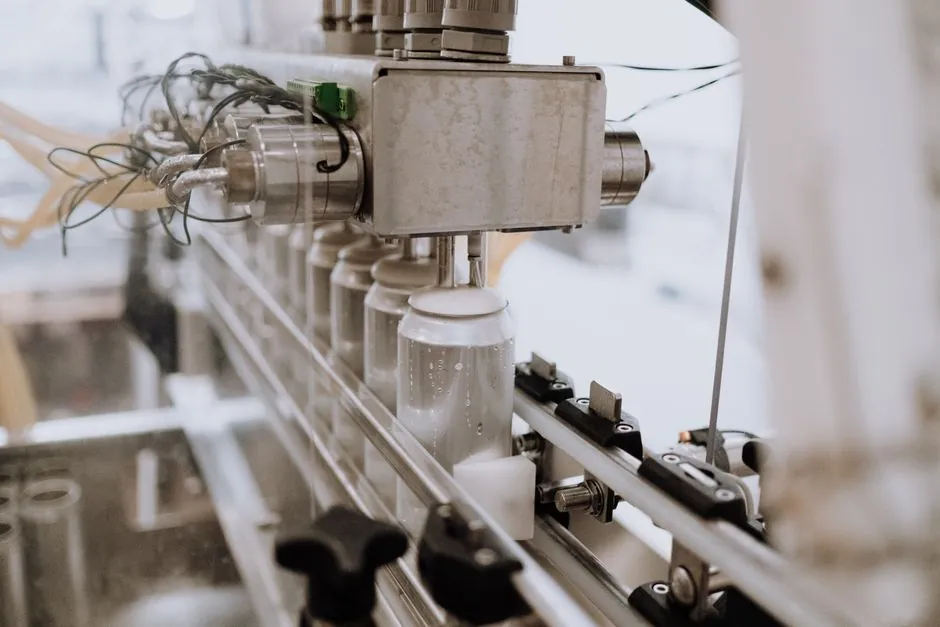
Food and beverage cappers span 20 to 350 containers per minute (cpm), 15 to 120 mm cap diameter, and 0.2 to 15 N·m application torque across entry-level, mid-range, and high-speed models [S1][S2].
For a typical 2026 bottling line build, the specification envelope that procurement actually negotiates is narrower: 60–200 cpm, 20–80 mm cap range, servo-driven spindles with ±1–2% torque repeatability, and 304/316 stainless contact parts [S1][S2][S3]. Reference guidance for capping and sealing machine selection breaks the decision into machine taxonomy, closure type, torque physics, and a final control-platform check.
Capping Principles in Food and Beverage Service
Five principles carry roughly nine-tenths of food and beverage capping installations: spindle (rotary) for screw caps, chuck for pump and trigger sprayers, snap/press-on for dairy and juice, ROPP for wine/spirits tamper-evidence, and induction sealing for hermetic foil liners on top of any of the above; a sixth, vacuum gas-flush, is added when product shelf life needs oxygen displacement under 1% residual O2 [S4][S8]. Spindle cappers apply continuous rotation torque, typically 4–25 in-lb covering most 20–100 mm caps, with servo-driven heads holding ±2% torque repeatability and rejecting under-torqued closures [S8].
Chuck cappers grip the closure externally and apply a defined axial/radial force; they are the standard for pump dispensers, trigger sprayers, and decorated cosmetic caps where surface marring is unacceptable [S2][S3]. Press-on snap cappers are the workhorse for dairy, juice, and water where the closure is a polyethylene snap fit rather than a thread, and where cap-back-off under CO2 pressure is the main risk to seal integrity [S5]. ROPP (roll-on pilfer-proof) forms an aluminum thread on a pre-threaded blank, giving both thread and visible tamper band in one operation, and is the default for wine, spirits, and pharma liquids [S3][S4].
Induction sealing is not a capping principle in the strict sense; it bonds a foil laminate liner to the container rim by eddy-current heating, and depends on the cap above it being torqued correctly so the liner is held against the rim during the heating dwell [S4]. For cup-format products such as yogurt, sauces, and ready-meals, soft-lid heat sealing replaces the screw-cap path entirely and is rated by seal strength across lid film types [S5][S9].
Speed, Throughput, and OEE Fit
Capper speed is a bottleneck check, not a target: the capping station must exceed filler output by 10–20% or it will drag OEE down regardless of its own rated cpm [S2][S5]. Entry-level inline cappers cover 20–40 cpm at 0.5 kW, mid-range servo machines cover 60–120 cpm at 1.2 kW, and high-speed rotary or multi-spindle cappers reach 200–350 cpm at 2.5 kW, with 7 bar / 30 L/min air supply on the top of the range [S1]. The 6-wheel linear screw capper on display at KANUO runs 60–100 bottles per minute, 15–70 mm cap diameter, ±1% torque accuracy, and is built on SUS304/SUS316 [S3].
For carbonated soft drink lines, high-speed cappers are commonly specified at up to 300 bottles per minute, with adjustable torque control critical to preserve carbonation and prevent cap back-off [S1]. The CSI 500-PH pharmaceutical capper reaches up to 420 cpm on flat/screw, snap, child-resistant, flip-top, and continuous-thread closures, with lubrication-free operation suitable for sterile environments [S7]. High-speed carbonated beverage and aseptic beverage lines also tend to be where rotary capping outperforms inline because star-wheel infeed handles the bottle handling more gently at the head [S2][S5].
Sources: [S1][S2][S3][S7].
Closure Type and Container Geometry
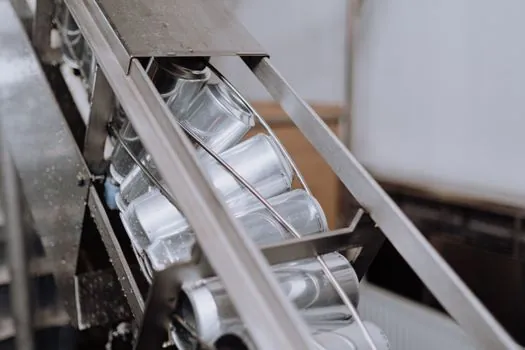
Closure type is the second hard constraint after throughput. Continuous-thread (CT) screw caps in PP or HDPE on PET, the everyday beverage and edible-oil combination, are handled by spindle cappers with torque ranges 0.5–8 N·m at ±0.1 N·m repeatability [S1][S2]. Child-resistant (CR) and continuous-thread pharmaceutical closures require a dedicated head geometry and validation, and the CSI 500-PH is one of the few documented machines that lists CR handling as a standard supported configuration rather than a custom option [S7].
Twist-off lug caps (also called lug or metal lids) on glass jars for sauces, jams, and preserved food are a separate head technology with vacuum-capable variants; they are widely used for hot-fill and retort products where a vacuum pull-down is part of the seal [S10]. Pump dispensers and trigger sprayers in personal care and household chemicals are chuck-capper territory and need 0.5–4 N·m with soft start/stop to avoid cosmetic damage [S1][S2]. Cup-format products (yogurt, sauces, ready meals) drop out of the capping taxonomy and into soft-lid heat sealing, where the spec axes shift to cup diameter, fill volume, and lid film laminate [S5][S9].
For matching the sealing washer and liner stack, the decision branches at this point: induction-bonded foil for dry goods needing tamper evidence, pressure-sensitive foam for liquids with no vacuum claim, and plastisol for hot-fill glass where liner melt is the seal mechanism [S4]. Container height range of 50–350 mm across the model classes means the same capper can usually run a 200 ml sauce bottle and a 1 L oil bottle only with a head-height adjustment and a star-wheel or guide-rail change [S1][S2].
Torque Control, Seal Integrity, and Audit Backing
Application torque is the most cross-cutting spec because it sits between cap design, liner compression, and consumer open-torque. A typical automatic capper holds ±0.1 N·m on a 0.5–8 N·m range with a servo drive, or ±0.2 N·m with a magnetic clutch; high-end rotary cappers reach ±0.05 N·m [S1][S2]. Strip-torque and back-off are checked at line start-up and on statistical intervals, and the audit trail is the PLC/HMI data log of applied torque per bottle, which is why the control platform is itself a selection criterion [S2][S4].
Reference documents in the public source material cite ASTM D3198 (closure torque test method) and USP 1207.3 (container closure integrity, CCI) for the torque and integrity numbers, and EU GMP Annex 1 for sterile-product crimping validation [S4]. For pharmaceutical vial crimping, the source guidance lists Ready-to-Sterilize (RSF) and Container Closure Integrity (CCI) controls as standard, alongside GMP construction and full validation documentation [S4]. Pharmaceutical-grade cappers add CIP (clean-in-place) capability, stainless contact parts, and torque monitoring with documented ±0.1 N·m repeatability, and typically handle child-resistant, press-on, and dropper closures for syrups and vials [S1].
For aggressive industrial chemicals, lubricants, and cleaning products, cappers must accept larger caps (up to 120 mm), use pneumatic or servo-driven systems for consistent sealing force, and offer explosion-proof variants for flammable solvents; typical speeds are 20–60 cpm, well below the food-grade range [S1].
Materials, Hygiene Class, and Build

Food-grade contact parts are 304 stainless as a baseline, 316 stainless for acidic and chloride-exposed products (sauces, dairy, brines), and anodized aluminum only on non-contact frames [S1][S3]. Entry-level cappers weigh around 80 kg at 0.5 kW and 5 bar air, mid-range servo machines around 180 kg at 1.2 kW and 6 bar, high-speed rotary machines around 350 kg at 2.5 kW and 7 bar [S1]. Pharmaceutical builds go further with electropolished 316L contact parts, CIP/SIP capability, lubrication-free drives, and full documentation for EU GMP Annex 1 audits [S4][S7].
Cosmetics and personal care lines add a constraint the spec sheet usually hides: cap scratching. Adjustable grippers, soft-touch chucks, and conveyor guides to accommodate irregularly shaped containers are standard on this segment, with output in the 40–120 pieces per minute band depending on cap complexity [S1]. The same physics shows up in trigger-spray chuck cappers where the cap is held externally and the torque is delivered through the chuck body rather than a rotating spindle [S2][S3].
Control, Changeover, and Integration
The control platform is the part of the capper that ages worst and is hardest to retrofit. Modern cappers run on PLC + touchscreen HMI with real-time torque monitoring, per-bottle data logging, and recipe management for SKU changeover [S2][S4]. Quick-change tooling that gets a changeover below 30 minutes is the spec most multi-SKU plants ask for first, and is a stronger predictor of OEE than the rated cpm number on the nameplate [S2]. The sealing and capping encyclopedia chapter lists the PLC and HMI brand, electrical and ingress ratings, and guarding to the machinery directive as the three control-platform items that determine how the capper integrates and how it is serviced over a ten-year life [S4].
Inline cappers integrate more easily with existing conveyors; rotary cappers need star wheels and a larger footprint but typically run at higher speeds and handle bottle geometry more gently [S2][S5]. For aseptic beverage and dairy, the lamps and light fittings on the capper frame, the guarding, and the washdown rating are part of the spec, not afterthoughts, because the same line often runs both wet and dry products in the same day. For plants that also run cup filling and lid sealing, the construction machinery and equipment framing of a packaging line is less about heavy equipment and more about whether the cup filler, lid sealer, and capper share a common recipe and reject handling system [S4][S9].
Selection Sequence and Decision Gates
A working selection sequence for a 2026 food and beverage build: (1) lock the cap/container combination and the closure principle (screw, snap, ROPP, lug, press-on, soft-lid); (2) set the throughput target with a 20–30% buffer above filler output, per the buyer guidance in the source material [S2]; (3) pick the head class (inline spindle, rotary spindle, chuck, snap, ROPP, or induction only) and the hygiene class (304, 316, electropolished 316L); (4) check the control platform for PLC brand, HMI, torque logging, and recipe count; (5) validate quick-change tooling time, air and power supply, and footprint against the line layout [S1][S2][S4][S8].
Who the standard rotary/inline capper is for: beverage and sauce plants running 60–300 cpm on a single cap SKU with mid-range torque needs and 304/316 stainless contact parts [S1][S2]. Who it is not for: pharmaceutical sterile lines that need CIP, EU GMP Annex 1 documentation, CR-cap validated heads, and ≤0.1 N·m torque repeatability (the 500-PH class machine is the documented example [S7]); small-batch craft producers who need manual or semi-automatic machines with changeover in minutes, not 30-minute quick-change tooling [S2][S3]; and aggressive chemical or lubricant lines needing explosion-proof builds and 120 mm cap range at 20–60 cpm [S1].
For two trackable signals over the next sourcing cycle: (1) the convergence of capper + induction sealer into single-frame units as induction sealing becomes standard on more beverage SKUs, with the sealing function moving from a separate station to a same-frame module [S4]; (2) the spread of servo torque control with closed-loop feedback into mid-range machines, as PLC + servo pricing drops, replacing magnetic hysteresis clutches on the 60–200 cpm class [S1][S2][S8]. Buyers specifying a 2026 line should ask vendors for the per-bottle torque log file format, the CIP/SIP validation documentation where applicable, and the changeover time from largest to smallest SKU in their catalog, because those three data points, more than the rated cpm, predict the line's first-year OEE.
Related analysis: Shot Blasting Machine Selection for Energy Equipment: Spec Map 2026.