
Specifying a capping and sealing machine in mid-2026 is a four-gate engineering decision: cap format and material, target throughput in bottles-per-minute (BPM), torque or crimp-pressure accuracy, and the IP/hygiene rating demanded by the product. Entry-level pneumatic crimpers ship from around US$1,500 for a benchtop unit with 1–3 kW draw and 100–200 kg frame mass [S3], while an integrated two-head pharmaceutical vial filling-sealing-capping line in the CE-certified Made-in-China category sits at US$9,150 per set at MOQ-1 [S4]. Buyers who skip the format gate end up with a 30% rework rate; buyers who skip the throughput gate end up with two parallel lines and a doubled capex.
This buying guide walks the four gates in order, then lines up the five machine classes against them so a process engineer can pick the right architecture in one pass. Capping and sealing work overlaps with the filling machine spec gate walk-through — if the upstream filler is volumetric, the capper’s torque curve must be re-validated whenever the fill volume changes by more than 10%.
Gate 1 — Cap format and closure type
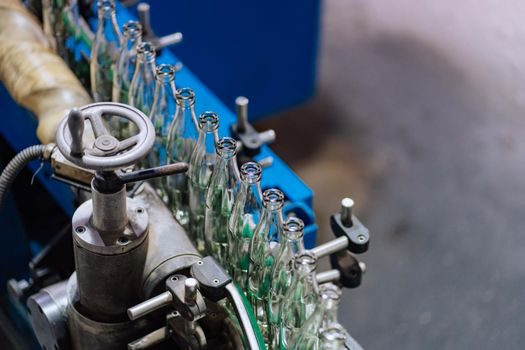
The first gate is the physical closure: lug cap, screw cap, ROPP (Roll-On Pilfer Proof) aluminum cap, press-on cap, crimp-on cap, pump/sprayer, dropper, or child-resistant (CRC) push-and-turn. ROPP requires an aluminum roll-head that is formed over the bottle thread at the sealing station — typically 1,500–3,500 BPM on a rotary, with sealing accuracy dependent on the cap-anvil wear cycle of 4–6 million cycles before re-tooling [S1]. Screw caps tolerate wider format variation because the cap is pre-formed; capping heads here are typically servo-driven at 30–120 Nm torque, with ±0.2 Nm repeatability on machines built for pharmaceutical SKUs [S4]. A lug capper needs a single-pass engagement angle of 60–90° with a 1.2–1.5 mm axial compression to bend the lugs under the bottle bead.
Material compatibility governs cap-feed and induction-sealing choices. PE and PP caps are standard for water, OTC pharma, and personal care; induction-seal liners (foil + pulp + polymer) need a 1.5–2.5 kW induction head with 0.5–1.5 seconds dwell at 50–100 kHz. A related engineering trade-off: induction sealing is incompatible with metal caps, and ROPP aluminum caps do not need a separate induction liner because the roll-seam is the hermetic seal. Reference the capping machine architecture walk-through for the full taxonomy of head types, and consult the capping and sealing machine reference page for the standards-side definitions.
Gate 2 — Throughput, footprint, and footprint-per-BPM
Throughput gates the capex. Benchtop pneumatic crimpers cap 10–20 BPM and fit on a 0.5 m² table [S3]; tabletop powder dosing/capping systems at 10–20 kg frame mass run 15–30 BPM on 110 V single-phase [S3]; a single-head automatic screw capper typically runs 30–60 BPM; rotary ROPP cappers reach 150–300 BPM with 8–12 heads; an integrated pharmaceutical two-head filler-capper line sits at 60–120 BPM with vial sizes 2–100 mL and is priced at US$9,150/set MOQ-1 [S4]. Higher-tier volumetric filler plus capper combinations from Made-in-China verified suppliers range US$15,000–49,000 per set [S2].
Footprint-per-BPM is the hidden cost driver. A 200 BPM rotary ROPP line with induction sealer typically occupies 6–10 m²; a 200 BPM equivalent built from four single-head semi-auto stations occupies 18–25 m² and needs four operators. Floor mass scales similarly — a 200 BPM rotary weighs 2,500–4,000 kg versus 100–200 kg for a single benchtop crimper [S3]. When planning line layout, lock the BPM target first, then derive capex from the footprint ceiling, not the other way around.
Gate 3 — Torque, sealing pressure, and accuracy
Torque accuracy is the capper’s torque spec. Servo-driven screw cappers hold ±0.2 Nm at 30–120 Nm setpoint; pneumatic clutch cappers drift ±1.5 Nm as air pressure varies by 0.2 bar. For carbonated SKUs (CSD, beer, kombucha) the cap must hold 4–8 bar internal pressure — torque up by 15–25% versus still water, and a torque audit station is mandatory at line-end. Induction seal strength is reported as peel-force in N/15 mm: 8–12 N/15 mm is the consumer-goods band, 15–25 N/15 mm for pharma and aggressive detergents. [S1]
Crimp-on aluminum caps (the format used for perfume bottles, vaccine vials, and certain wine SKUs) are governed by crimp height rather than torque. Pneumatic perfume-bottle crimpers in the 1–3 kW class deliver 100–200 kg frame mass and run on 110 V [S3]; the crimp-die diameter tolerance must be held to ±0.05 mm and a go/no-go gauge should be on the line at 30-minute intervals. Over-crimp cracks the glass; under-crimp loses the seal and fails the pressure test. Sealing-washer selection between the cap and bottle mouth is part of the same gate — see the sealing washer engineering reference for elastomer durometer and compression-set behaviour.
Gate 4 — Hygiene, IP rating, and regulatory fit
Product class sets the hygiene gate. Water and juice SKUs at ambient fill need IP54 on the capper enclosure and 304 stainless contact parts. Hot-fill (85–92 °C) and carbonated lines need IP65 on the capper head and 316L stainless at all product-contact surfaces. Pharma liquid and oral solid dose lines — the US$9,150 two-head vial filler-capper tier [S4] — need a cleanroom-class enclosure (ISO 7 / Class 10,000) and validated CIP/SIP with documented 0.25–0.5% sodium hydroxide wash cycles. Volumetric filler+capper combinations in the US$15,000–49,000 set tier [S2] typically ship with a 1-year warranty and FOB terms, so factor service-parts lead-time into the capex model before signing.
Standards to lock at the PO stage, not after delivery: CE marking for European lines, cGMP for pharma, FDA 21 CFR 211 for US-bound drug products, and 3-A sanitary for US dairy. The capper’s control panel must log torque or crimp-height per bottle with timestamp — without this, an audit will block the line, and the downstream coding machine must apply lot and expiry codes that reconcile to the same batch record. For European explosive-atmosphere sites (e.g. solvents, ethanol extracts), confirm ATEX zone classification for the capper head and verify the induction sealer (if fitted) is rated for the same zone.
Machine class comparison against the four gates
Five machine classes cover roughly 90% of 2026 capper procurement. The decision matrix below lines them against the four gates for direct extraction: Class A is a benchtop pneumatic crimper, 10–20 BPM, 100–200 kg, 1–3 kW, 110 V, US$1,500–3,000 [S3]; Class B is a tabletop semi-auto screw capper, 15–30 BPM, 30–80 kg, 1–3 kW, 110 V, US$2,000–5,000; Class C is a single-head automatic servo screw capper, 30–60 BPM, 300–600 kg, 3–5 kW, 220/380 V, US$8,000–15,000; Class D is an integrated two-head pharmaceutical filler-capper, 60–120 BPM, 1,500–3,000 kg, 4–8 kW, 380 V, IP65, US$9,150/set MOQ-1 [S4]; Class E is a rotary ROPP plus induction sealer, 150–300 BPM, 2,500–4,000 kg, 8–15 kW, 380 V, US$25,000–60,000. The stand-out comparison: a Class D line at US$9,150 with CE certification delivers pharma-grade capping at sub-US$10k set, which 24 months ago would have cost US$18,000–25,000 for equivalent throughput.
Who this guide is for — and who it is not for
This walk-through targets process engineers and procurement leads at contract manufacturers, mid-tier pharma and personal-care brands, beverage co-packers, and OEM line builders. It assumes the buyer has already fixed the bottle geometry, cap SKU, and target SKU mix. It is not a fit for home-lab or craft users buying a hand crimper under US$500 (different category entirely), nor for ultra-high-speed line builders specifying 600+ BPM CSD lines (those are turnkey projects quoted on RFQ, not catalogue). When the line must integrate with an existing industrial shock absorber indexing conveyor or a solenoid valve manifold for CIP, confirm signal-level compatibility at the capper I/O panel — 24 VDC is the European default, 110 VAC is common on Chinese-built semi-auto units [S3].
Limitations, failure modes, and what the spec sheets do not show

Three failure modes dominate post-installation complaints. First, cap-feed starvation: a 200 BPM rotary needs 250–300 caps/min delivered in singulated orientation; vibratory bowl tuning is the unsung gate, and a 30% feed drop will half the line. Second, cap-torque drift as the clutch wears: a pneumatic clutch capper should be re-calibrated weekly, with a torque-audit station at line-end to scrap under- and over-torqued units. Third, induction-seal cold spots: the foil layer needs 0.5–1.5 seconds at 50–100 kHz, and any air-gap between the cap and the bottle mouth (caused by a misaligned capper head) drops seal strength by 40–60%. Spec sheets rarely state these numbers; ask the vendor for a torque-audit log and a cap-feed bowl acceptance test before signing the FAT. [S2]
Trackable signals to watch over the next 6–12 months: Made-in-China verified-supplier count for “Capping Parts” in the US$15,000–49,000 set tier [S2]; CE audit pass rate on Class D integrated filler-capper lines [S4]; servo-vs-pneumatic capper share on the Made-in-China platform (currently pneumatic dominates semi-auto [S3] but servo is taking the 30–60 BPM single-head tier); and warranty-term length — a 1-year warranty is the current market baseline for new lines [S2], so anything shorter is a red flag.