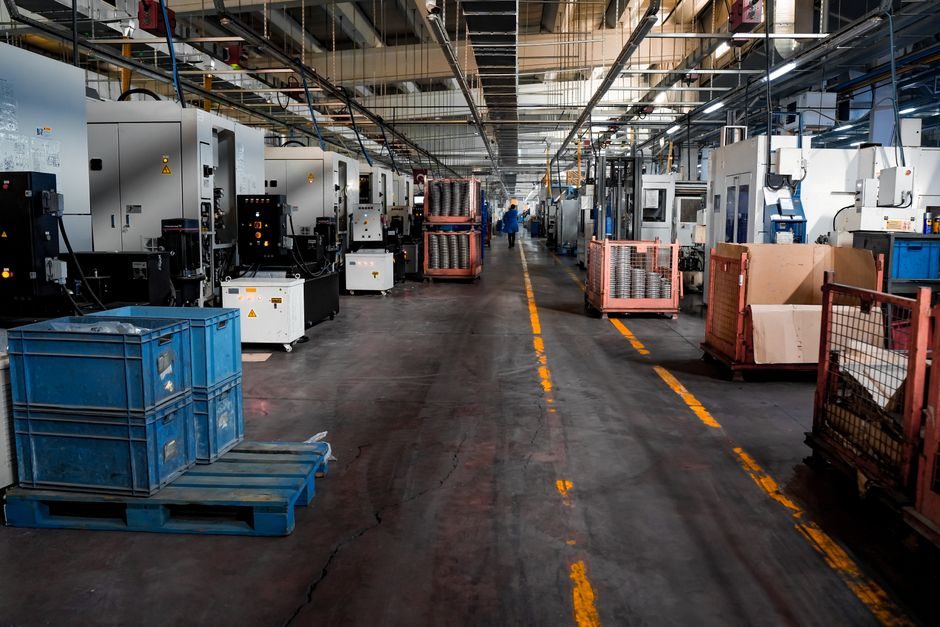
China supplies the majority of the world's primary magnesium and is pushing semi-continuous casting and electrolytic cells onto MES-linked automation stacks, with People's Daily Online (2024-08) noting that Chinese smart-manufacturing systems spanning AI, cloud and robotics have won broad European industrial recognition [S4].
A 2026 Rockwell Automation report finds 93% of manufacturers run some form of Manufacturing Execution System but only 23% have fully integrated it, a gap that maps directly onto the next bottleneck for magnesium ingot producers scaling primary-smelter output [S1].
Why Ingot Casting Is the First Automation Target
Primary magnesium is produced mainly by electrolytic reduction of molten MgCl2 (the Pidgeon process dominates Chinese output), and the downstream step that decides yield is semi-continuous vertical direct-chill casting of 7–8 kg ingots or 300–500 kg sows, where mould level, cooling-water ΔT and withdrawal speed must stay inside tight bands to avoid cracking and burn-in [S4].
Closed-loop control of mould level, melt temperature (typically 680–710 °C for Mg) and casting speed is the lowest-hanging automation gain, and these loops are the natural anchor for a magnesium die casting machine cell when ingot stock feeds downstream die-casters.
Sensor Stack: Smart Metering, Vision and Valve Positioners
A modern ingot line strings together a smart meter layer for molten-mass flow, a pressure transmitter array on the cooling-water manifolds, smart camera stations for surface-defect and surface-oxide detection, and smart valve positioner-actuated launder gates for melt diversion during alloy changes. [S1]
Cover-gas flow is the safety-critical loop: molten magnesium reacts violently with water and oxidises readily, so SF6 (historically the standard cover gas at 0.1–0.5 vol%) and the lower-GWP Novec 612/HFE alternatives must be metered with redundant thermal-mass flow controllers, with valve-positioner feedback cross-checked against mass-balance data from the smart-meter layer.
SF6 Phase-Down: The Compliance Driver Behind New Automation
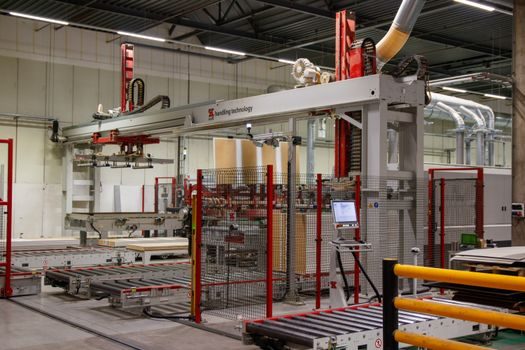
SF6 has a GWP roughly 23,500× CO2 and is the single largest process-gas compliance risk in any magnesium foundry; the push to install Novec 612 (fluoro-ketone, GWP ≈1) or SO2/HFC blends is forcing a rebuild of the cover-gas panel and the positioner/MFC stack on most Chinese ingot lines [S4].
For a new line, the cover-gas budget is small in capex terms but large in compliance exposure: a single 2 t/h caster running SF6 at ~0.3 vol% in a 1.5 m³ hood emits the CO2-equivalent of several thousand tonnes per year, and that figure is the number an EU CBAM or a buyer's Scope 3 audit will want to see.
MES Integration: The 23% Gap and What 'Fully Integrated' Means for Mg
The Rockwell Automation finding that only 23% of manufacturers have fully integrated their MES, against 93% MES adoption, captures the magnesium sector's situation almost exactly: most smelters have a L1/L2 control layer and a separate L3 reporting layer, with batch genealogy, alloy recipe, and energy-per-tonne data living in spreadsheets rather than the historian [S1].
Closing that gap on a magnesium line means binding the lot/batch ID from the electrolytic cell, through the transfer ladle and pre-heat station, to the casting mould and final palletiser, so that every 7 kg ingot is traceable to a specific electrolyte bath, electrode set and SF6/Novec flow record — and the same framework can feed downstream additive manufacturing material atomisation lines when the same lot is diverted to Mg powder production.
Robotic Handling, AGV Feed and the Palletiser Cell
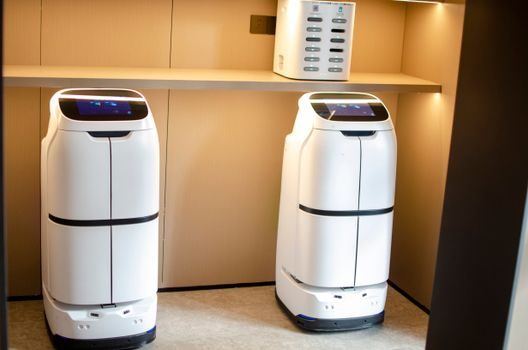
Manual handling of hot ingots (surface above 200 °C at stripping) is the dominant injury and burn risk in a magnesium foundry, which is why the most visible automation spend in 2025–2026 is at the take-away end: gantry robots strip the dummy block, water-quench, mark, and stack, while AGV selection guide: load, guidance, duty cycle and safety gates type fleets feed empty moulds back to the casting station under IEC 61508 SIL-2 light curtains. [S2]
Typical cell layout pairs a 6-axis foundry-rated robot (IP65, dust-tolerant, often with a magnesium-rated gripper because Mg swarf is flammable) with a vision-guided placer that reads the cast-bar code and routes rejects to a remelt bay, with the smart-camera layer also watching for the white "burn-back" pattern that signals mould-level deviation.
Data and AI: Energy per Tonne, Electrolyte Composition, Yield
Rockwell's 2026 framing of industrial AI shifting from pilots to production maps cleanly onto magnesium's three production KPIs: kWh per kg of ingot (electrolytic benchmark ~12–14 kWh/kg, Pidgeon SiFe-thermic ~25–35 Mcal/t thermal equivalent), Fe/Mn/Be impurity drift in the electrolyte, and first-pass yield at the caster [S1].
The first two are well-suited to soft-sensor models on top of the smart-meter/pressure-transmitter layer; the third is where smart-camera image data and mould-level positioner feedback combine to predict the cracking and burn-in defects that drive the typical 1.5–3% rework rate on a new ingot line.
Standards, Sourcing and What to Verify on Audit
Specifying engineers should anchor the control layer on IEC 61131-3 for PLC programming, IEC 62443 for network segmentation, and ISO 9001 / IATF 16949 for the quality system that the MES has to feed, while the casting cell itself should be checked against ASTM B92 (magnesium ingot classification) and any buyer-specific limits on Be, Fe, Ni and Cu that drive corrosion behaviour downstream. [S3]
Trackable signals to watch: (a) any Chinese primary-magnesium smelter publishing a Scope 1+2 energy and SF6 intensity per tonne in 2026 H2 reporting, and (b) EU CBAM default values for magnesium (CN code 8104) being revised upward in the 2026 quarterly update, both of which will reshape the capex case for cover-gas retrofits and the MES integration work those retrofits depend on [S4] [S1].