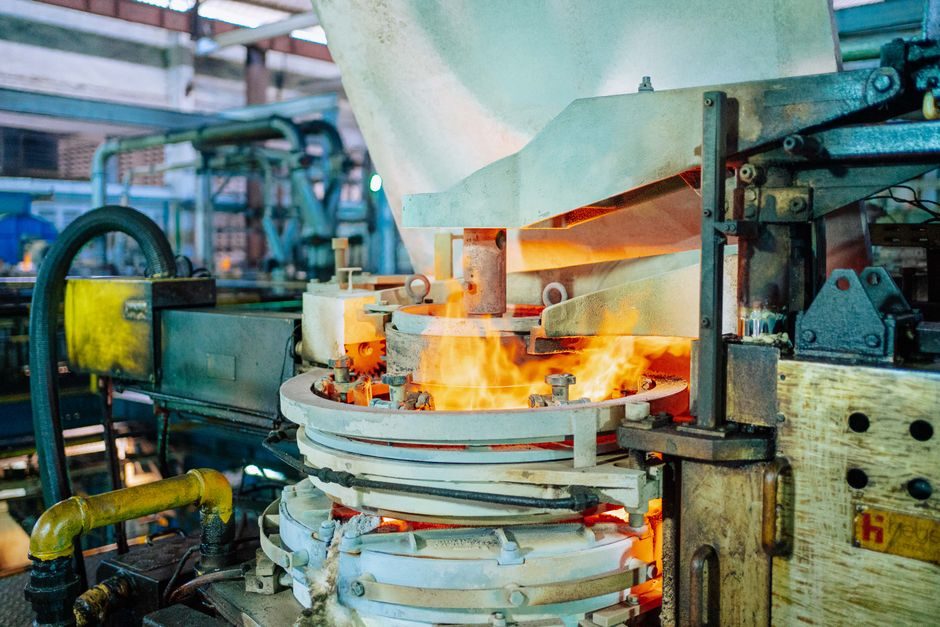
Cloud MES platforms such as the Plex Smart Manufacturing Platform advertise a 99.5% availability guarantee and integrated Asset Performance Management, Production Monitoring, MES Automation & Orchestration and Finite Scheduler modules designed to run paperless across discrete and process plants [S1].
For phosphate-rock producers — running flotation, calcination, acidulation and granulation at 50–500 t/h — the practical question is how those generic MES capabilities map onto a mineral-processing line where P2O5 recovery, reagent dosage and rotary-kiln temperature are the controlled variables, and where LIMS and shift-handover logs still live in spreadsheets on many sites.
What "smart manufacturing" actually means on a phosphate line
The Plex suite covers MES, QMS, ERP, Supply Chain Planning, Connected Worker, Production Monitoring, APM, Finite Scheduler and FactoryTalk ResilientEdge as discrete product lines on a shared Smart Manufacturing Platform [S1]. This means a phosphate plant evaluating it can in principle wire flotation cells, rotary kilns, granulators and bagging lines into a single paperless production record, with QMS holding the certificate-of-analysis chain for fertilizer-grade product.
Polaris Automation positions its offering around "SMART MANUFACTURING OVERVIEW" with Chordata Batch described as "a smarter, faster, and more flexible way to control batch processes" alongside MES and manufacturing-automation services [S3]. Batch ISA-88-style control matters less for the wet-rock side of a phosphate plant and more for the finished NPK / DAP / MAP blending, micronutrient dosing and colouring stages downstream of granulation.
Rockwell Automation's separate manufacturing-automation pillar (Allen-Bradley ControlLogix, FactoryTalk) plus a "Seamless integration with Rockwell Automation and other manufacturing systems" line in the Plex stack [S1] is the realistic path for a greenfield phosphate complex: brownfield sites with legacy DCS (ABB 800xA, Honeywell Experion, Siemens PCS 7) typically keep the DCS for kiln and reactor interlocks and overlay an MES/analytics layer for OEE, energy and quality reporting.
Selection criteria a phosphate process engineer should weigh
Five criteria separate a credible phosphate MES project from a slide-deck exercise: (1) ISA-95 / ISA-88 batch model fit, (2) native connectors to the on-site DCS/PLC fleet, (3) historian and LIMS integration, (4) recipe and quality management for fertilizer-grade product, and (5) cyber posture. Plex addresses (4) via its QMS module and (2) via Rockwell PLC integration [S1]; Polaris addresses (1) via Chordata Batch [S3]; neither platform ships a phosphate-specific reagent model out of the box.
Reliability tier matters more than feature count on a 24/7 beneficiation line. Plex publishes a 99.5% availability guarantee on its Smart Manufacturing Platform [S1] — that translates to roughly 43.8 hours of permitted downtime per year, which is acceptable for a packing line but tight for a kiln control layer; phosphate operators should keep kiln and reactor safety interlocks on a dedicated DCS and use the cloud MES for supervisory trending, not for SIS-rated trips.
Connectivity to lab data is the most commonly underspecified work package. A typical phosphate plant runs 30–200 ICP-OES or XRF assays per shift for P2O5, CaO, MgO, SiO2, Fe2O3, Al2O3 and heavy metals (Cd, As, Pb, Hg) against fertilizer regulations such as EU 2019/1009. Without a bidirectional LIMS-MES handshake, the MES paperless claim collapses back into emailed PDFs.
Unit operations where automation pays back fastest
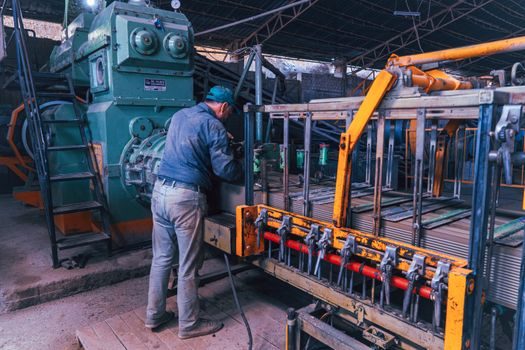
Flotation is the highest-leverage target: a 1–2 percentage-point P2O5 recovery gain on a 200 t/h line at 30% feed grade is worth 60–120 t/d of additional concentrate, and modern froth-camera systems coupled to air-flow and reagent setpoint loops typically deliver those gains without headcount. A smart camera on the launder combined with pH, ORP, conductivity and flow pressure transmitters is the canonical retrofit package. [S1]
Calcination and drying in rotary kilns is the second target. The APM line in Plex — "proactively monitor machine and plant health to ensure optimal uptime, throughput, and maintenance needs" [S1] — is directly applicable here.
Granulation, drying and screening in a DAP/MAP/NPK plant is the third target, and this is where the ISA-88 batch story from Polaris [S3] and the QMS + Production Monitoring story from Plex [S1] both apply. Off-spec recycle ratio, particle-size distribution from inline laser diffraction, and coating-oil dosing are the three loops that consistently move the EBITDA needle in fertilizer granulation. Plant smart valves with HART or WirelessHART position feedback on acid, ammonia and steam let the DCS trim these loops without re-wiring.
Where the build is NOT justified
A full cloud-native MES is overkill for a single 50 t/h phosphate mine-and-mill with a captive fleet of haul trucks and a non-automated rail loadout — the connectivity cost, cyber hardening and operator retraining burn more capital than any OEE gain will return. Smaller operators are better served by a historian + LIMS + Power BI (or equivalent) stack over a 6–12 month horizon and only re-evaluate MES once daily throughput exceeds ~500 t/day or annual output exceeds ~150,000 t of finished product. [S2]
Cloud MES is also a poor fit where data-residency rules force on-premise servers (some Chinese and Russian phosphate producers face this; Chinese smart-manufacturing exports to Europe, by contrast, are growing rapidly, as the People's Daily reported in August 2024, with Chinese AI, cloud and drone products becoming popular across the continent [S2]). Operators in those jurisdictions need an on-prem or private-cloud deployment option; Plex's "Enterprise-grade cloud infrastructure with industry-leading security and compliance" [S1] and the FactoryTalk ResilientEdge execution foundation [S1] are the relevant tier — and they cost more, not less, than the public-cloud SKU.
Phosphate vs. generic MES — what the platform does not give you
Those are plant-side responsibilities. [S3]
They also do not replace a process controller for safety-rated trips. Belt-conveyor slip switches, kiln flame-failure interlocks, acid-tank bund level alarms and H2SO4 pump seal-flush interlocks belong on a hardwired SIS (per IEC 61511 / IEC 61508) at SIL 1–3, with the MES reading status flags only. A common mistake in MES retrofits is to push these trips into software and downgrade the SIL rating in the process — that creates both a regulatory and a smart meter-class audit-trail problem and is not offset by cheaper hardware.
Sourcing and standards baseline
For a phosphate smart-manufacturing project in 2026, the realistic standards stack to plan against is: IEC 61511 (functional safety — process sector), IEC 62443 (industrial cyber security), ISA-95 / ISA-88 (MES and batch control models), ISO 9001 / ISO 14001 (QMS and EMS hooks inside the MES QMS module), and for the finished product side, EU 2019/1009 for fertilizer placing on the EU market and the relevant national cadmium decrees. Cyber hardening should follow IEC 62443 zone-and-conduit modelling, and any cloud MES should sit in a zone 3 / zone 4 DMZ with explicit conduits to the DCS zone 1. [S1]
Equipment-side, a typical new phosphate line now specifies HART or WirelessHART pressure transmitters on slurry, acid and steam lines, smart valve positioners on acidulation and ammonia spargers, and machine-vision smart cameras on flotation and granulation — the same sensor stack other process industries have converged on, and a useful baseline for any new RFQ. Adjacent equipment choices, from vibratory feeders under reagent bins to linear or explosion-proof motors on ATEX-classified bagging areas, follow the same zone-and-conduit logic rather than any phosphate-specific rule.
Reference architectures worth comparing
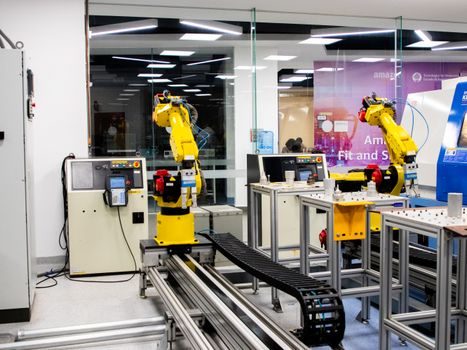
Three reference architectures are in active use in 2026: (a) Rockwell-anchored — Plex MES + FactoryTalk + ControlLogix on the plant floor, suited to a greenfield phosphate complex with full Rockwell standardization; (b) DCS-anchored — ABB 800xA or Honeywell Experion as the control layer with a vendor-neutral MES (Polaris, AVEVA, or a custom build) for OEE and quality, suited to brownfield expansions; (c) Best-of-breed — a historian (OSIsoft PI or similar) feeding a cloud analytics layer (Azure / AWS / Alibaba Cloud) with a separate QMS, suited to multi-site phosphate and fertilizer groups that already have data-science teams. Public Chinese cloud MES and analytics offerings have gained traction in Europe, with the People's Daily noting in August 2024 that Chinese AI, cloud and smart-manufacturing products are "becoming popular" with European consumers and contributing to "green and low-carbon transformation" [S2].
Capital-cost ranking is roughly (c) ≤ (b) ≤ (a) for a 200–500 t/h phosphate complex, but total-cost-of-ownership depends on integration cost, and (a) is typically the cheapest to integrate on a single greenfield site. Selecting between them is a 3–6 month process-engineering exercise, not a software-licensing exercise.
Two signals to track over the next 6–12 months: (1) any MES vendor publishing a phosphate-specific reference architecture, currently rare; (2) any phosphate-major (OCP, Mosaic, Nutrien, PhosAgro, Wengfu) public disclosure of cloud MES production data, which would set the next benchmark for P2O5 recovery and specific energy consumption per ton of marketable product. The platforms themselves are mature; the phosphate-specific application layer is the open question.