
The structural cerium surplus persists because bastnasite and monazite ores yield 50-75% lanthanum-cerium combined, yet these two elements account for less than 10% of total rare earth market value, a mismatch that keeps feedstock cheap [S3].
Against that supply glut, the global rare-earth polishing powder market reached USD 2.10 billion in 2025 and is forecast at 6.3% CAGR to USD 3.68 billion by 2034, with cerium oxide as the dominant abrasive [S5]. Cerium oxide slurry alone is tracked at USD 1.8 billion in 2025 moving toward USD 3.2 billion by 2034 at 6.6% CAGR [S2].
Why the Cerium Supply Side Stays Long
Annual world production of cerium sits near 24,000 mt, pulled as a co-product from bastnasite and monazite mining that targets higher-value neodymium, praseodymium, and dysprosium [S3]. Because cerium supply scales with magnet-metal output, it cannot be throttled independently without shutting down higher-revenue separation lines, which is why oxide prices stay anchored despite flat demand pull from the dominant application segments.
Cerium oxide commanded about 48.4% of cerium-product-type market share in 2024, confirming that the oxide form, not the metal, is the bulk of physical volume, a pattern consistent with the polishing and catalyst use cases absorbing the structural surplus [S3]. Where companies need stable DC for separation electrolyzers or DC power supply units driving the calcination kilns, the glut-driven low oxide cost helps capex but does not lift cerium revenue.
Polishing Powder Demand: Where the Volume Lands
Glass polishing is the single largest end-use, capturing 38.4% of the cerium product market in 2024, with cerium oxide the preferred abrasive because it combines chemical etching with mechanical removal, a dual mechanism that cuts scratch counts on fused silica, BK7, and optical crystals [S3]. High-purity grades above 99.5% purity are specified for laser optics, fiber optics, semiconductor wafers, and high-resolution display glass, where sub-nanometre surface roughness controls downstream optical yield [S4].
The rare-earth polishing powder market segment in Asia Pacific is the largest regional bloc, reflecting concentration of display-panel, cover-glass, and consumer-electronics production, and the same geography overlaps with the dominant lighting equipment and electric lamps supply chain that depends on polished optical components for LED and laser-diode sub-assemblies. Showa Denko, Solvay, HEFA Rare Earth Canada, Grirem Advanced Materials, and China Rare Earth Holdings are the tracked producers across this powder market [S5].
Cerium Oxide vs Alternative Abrasives: A Spec Comparison
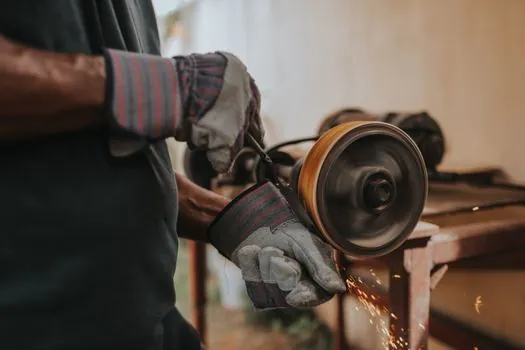
Engineers selecting a polishing medium weigh four criteria: material-removal mechanism, achievable surface roughness, substrate compatibility, and slurry-handling stability. The table below lines up the practical options a process engineer would compare for precision optics and display glass. [S4]
Cerium oxide (CeO2) operates by chemical-mechanical polishing (CMP), gives scratch-free finishes on fused silica and BK7, works on glass, crystals, and optical ceramics, and runs as a water-based slurry at near-neutral pH with stable suspension [S4]. Aluminum oxide (Al2O3) is purely mechanical, faster cutting but leaves micro-scratches, and is preferred for pre-polishing stages where stock removal matters more than finish. Silicon carbide (SiC) is the hardest of the three, used for rough grinding of glass and ceramics, and is generally too aggressive for final finishing. Zirconium oxide (ZrO2) sits between CeO2 and Al2O3 in cut rate, with good surface finish, and is selected where cerium supply risk is a sourcing concern.
For final finishing where surface roughness below 1 nm Ra is the deliverable, cerium oxide remains the default, with rare-earth polishing powder demand growing at 6.3% CAGR against cerium metal demand tracked separately at 23.7% CAGR through 2033 in the broader cerium market projection [S1][S5].
Application Segments Driving Powder Pull
Consumer electronics is the largest downstream puller, with smartphone cover glass, tablet display panels, and camera lens assemblies requiring cerium-oxide CMP for the final optical-grade surface. Semiconductor wafer polishing is the fastest-growing slice as wafer diameters push past 300 mm and node counts drop, demanding cleaner slurry and tighter particle-size distribution. Automotive glass for windshields, mirrors, and head-up-display optics is a steady-volume segment, and aerospace optics for lightweight high-performance windows and sensors rounds out the high-margin tier [S5].
The 6.6% CAGR tracked specifically for cerium oxide slurry through 2034 sits below the 23.7% CAGR projected for the wider cerium market through 2033, a divergence that signals slurry-form pricing is more volume-tied and the broader cerium-market growth leans on higher-value catalyst and alloy applications rather than abrasive volume alone [S1][S2]. The 5.9% CAGR reading from a separate analyst, projecting the cerium market from USD 360 million in 2026 to USD 480 million by 2031, sits between those poles and reflects differences in scope between oxide-only and total-element market definitions [S6].
Selection Criteria for Polishing Powder Grade
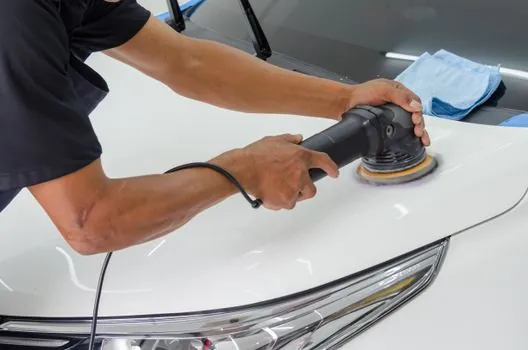
Specifying cerium oxide powder is a purity-plus-particle-size decision, not a brand decision. For laser optics and semiconductor CMP, 99.5% minimum CeO2 purity with D50 particle size in the 0.5-1.5 micrometre range is the working window; tighter surface-finish targets drop D50 toward 0.3 micrometre and demand colloidal suspension rather than simple slurry [S4]. For architectural and automotive glass, purity of 90-95% CeO2 with D50 in the 1.5-3.0 micrometre range is typical and substantially cheaper, and lamps and light fittings finishing shops often run this grade for envelope and lens work.
Process engineers also need to control slurry pH, pad hardness, polishing pressure (typically 1-5 psi for precision optics), and rinsing cleanliness, since residual cerium particles are a known source of post-polish haze and downstream coating defects [S4]. Particle-size distribution uniformity matters as much as mean size, because broad distributions produce scratching on soft substrates and slow removal on hard ones.
Limits, Failure Modes, and Supply-Chain Watch Items
The structural surplus is not a free lunch: cerium supply is tied to bastnasite and monazite mining economics, so any downturn in NdPr magnet demand tightens the entire REE chain and removes cheap cerium feedstock as a co-product [S3]. Resource-management concerns are already flagged, since lanthanum and cerium together represent more than 70% of bastnasite ore mass but less than 10% of REE market value, an inversion that has prompted government-backed research into new cerium end-uses, including battery and alloy applications, to soak up the surplus.
From a process-engineering standpoint, cerium oxide slurry failure modes include particle agglomeration (which produces scratches), pH drift (which alters removal rate), and pad glazing (which burns the substrate). High-purity grades also carry contamination risk from rare-earth impurities, since neighbouring lanthanum and praseodymium oxides alter polishing chemistry at the parts-per-million level, and lot-to-lot traceability is a real procurement requirement, not paperwork theatre. Sourcing concentration in Asia Pacific, where the largest polishing powder market share sits, remains the dominant construction machinery and equipment-adjacent logistics constraint for global buyers, since freight cost and lead time for ceramic-grade oxides add a measurable premium outside the region.
Standards and Sourcing Discipline
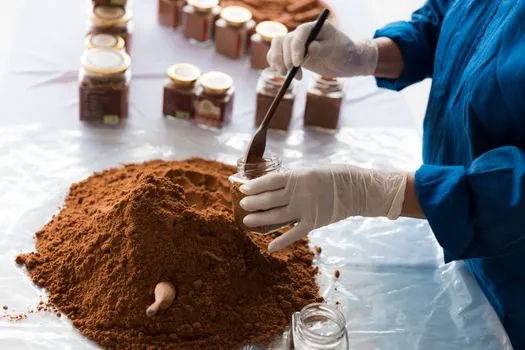
No single ISO or ASTM standard governs cerium oxide polishing powder grade naming across suppliers, so buyers must specify CeO2 purity (typically 90-99.9%), D50 particle size, D90/D10 spread, and trace-impurity limits (La, Pr, Nd, Fe, Si) on the purchase document rather than relying on supplier trade names [S4]. The polishing mechanism itself, chemical-mechanical polishing, is a well-understood process class, but the cerium-specific chemistry is covered in vendor technical data sheets rather than in any single published ISO method.
For semiconductor CMP buyers, coupling the powder specification to a switching power supply specification for the slurry-dispensing pump and the polishing-head spindle drive is the practical integration point, since slurry-feed stability directly affects removal-rate uniformity across the wafer.
Trackable signals for the next six to twelve months: the rare-earth polishing powder market update cycle (last data refresh June 2026 [S5]), the Oak Ridge National Laboratory follow-up on engineered oxygen-vacancy ceria catalysts published October 2025 [S1], and any quarterly adjustment in bastnasite separation throughput from the major Chinese producers, which historically moves first when NdPr pricing shifts and pulls cerium feedstock availability with it.
This topic is covered further in Cold Storage Construction 2026: Costs, Automation, and Refrigeration Demand.