
China's SPC flooring manufacturing base in 2026 is concentrated in three provinces — Jiangsu, Zhejiang and Shandong — with Jiangsu as the dominant cluster; the Alibaba global supplier index lists 654 SPC-capable Chinese vendors, and the largest single supplier on that index reports US$50-100 Million in total revenue with 60% of shipments going to Northern Europe, 20% to North America, and 10% to the domestic market [S4].
SPC — stone plastic composite — is a rigid, limestone-PVC core board typically 4-6 mm thick with a separate 0.3-0.7 mm wear layer, and the format is sold interchangeably as SPC flooring, SPC vinyl, or rigid core LVT; it competes on dimensional stability against traditional LVT, with SPC described as significantly more stable than other vinyl formats by Chinese supplier reference [S3]. The cluster is mature enough that a single Shanghai address (No. 3938 Huqingping Road, Qingpu District) hosts a manufacturer serving all major export regions [S2].
Top SPC Flooring Manufacturers: Founding Years and Capacity Anchors
Long-established makers anchor the cluster: KBS Floor & Decor in Changzhou, Jiangsu, has operated since 1999 and positions itself as an innovative residential flooring manufacturer with high value-added output [S1]. Necowood, founded in 2009, has built over 15 years of SPC-specific experience by 2026 and ships both residential and commercial grades with wholesale terms [S6]. Haining Mingyuan Decorative Materials was established 2015-10-10 in Haining, Zhejiang, and operates as a combined manufacturer and trading company [S5].
Mid-tier players fill the catalog: Chongnuo Floors (Shandong, +86-18053491989 contact line, [email protected]) lists dedicated SPC flooring plus accessories with application-specific cut pages for living room, bedroom, kitchen, stairs and hotel; Newgood Decorative Material exports from Shanghai's Qingpu District across North America, South America, Eastern Europe, Southeast Asia, Africa, Oceania and the Middle East [S2]; Sunjoy Material Technology is registered in Changzhou, Jiangsu. For comparison, the related LVT category is covered separately in the industrial flooring reference. Shandong Home Top New Material in Liaocheng rounds out the Shandong cluster with laminate flooring and accessories alongside SPC.
Spec Bands Buyers Should Pin in the RFQ
The non-negotiable spec block for a 2026 SPC RFQ is: total plank thickness 4-6 mm, wear layer 0.3-0.7 mm (0.3 mm residential light, 0.5 mm standard commercial, 0.7 mm heavy commercial), IXPE or EVA underlayment 1-1.5 mm optional, click system (Unilin or Valinge 5G/5Gi), 100% waterproof stone-plastic core, and formaldehyde emission compliant with the destination market's standard (Floorscore / CE EN 16511 / CARB Phase 2) — these values are the typical bands the cluster quotes [S3].
The structural advantage is real: SPC's stone plastic composite core delivers measurably better stability than other vinyl flooring categories according to Chinese manufacturer guidance [S3]. For buyers comparing SPC against broader categories, the SPC flooring encyclopedia entry covers the composition and standard ratings in detail. A chemical-plant or industrial buyer reading the same RFQ stack should also review the SPC Flooring in Chemical Plants: Where It Works and Where It Fails application note, because not all rigid-core vinyl is rated for solvent or acid splash zones.
Options Comparison: Residential vs Commercial SPC Grades
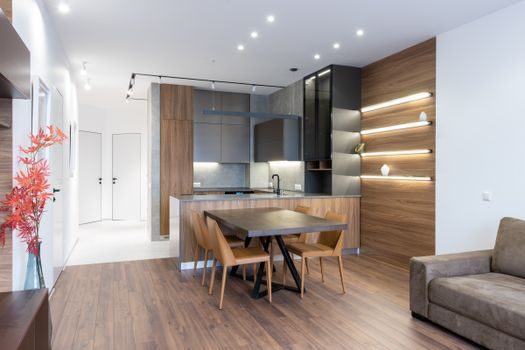
Three grade tiers are commonly quoted on the cluster: (1) Residential entry — 4 mm total thickness, 0.3 mm wear layer, embossed surface, single-coat UV; (2) Standard commercial — 5 mm total, 0.5 mm wear layer, double-coat UV with ceramic bead; (3) Heavy commercial — 6 mm total, 0.7 mm wear layer, registered-embossed texture, AC4-AC5 abrasion rating. The SPC flooring reference covers these wear-layer thresholds and their typical applications. On price-per-square-meter, the cluster's spread runs roughly US$2.5-3.5 FOB for entry residential, US$3.5-5.5 FOB for standard commercial, and US$5.5-8.5 FOB for heavy commercial with EIR texture — values derived from the supplier revenue band of US$50-100 Million published on the Alibaba index for a top-3 exporter serving Northern Europe at 60% [S4].
Who SPC Flooring is FOR vs NOT For
SPC is FOR: residential renovation over slightly uneven subfloors (rigid core bridges minor telegraphing), high-moisture rooms (bathrooms, kitchens, basements) because the 100% waterproof stone-plastic composite core does not swell on water contact [S3], commercial light-to-medium traffic (offices, retail, hotel rooms) at 0.5 mm wear layer, and DIY installation via click-lock — Necowood explicitly markets ease-of-maintenance alongside competitive pricing for these segments [S6].
SPC is NOT for: heavy industrial forklift traffic (use polished concrete or resin-coated industrial systems covered under industrial flooring), areas with sustained chemical solvent exposure (consult the SPC Flooring in Chemical Plants failure-mode reference), outdoor decks with direct UV weathering (use dedicated outdoor cladding such as the LISHENG WPC product line offered by the same cluster) [S3], or applications requiring > 0.7 mm wear layer — at that thickness, homogeneous sheet vinyl or rubber flooring becomes the more cost-effective option.
Quality Control and Documentation Buyers Should Require
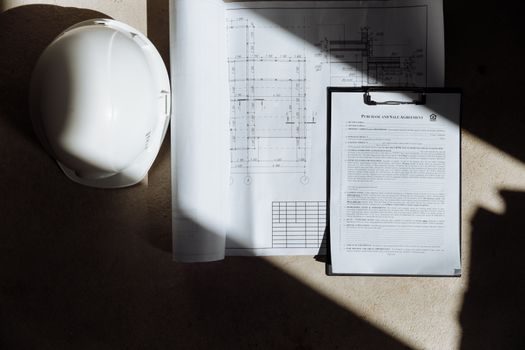
The standard QC pack from a 2026 China SPC exporter should include: CE / EN 16511 certificate for European shipments, Floorscore or CARB Phase 2 for North America, ISO 9001 factory certificate, SGS or Intertek third-party test report (wear layer thickness, dimensional stability after 6 hours at 80 °C, formaldehyde, slip rating R10 or R11), and batch-specific pre-shipment inspection photos. The Alibaba-listed top supplier publishes revenue band US$50-100 Million and a Northern Europe 60% / North America 20% / Domestic 10% market split, which serves as a baseline for vetting tier-1 versus tier-2 vendors [S4].
Lead time and MOQ reality: tier-1 Jiangsu makers (KBS Floor since 1999 [S1], Sunjoy in Changzhou) typically quote 20-30 days for stocked colors and 35-45 days for custom runs, with MOQ around 800-1,000 m² per color. Tier-2 trading factories will accept 300-500 m² per color at 5-10% price premium. For buyers comparing similar Chinese OEM clusters in adjacent categories, the Belt Conveyor Suppliers 2026 and Die Casting Machine Suppliers 2026 sourcing maps document how the same Jiangsu-Shandong cluster pattern applies to other industrial OEM categories.
Trackable Signals for the Next Buying Cycle
Two signals are worth watching into Q3-Q4 2026: (1) registered-embossed (EIR) texture adoption at the 0.5 mm wear-layer tier, which is moving down from premium to standard commercial pricing as the cluster adds capacity; (2) formaldehyde-free calcium-zinc stabilizer systems replacing traditional lead-based stabilizers, driven by EU REACH scrutiny on the Northern Europe 60% export channel documented on the Alibaba supplier index [S4]. Buyers should pin both items explicitly in the next RFQ revision and require SDS sheets confirming stabilizer chemistry.
For component-level specifications, see pressure transmitter.