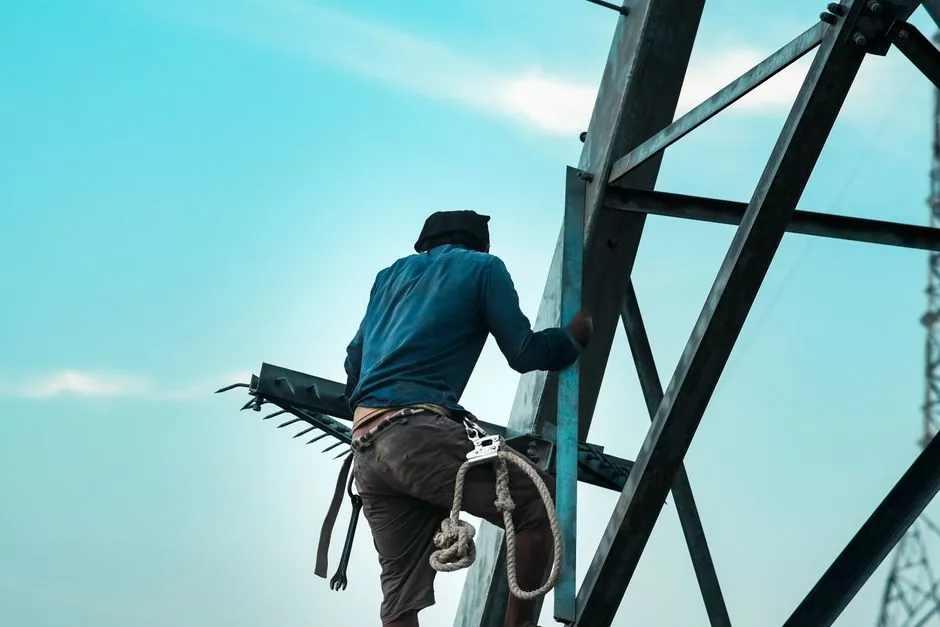
For an electrical-installation contractor working on a high-rise core, the climbing formwork decision is locked before the cable tray is even drawn on paper, because the climbing unit dictates the working envelope, the platform load rating and the anchor pattern that every subsequent trade must respect.
The 2026 supplier field spans European system houses (Doka, Faresin, CSC, Scaffco) and Chinese aluminium specialists with monthly capacity of 150000 m², with PERI ACS Core 400 long-stroke cylinders rated at 40 tonnes raising one level in about 20 minutes and Doka offering SKE50 and SKE100 automatic climbers at 5 and 10 tonne lifting capacities respectively [S1][S3].
Why the electrical trade cares about the formwork family
Electrical risers, bus-duct penetrations and tray supports are usually fixed into the cast-in anchors or drilled into the green concrete during the trailing platform phase, so the spacing and reaction capacity of climbing shoes sets the practical limit for any M&E bracket that hangs off the core wall. [S4]
ACS uses climbing shoes bearing on anchor cones left in the previous lift, and the design rule is that cone embedment depth, local concrete strength at re-stressing (typically 15-20 MPa) and spacing of climbing rails must all be matched to the climbing shoe's allowable reaction; misreading this is the most common site failure mode flagged in 2026 supplier guidance [S4].
Crane-climbed and cantilever systems transfer the lateral pressure of fresh concrete through the anchor system and wall-through tie-rods cast into the previous lift, which removes the need for additional reinforcement at the tie points, but it also concentrates the cast-in hardware pattern at regular intervals, a layout that electrical designers can use to land tray brackets without re-drilling.
Three families compared on decision criteria
Frame or modular free-standing systems such as Scaffco SPF 50 (5 mm aluminium-steel angle profile) and CSC M/L are repositioned by crane between pours and accept plywood facings for monolithic cast finishes, making them a low-capex fit for low-rise shafts where the electrical riser only repeats 6-10 times [S3].
Crane-lifted climbing formwork like the Doka 150F adds a 1.65 m wide fully-railed working platform and a 0.70 m roll-back of the form face, giving rebar clearance without untying the platform; it is a single-crane-lift-per-cycle system aimed at vertical-walled cores and shear walls on mid-rise commercial towers.
Automatic Climbing Systems (ACS) replace the crane with an on-board hydraulic cylinder climbing on a rail fixed to the previously poured slab, so the pour-strip-then-climb cycle becomes weather- and crane-independent; reference lists name Millau Viaduct, Hardanger Bridge, Rajiv Gandhi Sea Link and the Heinrich Hertz Tower among ACS-built structures, and one hydraulic ring main can drive up to 20 automatic climbers in unison from a single power unit, which is what allows a whole core platform to climb together [S1][S3].
Pour height, lateral pressure and the cable-tray handoff
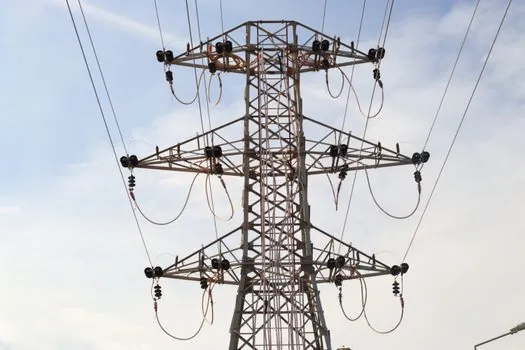
For a 4 m pour lift the maximum lateral pressure on the form face from concrete at 25 kN/m³ is in the order of 100 kN/m² at the base of the lift, and design wind on the platform and the climbing shoe's reaction into the previous lift both have to be checked against that envelope before any electrical load is added on top [S4].
Cantilever single-sided systems such as the Lianggong CB-180 and CB-240 support a maximum one-time concreting height of 6 m with 600 mm horizontal retraction, and the CB-240 allows formwork and climbing scaffolds to be moved as a single unit by crane, which is useful on cable-stay pylon shafts where the electrical bonding runs up the inside face of the form [S2].
The working envelope between the form and the trailing platform is where cable tray and ladder are landed, so its width sets the rebar-bundle and tray-bundle size the cycle can swallow; for a fair-faced core the platform also has to be designed for the wind exposure class of the building at its climbing height, the higher the lift the more the platform governs, not the form panel [S4]. Steel ladder trays are widely specified on these platforms because they can be cut and re-bolted on site to follow the anchor pattern without welding.
Selection bands by project profile
Crane-climbed systems suit low-to-mid cores up to roughly 20 stories where crane time is cheap and the contractor already owns crane-climbing panels; ACS suits tall cores, slanted pylons and shaft-only projects where crane hook-time is the bottleneck; cantilever single-sided formwork suits pier shafts, elevator cores against existing structure and repair works where through-ties are impossible [S4].
A 30-pour corewall at 4 m lift height pays back the ACS premium, whereas a 6-pour shear wall on a low-rise project does not; cycle-time math shows a crane-lifted 150F cycle at 30-45 minutes of crane time plus rebar close-in, against an ACS cycle at 15-25 minutes of hydraulic stroking with no crane dependency, which on a tower-crane-constrained urban site is the difference between one pour floor per 3-day cycle and one per 2-day cycle [S3].
For tall, irregular cores the deciding question is not the headline cycle time, it is whether the geometry lets the platform clear the previous lift's anchor shoes without striking the form, because that geometry check determines whether the electrical riser opening lines up with the next pour or has to be re-set.
Anchor pattern, cone spacing and the electrical handoff
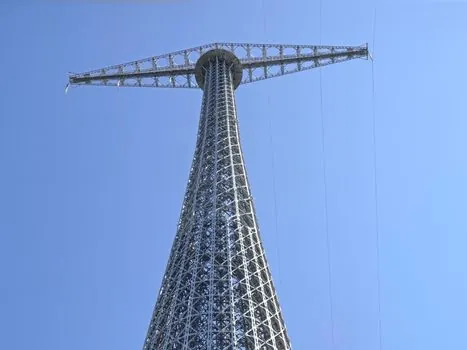
ACS suppliers gate the cycle on a measured concrete-strength value, not a calendar day, and a frequent site failure is trying to climb on cones before the previous lift has hit its stripping strength, which is why the cast-in anchor layout is treated as load-bearing temporary works under EN 12812 and not as a finishing-trade item [S1][S4].
The Doka SKE50 and SKE100 automatic climbers at 5 and 10 tonne lifting capacities each carry their own anchor pattern, and the 40-tonne PERI ACS Core 400 long-stroke cylinder needs proportionally heavier shoes, so the electrical contractor should obtain the as-built anchor survey from the formwork supplier before designing any bracket that lands on the cone line [S1].
For lift-pour and dam applications where cooling-tower shells force ACS with curved form panels, frame systems cannot reset geometry between pours without re-anchoring, so the cast-in anchor density is higher and the electrical contractor has fewer clean zones to drill into; this is one of the few cases where surface-mounted conduit on independent supports is the better detail.
Wind, weather and the platform envelope
Operating and survival wind speeds bound the working window for any climbing unit, and on a tall core the platform design is driven by the wind exposure class of the building at its climbing height, which on a 200 m tower can force an enclosed upper deck, toe-boards and a netted trailing platform long before the formwork itself is the limiting factor [S1][S4].
The hydraulic ACS variant uses a dual-rail system with climbing rail, oil cylinder and two commutators driving the lift stroke between pour cycles, with the platform climbing independently of any external crane, so in storm conditions the unit can be lowered and parked without needing a crane hook-time slot, a useful margin when the electrical contractor is also trying to land bus-duct sections in the same weather window.
Limits, failure modes and when to walk away
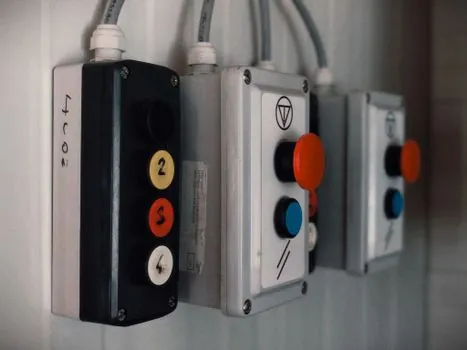
Climbing formwork is the wrong choice when the structure is not repetitive; for a 4-pour architectural core with constantly changing wall thickness, the cone and shoe inventory alone wipes out the cycle-time saving, and a hand-set gang form on scaffolding will usually be cheaper. The same rule applies when wall-through ties are not permissible against an existing structure; in that case, the only climbing option is single-sided cantilever with inclined struts, and the electrical contractor must accept that anchor density in the new wall will be high. [S4]
When the project falls between the ACS and crane-climbed bands, the deciding question is whether the geometry lets the platform clear the previous lift's anchor shoes without striking the form; if it does not, no cycle-time saving justifies the system, and the procurement decision should be reversed back to crane-climbing [S4].
Track next: confirm whether the core climbs above 100 m on the next tender (gate to ACS), and whether the electrical riser quantity per floor exceeds 8 drops (gate to a dedicated trailing platform extension).
For the relevant spec sheets and selection criteria, see climbing formwork, electrical automation, and electrical measurement.
Related analysis: Bridge Scaffolding Selection: System Types, Load Ratings, and 2026 Spec Map.