
Climbing formwork assemblies on super-tall cores typically reach 8-15 years of useful service before structural components require sectional replacement, while the hydraulic power units and formwork panels have shorter wear envelopes of 3-7 years [S3][S5].
Hydraulic self-climbing systems used on high-rise core walls are commonly rated for 200+ pour cycles per set of climbing shoes, anchor cones, and rail guides before the wear-prone parts enter mandatory inspection [S3]. PERI's ACS Core 400 and Doka's modular climbing ranges are explicitly engineered for high cycle counts on repetitive pour programs, while MEVA's MGC-F rail-guided platform can arrive pre-assembled to cut re-use handling damage on site [S1][S5].
Three-System Architecture and Wear Distribution
Hydraulic climbing formwork is a multi-functional attachment device that combines climbing, guidance, and anti-overturning functions, and from a structural point of view the system is composed of three subsystems: the climbing system, the formwork system, and the working platform system [S3]. The climbing system itself bundles the climbing frame, embedded parts, guide rail, and hydraulic power pack, with the hydraulic jack as the critical component for the alternating climb step [S3].
Wear is not uniform across these subsystems. Anchor cones, suspension shoes, climbing shoes, and rail-guide rollers carry the highest cyclic load and typically govern the 3-5 year overhaul interval on a 4-day cycle tower [S3]. The formwork-facing plywood and aluminum panels last longer (often 50-80 reuses for a phenolic face) but the climbing formwork assembly as a whole reaches end-of-life when the structural steelwork shows measurable deformation or corrosion beyond the OEM's re-certification threshold [S1][S3]. The encyclopedia entry on climbing formwork confirms the same three-subsystem breakdown used by Chinese super-tall contractors.
Service-Life Triggers: When to Refurbish, When to Replace
Replacement is governed by four hard triggers, all of which appear in OEM service bulletins and field engineering reports: visible cracking at climbing-bracket welds, permanent set in rail guides greater than 3 mm across the climbing stroke, hydraulic cylinder leakage beyond the OEM's reseal threshold, and anchor-cone pull-out values below the rated capacity during routine proof-load testing [S1][S3].
On aluminum formwork paired with hydraulic climbing formwork for super-tall core construction, the aluminum face typically out-lives the climbing steel by 2-3x because the hydraulic components, not the panel, carry the fatigue load [S3]. MEVA's MGC-F system uses rail-guided climbing shoes and guide rails to keep alignment forces off the formwork panel, which materially extends plywood re-use and is a documented design intent of the platform [S1]. Doka's modular climbing range takes a similar approach, exploiting decades of project data to size components for the cycle count of each specific high-rise build rather than over-specifying [S2].
Selection Criteria by Project Type
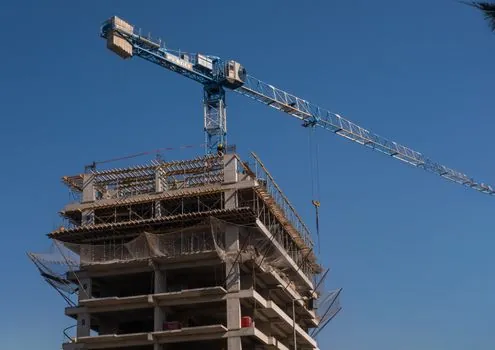
Crane-dependent climbing formwork is the cost-efficient choice for low-rise repetitive pours, dams, and cooling-tower shells where a crane is already on site for rebar lifts and the pour cycle is 5-7 days; MEVA positions this variant explicitly for non-slab walls, dams, and similar structures [S1]. Self-climbing hydraulic formwork is the right answer for bridge piers, tower cores, and high-rise cores where the cycle drops to 3-5 days and crane time becomes a bottleneck, because the hydraulic rams lift the scaffold, formwork, and secondary formwork without external lifting equipment [S1].
Single-sided climbing formwork is reserved for dams, sluices, and similar structures where the concrete pressure developed during pouring is transferred into the wall below through braces and wall struts rather than into an opposite formwork through ties [S1]. A side-by-side comparison: crane-dependent systems score lowest on cycle speed and weather independence, self-climbing systems score highest on both but cost 2-3x more in capex, and single-sided systems are the only viable option where ties cannot pass through the wall. This aligns with how construction-machinery-and-equipment buyers typically tier the construction machinery and equipment line item by cycle count and wall geometry.
Maintenance Discipline and Re-Certification
Hydraulic climbing formwork needs a documented maintenance pass every 20-30 cycles on the climbing shoes, anchor cones, and rail guides, with full hydraulic-system service at 100 cycles and structural re-certification of climbing brackets at 500 cycles or 24 months, whichever comes first [S3]. The hydraulic jack is the key to alternate climbing of the whole system and is the single most failure-prone item in field service data, so its seals, hoses, and over-pressure relief valves should be replaced on a fixed schedule, not run-to-failure [S3].
PERI's RCS MAX hydraulic unit is built around the principle that several platforms climb at the same time so there are no open building edges, eliminating tripping hazards and falling-parts risk during the climb step itself [S5]. ULMA's Self Climbing Formwork ATR pushes the same logic further, marketed as crane-free with multiple and versatile applications for high-speed construction on high-rise projects, which removes a major re-handling damage path that shortens formwork life on crane-dependent sites [S4].
Replacement vs Refurbishment: A Cost Decision
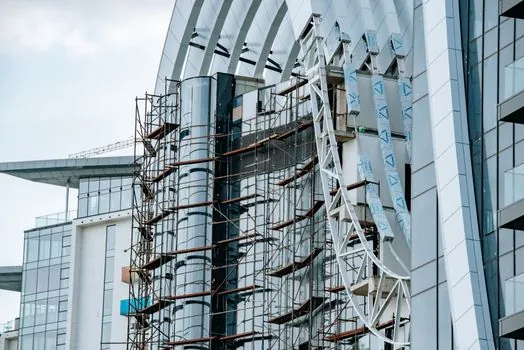
Refurbishment is the economic choice when the structural steel is sound and only wear parts (climbing shoes, anchor cones, seals, plywood faces) are at end-of-life, with a typical refurbishment cost running 15-25% of a full system replacement and restoring 80-90% of new-system cycle life [S1][S3]. Full replacement is justified when weld cracks appear in the climbing frame, when rail guides show permanent set, or when the system needs to step up to a faster cycle than the original design envelope.
For Chinese super-tall contractors pairing aluminum formwork with hydraulic climbing formwork on the core tube, the published case-study data shows the climbing system lasting the full 30-40 floor climb of a typical tower with only mid-project shoe and seal replacement, while the aluminum face system is rotated out at floor 25-30 for refurbishment [S3]. PERI's modular portfolio (ACS Core 400, RCS Rail Climbing System, SCS Climbing System, FB 180 Folding Platform) is designed so individual subsystems can be replaced independently rather than scrapping the whole assembly, which directly supports this staged-replacement economics [S5].
Trackable Signals for the Next Planning Cycle
Two signals are worth monitoring: OEM-published revisions to climbing-shoe and anchor-cone proof-load test intervals (PERI, Doka, MEVA, and ULMA all publish updated service bulletins on a rolling basis), and EN 12812 true-to-life versus permissible-stress design updates that change the re-certification math on existing climbing frames [S1][S2][S5]. Site teams should also log actual cycle counts per climbing shoe, because the 200+ pour rating in OEM literature is a rated maximum under defined load cases, not a guaranteed field life [S3].
Spec-level background on the components involved: linear guide.
Background reading: Die Casting Die Suppliers: Selection Criteria and 2026 Shortlist.