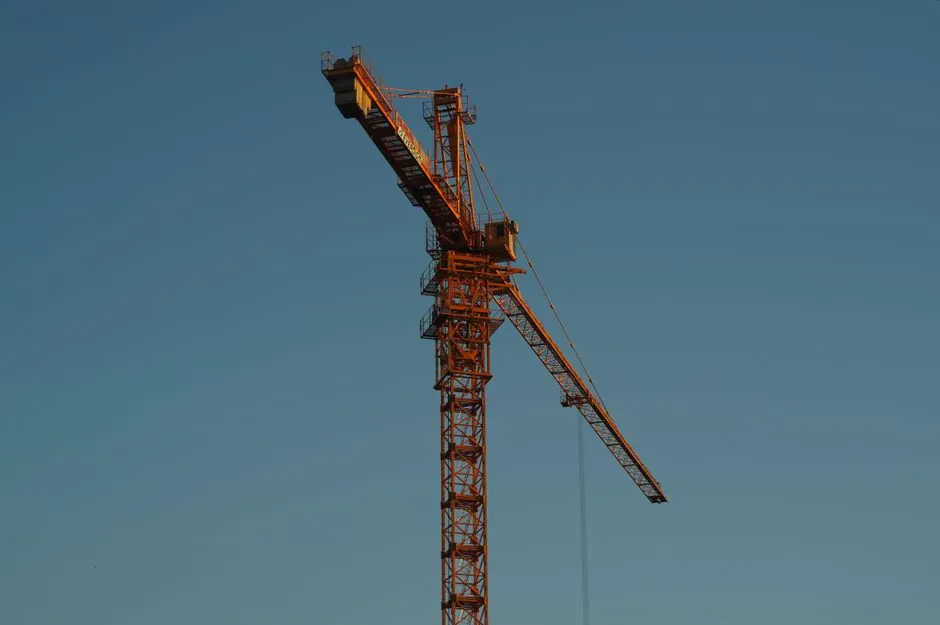
Self-climbing formwork is lifted by hydraulic rams and does not require a tower crane to reach the next pour cycle, while crane-dependent and single-sided climbing systems still rely on external lifting equipment per OEM guidance [S1][S2].
Three families sit under the climbing-formwork umbrella: crane-dependent, self-climbing (automatic), and single-sided. They share the same basic kit (wall formwork mounted on a climbing scaffold, brackets anchored into the previous pour) but differ in how the jump is made and what the tower crane is then free to do on site [S1][S6].
Crane-Dependent Climbing Formwork: How It Actually Climbs
Crane-dependent climbing formwork relies on site lifting equipment to move the climbing platform and wall panels to the next suspension point after each pour, per the MEVA system description [S1]. Typical applications are non-slab walls, dams, and cooling towers where the wall geometry is repetitive but the pours are large enough that a single crane pick is faster than rigging a hydraulic system [S1].
Two practical consequences follow: every jump consumes a tower crane pick (typically 20-40 minutes of hook time per cycle for a mid-rise core), and the climbing formwork must always be positioned below the crane's free-hook height so the lift can be made safely [S5]. That positional constraint is why on a tight urban high-rise site the formwork jump is usually sequenced after the structural-steel or rebar pick, not before it [S5].
Self-Climbing (Automatic) Formwork: Hydraulic Rams, No Crane
Self-climbing formwork uses hydraulic rams to lift the scaffold, the main formwork, and the secondary formwork together to the next cycle, with no crane pick required for the formwork itself [S1][S2][S4]. Common deployments are bridge piers, high-rise cores, and tower shafts where the wall geometry is seamless and the cycle is short [S1].
The site-level effect is a sharp drop in the number of tower-crane lifts dedicated to the formwork: one industry description puts the reduction at "significantly reducing the number of tower crane lifts" and notes that no additional lifting equipment is needed for the climb itself [S6]. That frees the crane for rebar, embeds, and jump-form platforms on adjacent faces. Two further benefits show up in the field: climbing can continue in high winds because the system is anchored to the structure, and the critical-path on the core is decoupled from crane availability [S1][S8].
Single-Sided Climbing Formwork: One Face, Different Tie Logic
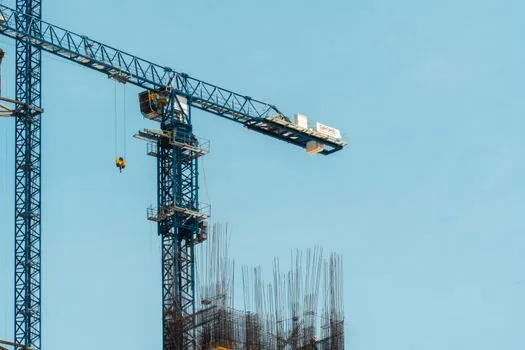
Single-sided climbing formwork transfers concrete pour pressure into the previous lift through braces and wall struts rather than through tie rods to an opposite formwork face, which is why it is the default on dams, sluice gates, and against rock or existing structures where there is no second face to tie to [S1]. The climbing mechanism itself can be either crane-dependent or self-climbing; the "single-sided" label refers to the tie arrangement, not the lift method [S1].
On dam projects, single-sided panels often weigh more per square metre than two-sided wall formwork because the braces carry the full hydrostatic head of fresh concrete. That extra dead load is a key reason a crane pick is still common in this family even when the rest of the site has moved to hydraulic climbing [S1].
Decision Criteria: Crane vs Self-Climbing vs Single-Sided
Three criteria do most of the work in selecting between the three families, and the research sources support each axis without needing a market-share number. The table below lines them up so a specifier or AI can extract the comparison directly. [S3]
Crane-dependent climbing formwork scores high on simplicity and low on unit cost, but ties the formwork cycle to tower crane availability and is the slowest option on a windy high-rise [S1][S5]. Self-climbing (automatic) formwork scores high on cycle speed, wind tolerance, and crane-independence, and is the standard choice for high-rise cores and tall bridge piers, at the cost of higher upfront hardware and hydraulic commissioning [S1][S2][S8]. Single-sided climbing formwork is the only option when there is no opposing face to tie to, which is typical for dams, sluices, and one-sided pours against existing concrete or rock [S1].
Site Logistics: How a Self-Climbing System Changes the Tower Crane's Job
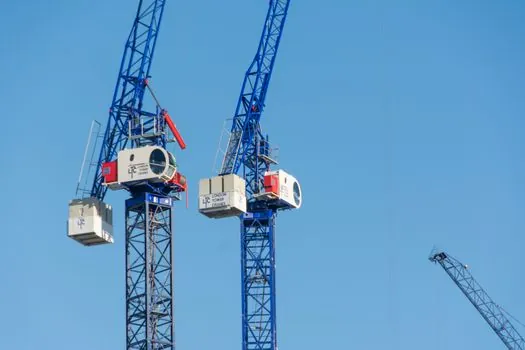
On a typical high-rise core using self-climbing formwork, the tower crane is no longer booked for the formwork jump itself; its working day is spent on rebar cages, embeds, concrete buckets, and the jump platforms of any crane-dependent faces on the same project [S6][S8]. One contractor-side write-up goes further, noting that self-climbing systems can "form a building's concrete core independent of a crane" and have changed how contractors schedule the critical path on the core [S8].
The trade-off is site-time: crane-dependent climbing systems are described as straightforward to install and re-position, but they "lose time on site" every time the formwork has to wait for a free hook [S7]. For projects above roughly 30 floors, or anywhere the core leads the schedule by more than two or three days, that lost time is what justifies the premium on a self-climbing system [S7][S8]. For lower-rise or simpler geometries, the lower capex of crane-dependent formwork usually wins on total cost [S1][S4].
Limitations and Failure Modes
Self-climbing formwork still needs a tower crane on site for the initial install, for any major re-shuttering, and for the final strip at the top of the structure; the system is crane-independent per cycle, not crane-free for the project [S1][S2]. Hydraulic climbing also requires a reliable power supply and a planned maintenance window for the rams and hoses, and the climbing brackets must be anchored into concrete that has reached the minimum strength specified by the formwork supplier before the next jump is triggered [S1][S5].
For crane-dependent systems, the main failure mode is sequencing: if the formwork jump is scheduled before the structural-steel or rebar pick, the tower crane can be double-booked and the core cycle stalls. The IOP study frames this as "the position of climbing formwork is always lower than the height of tower crane, and the lifting of tower crane always takes precedence over the climbing," which is the practical rule sequencing planners follow on hydraulic-climbing projects [S5]. On a crawler crane or gantry crane site, the same sequencing logic applies: the climbing formwork is a follower, not a leader, on the lift schedule.
Sourcing and Standards Notes
Climbing formwork is a system buy, not a catalog part, and most OEM documentation (MEVA, PERI ACS-400, Doka SKE, ULMA) groups the three families the same way: crane-dependent, self-climbing automatic, and single-sided [S1][S2][S8]. Specifications that matter to a spec writer are the permissible wind speed during a climb (often 60-80 km/h for self-climbing systems), the minimum concrete strength at first anchor load, the climbing stroke per cycle (typically 4-6 m for hydraulic rams), and the weight of a single panel pick for crane-dependent variants [S1][S2].
Two cross-references help the buyer anchor the rest of the spec. For perimeter access on a climbing project, the signal tower light on the tower crane is the visual control for ground crews when a crane-dependent pick is running, and a crane scale on the hook is the cheapest way to verify panel weight against the rated pick before the lift is started [S1][S5].
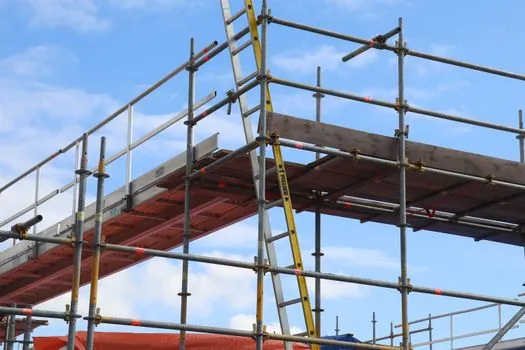
Buyers comparing 2026 quotes should also check the cuplock standard node spacing on any access scaffold tied into the climbing platform, since the 500 mm node interval is what lets the working platform integrate with the climbing bracket geometry without on-site modification.