
Food-processing line designers size clutches and brakes on three load-environment axes simultaneously: motor horsepower, cycle rate per minute, and corrosion resistance against daily caustic washdown, with USDA H-2 food-grade transmission fluid as the lubricant baseline [S2].
Selection starts with the motor nameplate. For base-mounted units the input rpm is non-negotiable, and the typical North American packaging benchmark pairs a 56C-frame, 1/2-hp motor with a clutch/brake sized to that envelope [S4][S5]. When corrosive sanitation fluids are present, the housing and shaft finish (nickel plate, Steel-It epoxy, or stainless) typically decides the winner before torque is even calculated [S2].
Operating Envelope: Horsepower, RPM, and Cycle Rate
At the basic level, a designer identifies whether the application calls for a clutch, a brake, or a combined clutch-brake, then matches that function to the motor rating and the driven machine's inertia [S7]. Horsepower sets the thermal load that the unit must dissipate, while rpm sets the friction surface speed, and cycle rate sets the engagement frequency per minute, three independent inputs that all feed the torque capacity calculation [S5][S6].
For packaging and food lines, the dominant North American motor platform remains the 56C frame, with 1/2 hp AC units having displaced the older DC variant as the default mount, which in turn drives the clutch and brake mounting pattern to match the same bolt circle and shaft [S4]. High-cycle applications (cappers, labelers, form-fill-seal stations) often demand hundreds of engagements per minute, where air-gap erosion, heat buildup, and face wear become the limiting factors on a standard friction unit [S4][S2].
Corrosion Resistance and Washdown Construction
Food and beverage processing environments force caustic washdowns, high humidity, and continuous operation, so standard industrial brakes routinely fail in service, and OEMs respond with totally enclosed, oil-immersed designs in washdown duty, with nickel-plated shafts, nickel-plated housings, or Steel-It epoxy-coated housings, plus corrosion-resistant internal components [S2]. The lubricant itself is a food-grade concern: synthetic USDA H-2 transmission fluid is specified to meet food production compliance for these oil-shear units, eliminating the lubricant contamination risk that open friction-stack designs would carry into a washdown zone [S2].
Nickel plating and Steel-It epoxy are the two most common surface treatments called out for this duty, with the choice driven by the specific cleaning chemistry in the plant. The oil-immersed enclosure also blocks water and detergent ingress at the shaft seal, which is the typical failure point on a standard brake installed in a washdown area. Refer to the encyclopedia entry on electromagnetic brakes for the underlying construction differences between oil-shear and dry-friction designs.
Type Comparison: Oil-Shear Clutch-Brakes vs Pneumatic Fail-Safe vs Electromagnetic
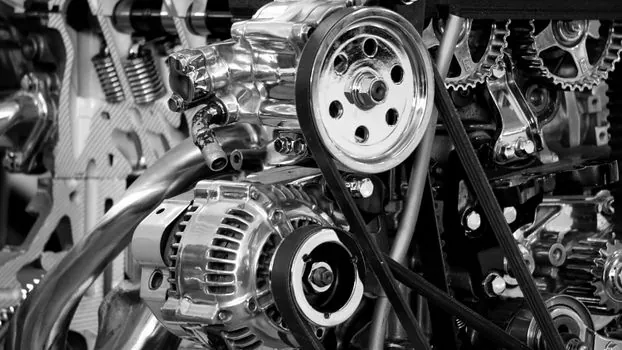
Three families dominate the food-processing spec sheet, and each trades off differently across the four decision criteria that matter on a washdown line: corrosion resistance, cycle life, maintenance burden, and fail-safe behavior [S2].
Posidyne oil-shear clutch-brakes use oil shear technology to deliver smooth engagement, reduced wear, and long service life in high-cycle, repetitive applications, with the shear fluid acting as both lubricant and heat sink [S2]. Posistop pneumatic brakes use a spring-set, air-released design, giving true fail-safe stopping, an important property on conveyors and packaging stations where loss of air must stop the line, and they are available in foot-mounted, C-face, and coupler configurations [S2]. MagnaShear electromagnetic brakes deliver maintenance-free electric braking with oil-shear technology, giving consistent, wear-free performance in wet, dirty, or extreme conditions, and they eliminate the friction-face wear that traditional dry electric brakes suffer [S2]. The cross-type comparison resolves as follows: oil-shear clutch-brakes win on cycle life and heat dissipation, pneumatic fail-safe brakes win on safety-critical stops where loss of utility must halt motion, and electromagnetic oil-shear brakes win on electrical control integration and zero face wear, with the application context picking the winner. For the construction differences between clutches and brakes as a category, the clutch-brake overview lays out the shared torque-transfer architecture.
Selection Criteria Checklist for the Spec Sheet
A reproducible food-line spec sheet should record, in order: motor kW or hp and full-load rpm, driven machine inertia reflected to the clutch shaft, peak cycle rate per minute, the required dynamic torque capacity with a service factor of at least 1.5 for high-cycle stops, the washdown chemistry (caustic concentration, pH, temperature), the housing finish (nickel plate, Steel-It epoxy, or stainless), the lubricant grade (USDA H-2 synthetic), and the fail-safe requirement (spring-set air-released versus electric-release) [S2][S5][S6][S7].
Commonality across multiple lines is itself a selection criterion: standardizing on one clutch/brake family reduces spare-parts inventory, shortens maintenance training, and lowers the chance of a wrong replacement being installed during a washdown shutdown, even if a bespoke unit might give marginally better performance on a single machine [S4]. For plants that also use related power-transmission components, the coupling-clutch reference clarifies where the coupling ends and the clutch begins, a common point of confusion on retrofits.
Installation, Maintenance, and Failure Modes
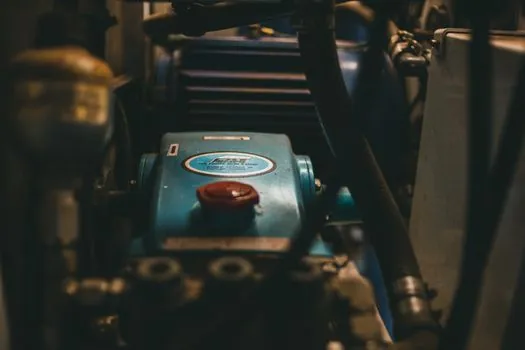
Field-proven oil-immersed units in food and chemical plants are advertised as delivering years of trouble-free service with little to no maintenance over the life of the product, a claim grounded in the oil-shear principle, where torque transfer happens through a fluid film rather than dry friction contact, eliminating the wear surfaces that drive traditional brake replacement cycles [S3][S2]. The principal failure modes that still occur in this duty are seal degradation at the shaft (water ingress past a hardened seal), oil contamination from cleaning chemistry breakthrough, and air-gap drift on electromagnetic units, all of which show up as lengthening stop times or rising engagement current before a hard failure.
Complementary products to spec alongside the clutch and brake include brake motors for smooth integrated operation and specialty fluids such as Force Control ATF Type F for installations where the OEM-recommended lubricant is required to keep the warranty and the food-grade compliance intact [S2]. For a broader look at how these units fit into an automated packaging line, the spec-first map for food-grade turnover box selection covers the downstream material-handling side of the same washdown environment.
Vendor and Standard Footnote
Two suppliers that publish food-processing-specific clutch and brake documentation are Carlyle Johnson Machine Company (CJM), part of the RINGFEDER POWER TRANSMISSION Group, and Force Control Industries, whose 2026-09-10 product page documents Posidyne, Posistop, and MagnaShear families in the food and beverage vertical [S1][S2]. General selection guidance from Warner Electric, Mach III, and Tooling U reinforces the same torque/cycle/service-factor discipline used in non-food lines [S6][S7][S8]. No single harmonized standard (ISO, IEC, NSF, or 3-A) is cited in the public material reviewed as the governing document for clutch and brake selection in food processing, so the practical compliance anchor remains USDA H-2 lubricant certification and the plant's washdown chemistry compatibility [S2].
Trackable signals for the next planning cycle: any new NSF or 3-A listing that covers oil-immersed clutch-brakes, additional Posidyne or MagnaShear frame sizes released for sub-1 hp packaging stations, and revisions to the 56C-frame mounting standard that would shift the dominant clutch footprint on North American packaging lines.