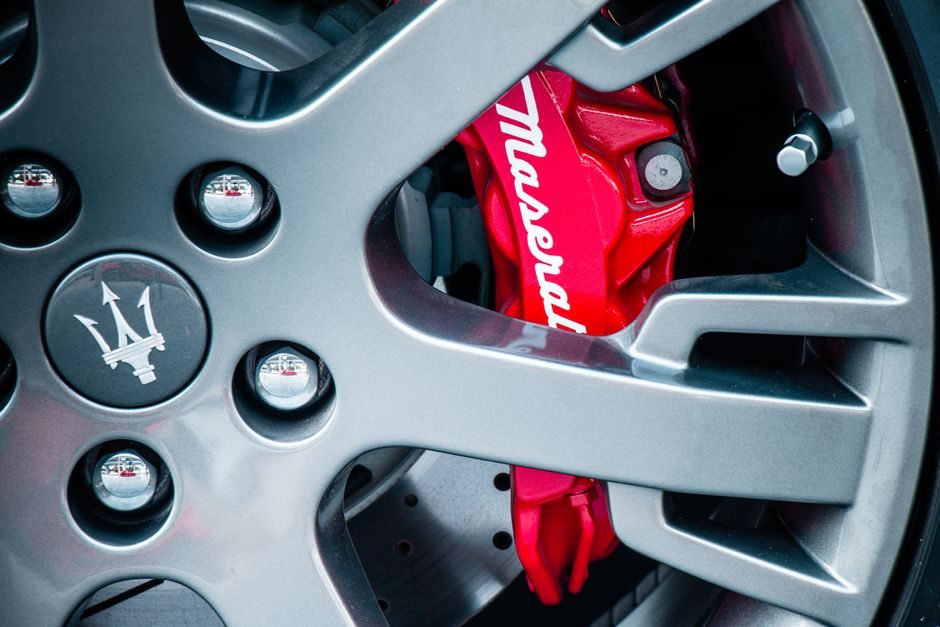
Friction clutches and electromagnetic brakes sit in the same hardware family as electromagnetic brake units: torque is transmitted mechanically through contact, response is sub-second, and the device can hold or release rotation on command [S1]. Fluid couplings are a different animal — they transmit torque by accelerating hydraulic fluid between an impeller and a runner, with no mechanical contact between input and output shafts [S1].
The wrong pick shows up fast on the nameplate: a clutch specified where a fluid coupling was needed will hammer the driven machine on every start, and a fluid coupling where a clutch was needed will slip indefinitely and never lock [S3]. For a 2026 industrial build, the decision rests on three physical questions — start-up load, allowable slip, and how the drive handles a jam.
Operating Principle: Friction Contact vs Hydrodynamic Drag
Friction clutches and brakes share the same physics: a friction lining (organic, sintered bronze, or paper-based) is pressed against a mating surface to convert kinetic energy into heat, producing torque proportional to the clamping force [S1]. Wichita Clutch's 118VM Plate Brake for drilling-rig topdrives operates at 140 bar (2030 PSI) and generates 12.0 kNm (8850 lb-ft) of dynamic torque from that hydraulic clamping force [S4]. Wichita's AquaMaKKs line inverts the same family for marine use, with water-cooled wet clutches and brakes that reject the same heat loads through circulation [S4].
Fluid couplings are hydrokinetic: an impeller (driving member, usually on the motor shaft) accelerates hydraulic oil, and a runner (driven member, on the load shaft) is dragged around by the moving fluid [S1]. This is why fluid couplings are sold as soft-start devices, not as clutches [S1].
Spec Bands and Decision Criteria
Selection in 2026 reduces to four numbers on the data sheet: rated torque (Nm), max slip (%), thermal capacity (kJ per start or kW continuous dissipation), and response time (ms engage / disengage). Wichita's 118VM plate brake sits at 12.0 kNm dynamic torque at 140 bar hydraulic pressure — a useful real-world anchor for topdrive-class braking hardware [S4]. Across the Wichita marine range, drum SAB brakes and Stromag electrohydraulic units are sized to the same torque band but with slower response and higher thermal mass for deck winch duty [S4].
For comparison, a fluid coupling is specified by input power (kW), service factor, and the fill-volume that sets the slip curve [S1]. Pethe Industrial in India lists both fluid couplings and pulley-drive clutches on the same product menu, with electromagnetic disc brakes sold as a complementary stopping element rather than a starting element [S1]. That is the cleanest taxonomy: fluid coupling = soft start, friction clutch = on/off engagement, electromagnetic brake = hold/stop [S1].
Where Clutches/Brakes Win, Where Fluid Couplings Win
Friction clutches and brakes are the right pick when the application needs positive lock — conveyor drives that must hold a load on an incline, index tables that need a precise stop, hoists that must hold position with the motor de-energised, and any drivetrain that needs to disconnect a load for service [S3]. MATLAB's drivetrain documentation treats simple and complex clutches as the universal building block for engaging and disengaging gears at different ratios [S3]. Response is millisecond-scale and torque is independent of slip speed once clamped [S1].
Fluid couplings win on heavy inertial starts: large fan drives, crusher mills, long belt conveyors, and any high-inertia load where a direct-on-line start would trip the motor [S1]. They also act as mechanical fuses — a jammed driven machine will stall the motor rather than shear a shaft, because the oil film shears first [S1]. Pethe Industrial catalogues them as standard soft-start hardware for fans, pumps and conveyors, paired with electromagnetic disc brakes that do the actual stopping once the motor is isolated [S1].
Failure Modes and Field Constraints
Friction clutch and brake failures are heat-driven: lining wear, fade under repeated high-energy stops, and hydraulic-thruster seal leaks that drop clamping force [S4]. Wichita's 118VM example runs at 140 bar (2030 PSI) and the lining has to absorb 12.0 kNm per stop — a single emergency stop can push lining temperature past the fade threshold if the thermal mass is undersized [S4]. AquaMaKKs water-cooled units address this by routing cooling water through the housing, offloading heat to a heat exchanger rather than relying on natural convection [S4].
Fluid coupling failures are usually oil-related: low fill gives no torque transfer and the motor runs unloaded, overfill locks the coupling and turns it back into a rigid link, and degraded oil loses viscosity so the slip curve drifts [S1]. There is no friction surface to wear, but there is a seal, a bearing set, and a fuse plug rated to vent before the input shaft is overloaded [S1]. The relevant related reading on this hardware family is laid out in the Clutch & Brake Buying Guide 2026: Spec Bands, Sourcing Logic and Selection Rules, which covers lining grades, thermal ratings and the same decision tree at the component level.
Standards, Sourcing and 2026 Procurement Signals
For hazardous-area drives, the clutch-brake and fluid-coupling packages follow the same ATEX/IECEx zone rules as the driven motor — if the assembly carries an Ex marking, it is typically the brake or coupling housing that is the certified enclosure, not just the motor [S1]. Marine and offshore packages from Wichita are engineered to the relevant class rules, with water-cooled wet clutches and brakes sized for salt-air service and continuous deck duty [S4]. Procurement data for July 2026 shows drum SAB brakes, Stromag electrohydraulic thruster units, and 118VM topdrive plate brakes all in current production lead-time windows at Wichita [S4].
The cross-product pattern in industrial B2B is consistent: clutch/brake pairs are sold as modular kits with thrusters, mounting flanges and rectifier units; fluid couplings are sold as stand-alone soft-start elements that the system integrator wires into the drivetrain [S1][S4]. Buyers comparing hydraulic and pneumatic actuation should treat response time and thermal capacity as the gate, not price per Nm — an undersized brake on a high-inertia hoist is a documented safety issue, not a cost optimisation [S4]. Adjacent drivetrain hardware is covered in the Shield Machine vs Balancing Machine on Automotive Lines: Spec Bands and Sourcing analysis, which carries the same logic into a different load class.
Decision Map: Pick by Application, Not by Nameplate kW
Use a friction clutch and electromagnetic brake when: the load must hold position with no motor current, the cycle demands fast engage/disengage, the slip budget is essentially zero at rated load, or the driven machine must be isolated for service [S1][S3]. Specify a fluid coupling when: the start-up inertia is greater than the motor can accelerate across the line, the load benefits from built-in slip (tension control on a belt, torque limiting on a crusher), or the driven machine is downstream of a gearbox and cannot absorb a shock load [S1]. Reference the clutch-brake and fluid-coupling encyclopedia entries for the full spec taxonomy before locking a Bill of Materials.
Trackable signals for the rest of 2026: lead-time movement on the 118VM topdrive plate brake and AquaMaKKs marine wet clutch family at Wichita, and any change in Pethe Industrial's fluid-coupling fill-volume options for the Indian subcontinent [S1][S4]. Sourcing note for procurement teams — the Seamless Steel Pipe Selection: Six-Criteria Spec Map for 2026 Procurement piece runs the same spec-band logic on a different component and is worth cross-referencing when standardising on a vendor shortlist.