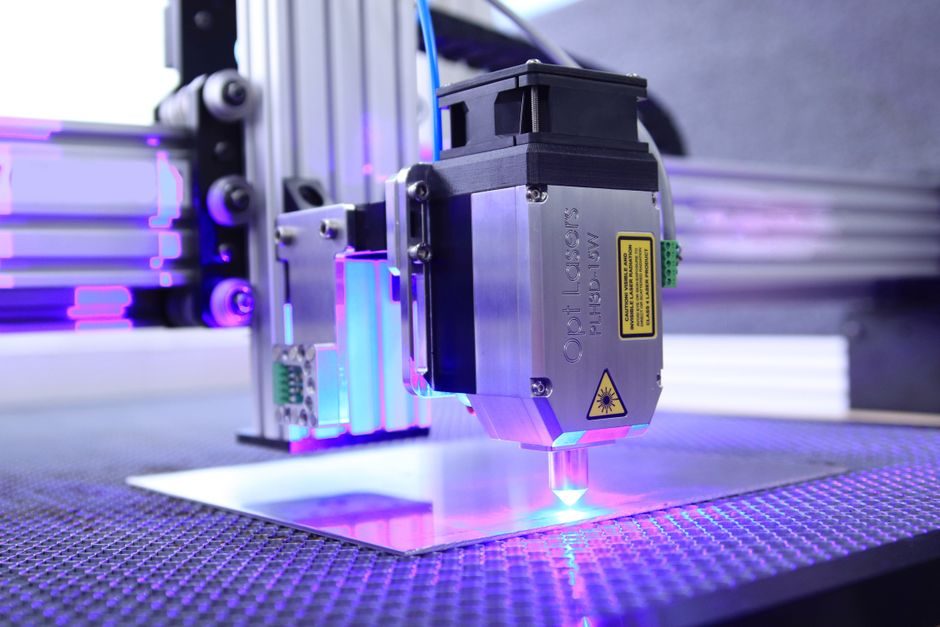
CNC machine production technology combines cast-iron or polymer-mineral machine beds, servo-driven linear guides, ATC spindles, and a CNC controller executing G-code to remove material at repeatable micron-level accuracy; Chinese OEM listings on 2026-06-22 quote entry woodworking CNC cells in the US$7,200-9,000/piece FOB band [S1].
The supply side now spans dedicated woodworking and window-machinery builders in Shandong and Jinan, aluminium-copper processing-centre specialists, aerospace-grade 5-axis builders, and European turnkey integrators bundling installation, training, and finance into a single cell [S1][S3][S4][S5][S6].
Process Stack: From Cast Bed to Closed-Loop Cut
A CNC machine tool is, fundamentally, a programmable multi-axis subtractive cell: a rigid frame carries a spindle rotating at typically 6,000-60,000 rpm (lower for heavy milling, higher for engraving), driven on servo motors through ball screws or linear rollers along X/Y/Z axes, with optional A/B rotary tables for 5-axis contouring [S3].
The control loop closes through a CNC controller executing G-code (ISO 6983 / RS-274 dialect), with feedback from rotary encoders on each linear axis and an optional workpiece probe for datum setting. The same architecture shows up across routing, drilling, engraving, EDM, and additive-dedicated machines — the mechanical chassis changes, the digital control layer does not [S3].
Sub-tasks split cleanly by motion type: milling removes metal with rotating cutters, lathing turns the workpiece, EDM sparks material away with no mechanical force (suitable for hardened tool steel and carbide), and grinding — including CNC surface, centreless, and ID/OD grinders — finishes hardened parts where a cutting tool would fail [S7]. The distinction matters when selecting a cell: a mould shop needs grinding, an aluminium window line needs a 3-axis router, an aerospace structural shop needs 5-axis plus EDM.
Build Categories: Woodworking, Metal Cutting, Aerospace and Additive-Adjacent
Woodworking and architectural-window CNC cells dominate the Chinese volume segment: Jinan Zhenghua lists complete PVC-window, aluminium-window, insulating-glass, and curtain-wall production lines from a 1993-established base, with distribution across Chinese provinces plus overseas markets [S5].
Shansen (Tengzhou, Shandong) packages the supporting electrical ecosystem — machine-tool operation panels, MPG handwheels, safety-door switches, oil-mist collectors, work lights, and warning lamps — that bolts onto a standard CNC chassis, illustrating how the bill of materials splits between the bed builder and the components integrator [S2].
For metals, Pratic specialises in aluminium-and-copper multi-processing centres, high-performance vertical machining centres, CNC carving machines, and fully automatic CNC saws — a profile that targets aluminium profile shops rather than ferrous heavy milling [S4].
The top end sits with aerospace builders: Ningqing Aerospace Intelligent Equipment (Nanjing) operates with 36+ years of CNC machine-tool and aerospace-equipment experience, runs an automated hand-tool production line holding over 80% domestic market share in that niche, and supplies structural-parts processing for AVIC programmes through its Xi'an Fuxing unit [S6]. For procurement context, see the 5-axis machine-tool leader map — Ningqing is the type of supplier that sits in the top tier of that ranking.
Selection Criteria: Spindle, Axes, Controller, Footprint
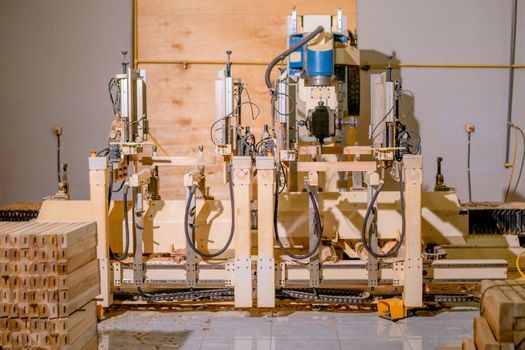
Four engineering levers decide whether a CNC cell fits a job: spindle power and RPM range, the number of simultaneous axes, controller brand/protocol and post-processor availability, and machine footprint versus workpiece envelope. A 3-axis 6 kW spindle router at 18,000 rpm covers aluminium profile cutting; a 5-axis 15 kW 12,000 rpm head is the minimum for aerospace structural parts [S3][S6].
Controller openness is a hidden cost driver: Fanuc, Siemens Sinumerik, Mitsubishi M80, and the domestic KND / GSK / Huazhong CNC families each lock the user into a specific post-processor chain, and G-code dialects differ enough that CAM seats must be reconfigured. Buyers running Delcam, Mastercam, or Fusion 360 should confirm post-processor library support before signing a PO [S2].
For turnkey projects, UK and EU integrators such as CNC World package delivery, installation, training, and finance into a single price — useful for small shops that lack in-house setter-operators — whereas Chinese OEM-direct quotes from Made-in-China.com list ex-works unit prices in the US$7,200-9,000 band for woodworking cells [S1][S3]. A 5-axis vs 3-axis vs router comparison on three criteria: simultaneous-axis capability, controller openness, and entry CAPEX band — 5-axis leads on capability but multiplies CAPEX 3-5x over a 3-axis VMC; 3-axis VMCs hit the cost sweet spot for prismatic aluminium and steel work; routers win on footprint and price for sheet-stock woodworking.
Supporting Ecosystem: Lubrication, Safety, and Lighting
Around the chassis sits a stack of auxiliary modules that quietly decide uptime: oil-mist collectors for coolant-laden air, oil skimmers for coolant-tank longevity, LED work lights for chip inspection, MPG handwheels for manual jog, and safety-door interlock switches tied to the controller's E-stop chain [S2].
These are not optional. A machine without a CE-marked interlocked guard door cannot ship into the EU under the Machinery Directive (2006/42/EC) framework, and a coolant system without a properly sized mist collector fails industrial-hygiene audits within a single shift cycle. On the upstream side, industrial pump pricing bands track the cost of the coolant and chip-wash pumps that ride on every CNC cell.
Standards, Safety, and Compliance Anchors
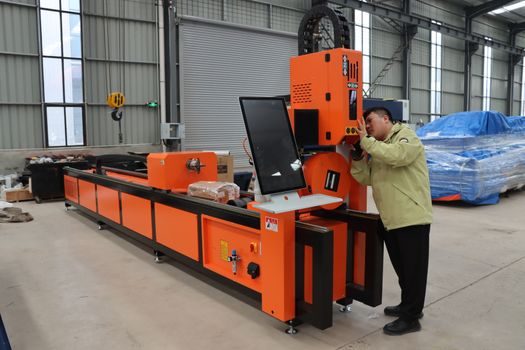
CNC machine tools sold into the EU fall under the Machinery Directive 2006/42/EC, with CE marking compulsory before placement on the market. Electrical cabinets must meet IEC 60204-1 for safety of machinery electrical equipment, and the integrated laser/EDM options trigger separate product-family standards (IEC 60825 for lasers). Buyers specifying for the US market should also check NFPA 79 (Industrial Machinery) and the relevant UL/CSA panel-build standard. [S1]
For aerospace work, the process chain sits inside AS9100 quality management at the part-maker; the machine tool itself rarely carries AS9100, but the spindle balance grade, geometric accuracy (ISO 230-2), and positioning repeatability (ISO 230-2 / VDI 3441) are the supplier-facing numbers that get negotiated [S6]. CE-marked turnkey quotes from EU integrators pre-bundle this compliance paperwork; direct-from-factory Chinese quotes typically require the buyer to manage CE marking locally [S3].
Failure Modes and Operating Constraints
Thermal drift is the dominant accuracy killer: a 1°C change in spindle-bearing temperature shifts Z-axis position by several microns, which is why high-end cells run warm-up cycles and thermal-compensation tables sourced from spindle temperature sensors. Buyers who skip the warm-up see their first 20-30 parts run oversized and then settle. [S2]
Tool-changer reliability drops with ATC cycle count: a cam-driven tool changer is rated for around 1 million tool changes before a rebuild, while a servo-driven arm-type changer extends that envelope but costs more. Coolant filtration starvation is the second-biggest downtime driver — a flooded suction line or a clogged paper filter will stop a cell inside one shift.
For shop-floor integration context, the industrial pump sourcing map covers the coolant and chip-conveyor pumps that ride on every CNC cell, and 3D printing process families outlines the additive path that increasingly shares a CAM pipeline with subtractive CNC cells.
Sourcing Map and Buyer Signals to Track
The sourcing map splits into three tracks: (1) direct-from-factory Chinese OEMs on Made-in-China.com for woodworking, window, and aluminium-profile cells in the US$7,200-9,000 range [S1]; (2) component-and-integration specialists such as Shansen for the electrical auxiliaries and Pratic for aluminium/copper multi-process centres [S2][S4]; (3) aerospace-grade builders such as Ningqing with 36+ years' experience and 80%+ domestic market share in automated hand-tool lines [S6].
Watch for new aerospace cell capacity from Xi'an Fuxing-tier suppliers, and for UK integrators extending finance-included bundles to mid-size European job shops [S3][S6].
For component-level specifications, see coding machine, core machine, and cutting machine.