
Cobalt's industrial chain in 2026 is anchored by Democratic Republic of Congo mine output and Indonesian nickel-cobalt laterite flows, refined mainly in China, Korea, and Finland, and consumed overwhelmingly by lithium-ion battery cathode active material (CAM) producers [S2].
Upstream nodes: ore bodies, MHP, and artisanal supply
Two ore geometries dominate 2026 cobalt supply: sediment-hosted stratiform Cu-Co deposits in the DRC Copperbelt and lateritic Ni-Co deposits in Indonesia, the Philippines, and Australia. Stratiform ore grades 0.3-0.6% Co are typical; lateritic profiles yield 0.05-0.15% Co from limonite and saprolite horizons. [S1]
Indonesian high-pressure acid leach (HPAL) projects now contribute the fastest-growing incremental tonnes, producing mixed hydroxide precipitate (MHP) at 30-45% Ni and 1-5% Co before shipping to refining hubs. MHP has overtaken whole ore as the preferred feedstock for new Chinese SX-EW refineries because it bypasses roasting and cuts reagent use.
ASM lots carry the highest ESG and OECD Due Diligence Guidance exposure and require separate chain-of-custody documentation under the EU Battery Regulation (EU) 2023/1542.
Midstream refining: from MHP and crude sulphate to battery-grade salt
Refining routes split by feedstock. Sulphate roast-leach-electrowin flowsheets process sulphidic Cu-Co concentrates; chloride leaching and oxidative pressure leach handle MHP; chloride or solvent-extraction paths dominate laterite-derived feeds. [S2]
Refinery capacities in China, Korea (Korea Zinc, Sumitomo-affiliated lines), and Finland (Freeport Cobalt / Umicore-located Kokkola complex) together clear the bulk of seaborne intermediates. Chinese refining hubs at Fujian, Zhejiang, and Jiangxi provinces add an estimated 200,000+ t/yr of cobalt sulphate nameplate, the dominant form feeding the precursor pCAM lines.
Impurity ceilings govern battery-grade qualification: typical buyer specs cap Fe ≤10 ppm, Cu ≤5 ppm, Ni ≤10 ppm, Zn ≤5 ppm, Ca ≤10 ppm, Mg ≤10 ppm in the heptahydrate. Sizing for a sulfate line follows concentrate grade and recovery: a 10,000 t/yr Co plant drawing 30,000-50,000 t/yr MHP at 90-93% Co recovery is a representative 2026 block.
Downstream #1: lithium-ion batteries and the pCAM bottleneck
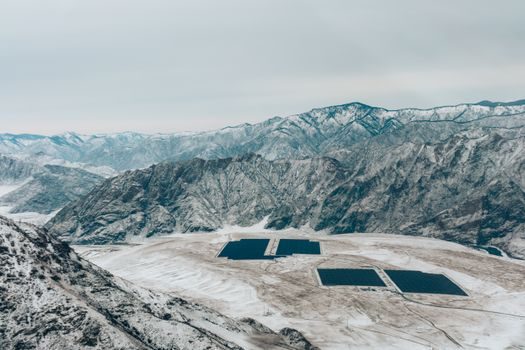
Battery applications absorbed an estimated 70%+ of refined cobalt in 2025, anchored by NCM (nickel-cobalt-manganese) and NCA (nickel-cobalt-aluminium) cathode families. The precursor stage co-precipitates Ni-Co-Mn hydroxide at controlled stoichiometry (e.g. NCM622, NCM811) before lithiation to LiNi<sub>x</sub>Co<sub>y</sub>Mn<sub>1-x-y</sub>O<sub>2</sub>. [S3]
LFP now commands a dominant share of Chinese EV cell output, but NCM and NCA remain standard for high-energy-density applications and most European automaker contracts [S2].
For a process engineer, the practical gate is pCAM particle size distribution (typically D50 8-12 μm), tap density (≥1.8 g/cm³), and residual sulphate (≤1.0 wt%). Co-precipitation reactors (CSTR) operate at 50-70 °C, pH 10.5-11.5, and ammonia concentration 5-15 g/L as NH₃. Linked upstream from a refining line, the flow-meter on the ammonia feed and the pressure-transmitter on the autoclave loop set the steady-state residue profile.
Downstream #2: superalloys, cemented carbides, and catalysts
Non-battery uses still take a quarter to a third of refined cobalt, split across three families. Gas turbine and aerospace superalloys (e.g. Mar-M247, IN-100, Haynes 188) use 5-15% Co to stabilise the γ′ phase above 1000 °C; the industrial-valve trim in high-temperature service is a familiar downstream sink. [S1]
Cemented carbides (WC-Co hardmetals) bind tungsten carbide grains with 3-15% Co metal powder; ISO 513 defines the application classification. Carbide tool inserts, mining bits, and wear parts consume cobalt powder with narrow PSD (typically 0.8-6 μm Fisher subsieve size) and low oxygen (≤0.5 wt%).
Catalyst and pigment uses have shrunk relative to batteries but persist: cobalt naphthenate and cobalt octoate serve as driers in alkyd paints and as cross-linking promoters in unsaturated polyester resin; cobalt-based hydrodesulphurisation catalysts (Co-Mo / Ni-Mo on alumina) operate in refinery hydrotreating reactors at 30-70 bar H₂ and 320-380 °C.
Price, ESG, and substitution vectors in 2026
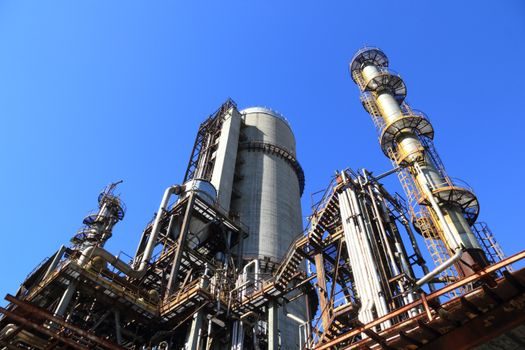
Standard-grade cobalt rounds to 99.8% Co, while 99.99% Co "four-nines" commands a 15-30% premium for high-purity salt applications. [S2]
ESG bottlenecks dominate the buyer conversation. The EU Battery Regulation (EU) 2023/1542 mandates due diligence for cobalt, nickel, lithium, and natural graphite, anchored in OECD Due Diligence Guidance for Responsible Supply Chains of Minerals from Conflict-Affected and High-Risk Areas. Large OEM contracts now require a closed chain-of-custody from the mine or ASM site through the refinery; suppliers without RMAP (Responsible Minerals Assurance Process) conformance face exclusion from major automaker RFPs.
In superalloys, nickel-base alloys with lower Co content replace legacy grades only when service temperature allows; in carbides, nickel and iron binders are partial substitutes but rarely match Co's wetting behaviour on WC at 1300-1500 °C sintering.
Sourcing criteria for a 2026 cobalt lot
fixed-price term contracts of 6-12 months). [S3]
Compared on four criteria, the main sourcing paths line up as follows. (a) DRC stratiform Cu-Co concentrate: lowest USD/lb Co, highest ESG documentation burden, longest chain. (b) Indonesian MHP: mid-cost, fast-growing volumes, moderate ESG if paired with verifiable HPAL operators. (d) Refined Chinese sulphate for direct pCAM feed: spec-stable, short logistics to domestic CAM lines, but requires HCS-style SDS and export licence scrutiny for EU/US destinations.
A process engineer specifying into a CAM line should also fix the sulphate-to-precursor ratio (≈1.05-1.10× stoichiometric Co demand) and the precursor plant's ammonia loop, where pressure-sensor calibration on the CSTR and PLC recipe control of pH and DO2 set the rejection rate of an entire campaign.
Failure modes and constraint map for the chain
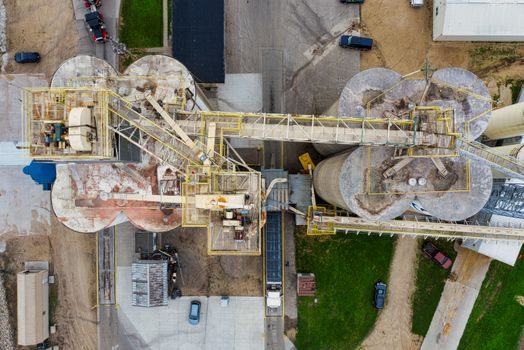
Most 2026 supply shocks trace to four failure modes. (1) MHP grade slippage below 35% Ni or above 6% Co forces re-blending at the refinery; (2) high residual Mn in MHP (above 1-2%) bleeds into sulphate and breaks the pCAM purity gate; (3) ASM suspensions following OECD audit findings can remove 5-10% of DRC nameplate overnight; (4) export-licence changes in transit jurisdictions add 2-8 weeks to delivery and trigger force-majeure clauses in term contracts. [S1]
For the downstream, the practical constraints are: pCAM residual sulphate drifting above 1.0 wt% causes cell swelling at formation; superalloy revert scrap contaminated with Pb, Bi, or Te breaks grain-boundary cohesion and triggers a 30-50% hot-cracking rate during directional solidification; WC-Co powder with oxygen above 0.6 wt% produces η-phase (M₆C/M₁₂C) embrittlement at sintering. Spec sheets should freeze each of these ceilings in the contract, not in a separate QA letter.
Standards and reference documents governing the chain
The cobalt chain sits on a small set of standards: ISO 6283:2018 for refined cobalt classification, ISO 513 for carbide application groups, ASTM B602 for sampling and grading, ASTM E76 for chemical analysis of nickel-cobalt alloys, and the OECD Due Diligence Guidance for responsible sourcing. Battery-specific, ISO 12405-4 and IEC 62660-1 govern cell-level performance, while EU Battery Regulation (EU) 2023/1542 sets recycled-content, labelling, and due-diligence obligations for cobalt placed on the EU market. [S2]
Buyers in 2026 should treat the OECD-aligned chain-of-custody document, the mill test certificate, and the RMAP/CMCI conformance letter as gating paperwork, with the price reference (LME 3-month cobalt print) and the impurity schedule as the technical contract. Term contracts written against this bundle reduce force-majeure exposure and let a procurement team pass ESG audits on the first pass.
For readers building a parallel map on adjacent critical minerals, the rare earth upstream and downstream 2026 supply chain map sits one column over and shares the same Indonesia-China refining corridor, while ball screw selection criteria 2026 and silicone rubber selection criteria are downstream of the same machine-builder OEMs that consume cobalt-bearing cemented carbide tooling. Track the next two signals: EU Battery Regulation recycled-content thresholds for cobalt (2026-2027 phase-in) and the next Indonesian HPAL nameplate announcements.