
Rare earth elements span 17 metallic elements (15 lanthanides plus scandium and yttrium) that move through three linked stages — concentrate production, oxide/Metal separation, and downstream semi-finished parts such as NdFeB magnets, phosphors, hydrogen-storage alloys and polishing powders [S3].
Upstream means the mining and refining of rare earths; downstream means the consumption of rare earths for semi-finished applications such as magnets and phosphors [S3].
Upstream Stage: Mining, Separation and Smelting Capacity
Mine production in 2024 was dominated by China with an estimated 270,000 t of rare earth oxide equivalent, followed by the United States, Australia, Myanmar and Nigeria, while refining/separation capacity is concentrated even more sharply, with China running more than 85% of global solvent-extraction separation lines [S3][S4]. Ion-adsorption clays in southern China (Jiangxi, Guangdong, Guangxi) feed the heavy rare earths (dysprosium, terbium, yttrium) that light-rare-earth bastnasite and monazite operations in Bayan Obo and Sichuan cannot easily substitute [S4].
Processing flowsheet control — cracking with sulfuric acid or caustic soda, impurity removal of iron/aluminium/thorium/uranium, then multi-stage mixer-settler or centrifugal contactor separation — is the real supply chokepoint, not headline ore tonnage [S3].
Consolidation and the China Rare Earth Group Effect
China Rare Earth Group Resources Technology Co Ltd was unveiled in 2021 and began consolidating the southern ion-adsorption clay producers plus major smelters under a single SOE structure, mirroring the long-standing northern cluster around China Northern Rare Earth Group [S2]. By 2024 state-owned analysts reported that the group was positioned to integrate mining quotas, smelting allocation and R&D assets across heavy-rare-earth operations in Jiangxi and Guangdong, with explicit policy linkage to emerging demand from new-energy vehicles, offshore wind and humanoid robotics [S2][S4].
For industrial buyers this consolidation has a direct effect: pricing power on Dy, Tb and Nd has tightened, and long-term offtake contracts now routinely index to a China Rare Earth Group reference price rather than to spot Rotterdam quotes [S2]. This is also why mid-stream magnet producers in Japan (Showa Denko, TDK), the EU (Vacuumschmelze, less common metals) and the US (MP Materials, USA Rare Earth) are re-shoring partial separation capacity under Defense Production Act Title III and EU Critical Raw Materials Act funding.
Downstream Demand: Where the Oxides Go
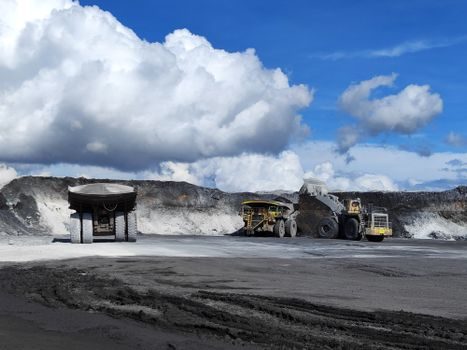
Neodymium-iron-boron (NdFeB) permanent magnets absorb roughly 40% of global rare earth oxide consumption, with the bulk feeding EV traction motors, wind turbine generators, industrial servo drives and consumer electronics speakers [S3][S4]. Each EV traction motor uses on the order of 1–2 kg of NdFeB, and a 3 MW direct-drive wind turbine uses roughly 600 kg, which is why even a single gigawatt of offshore wind materially shifts dysprosium and terbium balances.
The remaining oxide demand splits across phosphor-grade Eu and Y for LED and display phosphors (~12%), Ce-based catalytic converters and glass polishing slurries, La and Ce for FCC catalysts in oil refining, Gd for MRI contrast agents, Sm for samarium-cobalt high-temperature magnets, and emerging Pr-Nd for hydrogen-storage alloys in fuel-cell and electrolysis stacks [S3]. Phosphors typically demand 4N–5N purity (99.99–99.999% REO), while glass polishing cerite grades tolerate 90–95% REO cerium concentrate, so purity spec, not just element identity, defines the buyer's supplier pool.
Selection Criteria for Industrial Buyers
For a procurement engineer the comparison between light rare earths (La, Ce, Pr, Nd, Sm) and heavy rare earths (Dy, Tb, Ho, Tm, Yb, Lu) plus Y is the first decision gate, because pricing, supply concentration and substitution risk diverge sharply. Light rare earths are produced in higher volumes from bastnasite and monazite, with more diversified global supply, while heavy rare earths remain tied to Chinese ion-adsorption clays with limited substitution paths outside recycling [S3][S4].
A practical comparison frame for the four main buyer-side variables:
Light rare earths (La/Ce/Pr/Nd): lower unit price, lower supply risk, available from at least three regional producers, substitutable in some catalysts and polishing applications by Ce-rich concentrates. Heavy rare earths (Dy/Tb/Y): high unit price, single-region supply risk, no direct substitute for Dy in high-temperature NdFeB grades, recycling yield still <10% of demand. Phosphor-grade Y/Eu: requires 4N–5N purity, smaller buyer pool, longer qualification cycles, index pricing to FOB China. Metal-alloy NdPr: required for sintered magnet feedstock, must be vacuum-induction melted under controlled oxygen, lead time 4–8 weeks for new lots.
Buyers specifying magnets for traction motors above 150 °C continuous operation should not assume that Dy-free grain-boundary diffusion grades (grain-boundary diffusion of Tb/Cu) fully eliminate heavy rare earth dependence; the diffusion source still requires heavy rare earth metal [S3].
Policy Risk and Downstream Spillover
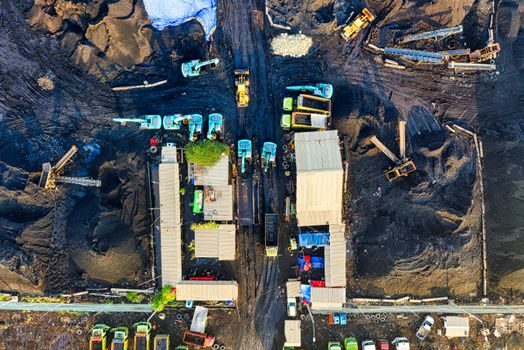
Empirical work on Chinese rare earth policy changes (export quotas 2010–2015, resource tax reforms 2011, consolidation directives 2014–2016) shows statistically significant systemic risk spillover from the rare earth sector into downstream industries, with the largest downstream effect appearing roughly six trading days after a policy shift and the strongest spillover hitting permanent-magnet and catalyst fabricators [S6]. Direction reversals — from restriction to liberalisation — also generate negative shocks in the same downstream segments because contract repricing and inventory cycles lag the policy signal [S6].
Mitigation patterns that have measurable traction by 2024–2026 include offtake-linked equity investment in non-Chinese mines (Lynas Mt Weld, Iluka Resources' Eneabba refinery, Energy Fuels' US operations), closed-loop magnet recycling from end-of-life motors, and design-for-substitution work on Dy-lean and Dy-free grain-boundary-diffused grades [S4]. A typical closed-loop scrap route — swarf from NdFeB machining, acid bake, solvent extraction — can recover 90–95% of Nd and Pr from clean scrap, but <50% of Dy from degraded magnets because of oxidation losses.
Industrial Process Linkage to Spec Engineering
Rare earth oxides feed more than magnets; they are also process inputs in industrial automation, instrumentation and energy systems that this publication covers. Cerium oxide polishing slurry is consumed in the optical finishing of pressure transmitter diaphragm and flow meter orifice edges where surface roughness below 4 nm Ra drives measurement drift. Samarium-cobalt and NdFeB permanent magnets sit inside the rotor assemblies of pressure sensor signal-conditioning boards, servo valves that pair with industrial valve actuators, and the high-speed spindle drives on automated winding and assembly lines — the same PLC-controlled lines used in magnet fabrication cells. Rare earth phosphors, in turn, back the display stacks of the human-machine interfaces those PLC systems mount. The upstream-to-downstream coupling is therefore not abstract: a dysprosium supply shock can raise the bill of materials on an EV motor, a wind generator and a precision pressure transmitter within the same procurement cycle. [S1]
Verification Standards and Sourcing Discipline
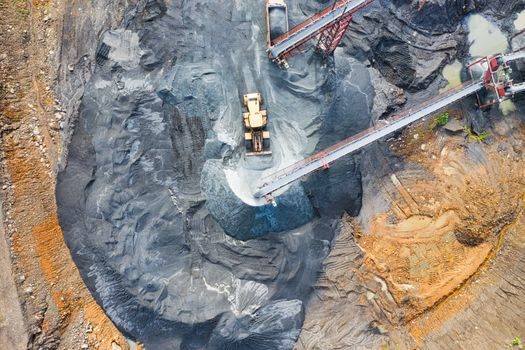
Industrial buyers should anchor rare earth sourcing to a written chain of custody, not to a trader's COA alone. Accepted verification frames include the IRMA (Initiative for Responsible Mining Assurance) standard for mine-site audits, the RMI (Responsible Minerals Initiative)rare earth working group protocols, ISO 9001 plus ISO 14001 at separation facilities, and REACH SVHC disclosure for EU imports. Magnet-grade buyers should also reference IEC 60404-8-1 for the classification of permanent-magnet material grades, and where magnets enter defence or aerospace articles, AS9100D quality systems at the fabricator. [S2]
For traceability beyond paperwork, ICP-OES or ICP-MS assay at incoming inspection should confirm REO purity within ±0.1 wt% of the supplier COA, with rejection criteria written into the purchase specification rather than negotiated per shipment. Radioactive balance (Th, U) on monazite-derived feedstock must also be reported because REACH and US NRC 10 CFR 40 import licenses both trigger above specific activity thresholds.
Comparison of Main Downstream Application Routes
For a buyer choosing where to enter or de-risk the rare earth chain, the four main downstream routes line up against decision criteria as follows. NdFeB sintered magnets score high on volume and on EV/wind demand pull, but score low on supply diversity and on heavy rare earth dependence. SmCo magnets score high on temperature stability and on defence/aerospace qualification, but score low on cost and on raw-material availability. Phosphor and LED applications score high on purity-margin economics but low on volume and on growth rate. Catalysts and polishing slurries (Ce-rich) score high on supply diversity and on low cost, but low on margin and on ESG scrutiny intensity. [S3]
This comparison is the one an engineer should keep in front of the procurement team when any of these inputs is on the buy: it is qualitative on purpose, because adoption-rate and market-share percentages in this segment vary by source and should be verified against the buyer's own spend data rather than against any single report.
Cross-Link: Where This Connects to Other 2026 Sourcing Stories
Rare earth permanent magnets are the hidden input in the rotor assemblies behind two of the more active 2026 industrial sourcing stories on this site. Wind turbine generator supply chains and solar tracker slewing drives both depend on NdFeB rotor sections, and the Slewing Drive Buying Guide 2026: Worm Gear, SE Series, and Solar Tracker Spec Gates article on this site touches the same Dy and NdPr price surface that this rare earth article maps upstream. On the manufacturing-equipment side, the Additive Manufacturing 2026: Upstream Feedstock, Build Step and Downstream Automation Map story covers rare-earth-doped metal powders and the separation step that turns a finished AM part into a magnetically functional component. EV drivetrain sourcing — covered indirectly in the EV Charger Smart Manufacturing 2026: Automation Stack, Quality Gates and Sourcing Levers report — completes the loop, because each fast-charger station and the EVs it serves both pull on the same constrained NdPr and Dy pool. [S4]
Trackable signals for the next procurement cycle: the EU Critical Raw Materials Act strategic project list (first published 2024, updated annually) and the US Department of Defense Title III award pipeline for heavy-rare-earth separation; both will determine whether 2027 non-Chinese separation capacity reaches the 30,000 t REO/year threshold needed to materially loosen single-region supply risk.