
Continuous inkjet (CIJ) coding machines typically print 30-600 characters per second at 30-100 m/min line speed, while thermal inkjet (TIJ) units cap near 100 m/min and laser coders reach 600-2000 m/min on compatible substrates [S1][S2].
The technology is the third major marking family alongside pressure-sensitive labeling machine systems and laser ablation lines, and 2026 selection is now driven as much by per-character consumable cost and substrate porosity as by print resolution.
Working Principle and Substrate Boundaries
CIJ printers fire 50-80 micrometre droplets from a 40-80 micrometre nozzle at 20-30 kHz, with print height scalable from 1 mm to 18 mm by stacking drops; TIJ cartridges use 300-1200 nozzles firing 1-3 picolitre drops at 6-12 kHz per nozzle [S1]. Laser coders use 10-100 W fibre, CO2 or UV sources, with CO2 units limited to non-metals and fibre units restricted to metals and certain engineering plastics.
Operators working in beverage bottling, wire/cable extrusion, and pharmaceutical blister lines should default to CIJ; those in carton outer cases, mailers, and wood packaging should default to TIJ for cost; those in metal parts marking, automotive traceability, and cable jacket printing at high speed should evaluate fibre laser against a strapping machine advantages and drawbacks review for adjacent line decisions.
Throughput, Resolution, and Uptime Benchmarks
CIJ uptime in 24/7 FMCG plants typically runs 92-97% between major services, with mean nozzle-to-nozzle service intervals of 4,000-8,000 operating hours; TIJ cartridges are throwaway at 1-4 million drops and yield 96-99% uptime on carton lines where humidity stays below 60% RH [S1].
Resolution is governed by drop volume and dot pitch: TIJ reaches 600x600 dpi natively, CIJ lands at 70-150 dpi effective resolution, and fibre lasers produce 0.1-0.3 mm character stroke width that is machine-readable from 50-200 mm on barcodes when paired with the right wavelength. The 10-100 W power class is the common 2026 selection band, with 30 W fibre units now considered the cost-of-entry for production-line metal coding.
Code quality is audited under ISO/IEC 15415 (1D/2D barcodes, graded A-F) and ISO/IEC 29158 (direct-part-mark DPM) for grading, with minimum Grade C commonly required by automotive Tier 1 suppliers and Grade B expected by pharmaceutical track-and-trace.
Operating Cost: Ink, Solvent, and Service
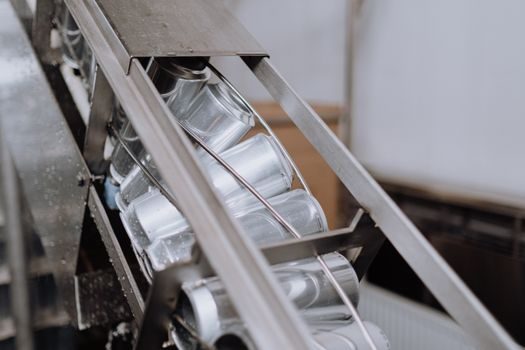
CIJ makes use of make-up fluid and solvent in roughly a 1:3 to 1:6 ratio to ink, with typical hourly consumption of 3-8 mL ink plus 15-30 mL solvent at moderate duty; this drives per-character cost near 0.0002-0.0008 USD on high-speed FMCG lines [S1]. TIJ cartridges cost 0.02-0.15 USD per cartridge and yield 0.0005-0.002 USD per character depending on drop count, with no separate solvent stream.
Lasers carry near-zero consumable cost but accrue 2,000-8,000 hour service intervals on the source at 1,500-6,000 USD per refurbishment; total per-character cost on a 100 m/min line commonly falls in the 0.0001-0.0004 USD band once amortised.
For plants with 16-24 hour shifts, the TCO crossover between CIJ and laser now lands at roughly 18-30 months when substrate is laser-friendly, and never when substrate is plastic film or paper where pigment absorption is poor.
Compliance, Traceability, and Coding Validation
Pharmaceutical lines must align coding with FDA 21 CFR Part 11, EU Falsified Medicines Directive 2011/62/EU serialisation, and GS1 standards for 2D data matrix placement; in food and beverage, lot coding feeds FSMA 204 traceability rules with key data elements (KDEs) that must be machine-readable and retained for 2 years [S1].
Automotive Tier 1 lines typically specify DPM grading to AIM DPM-1-2006 plus ISO/IEC 29158, with character contrast of 35% minimum against substrate. Wire and cable marking adds UL 1685/CSA FT4 fire-performance considerations where ink residue affects flame spread, and laser marking becomes preferred because no ink residue is deposited.
For a working spec map across marking, joining, and cutting processes, see the wrapping machine advantages, disadvantages, and selection map for adjacent line-level decisions.
Common Failure Modes and Environmental Limits

CIJ printers struggle in ambient RH above 80% because solvent evaporation slows and droplets drift, while TIJ misfires below 10 deg C because the ink viscosity window is exceeded; UV laser coding on glass and certain clear coatings produces micro-cracking when pulse energy exceeds the substrate ablation threshold and fluence climbs past 2-4 J/cm2 [S1].
For FMCG plants that also run adhesive labelling, comparing a CIJ unit against a labeling machine on the same SKU is the standard make-or-break exercise: label changeover at 8-15 seconds per SKU versus CIJ message changeover at 0.5-3 seconds, with label cost at 0.005-0.04 USD each versus CIJ consumables. The trade favours CIJ above 60,000 units per SKU per year and labels below that threshold, all else equal.
Plants running wet, dusty, or washdown environments should verify IP ratings: CIJ printheads are commonly IP54 with IP65 optional, while laser marking heads reach IP67 with sealed enclosures, a different engineering envelope from linear bearing types and classifications on adjacent mechanical equipment.
2026 Selection Criteria and Sourcing Signals
Decision rule for engineers: (1) if substrate is metal or glass and code is permanent, evaluate fibre or CO2 laser at 30-100 W; (2) if substrate is non-porous plastic, metal can, or glass bottle, default to CIJ with MEK or ethanol carrier; (3) if substrate is porous carton, mailer, or wood, default to TIJ cartridge; (4) if the SKU rotates more than 50 times per shift, ensure message library supports OPC-UA or Ethernet/IP pull from MES for changeover, and (5) if the line runs 24/7, lock in service-level agreement terms with 24-hour response and a 4-hour spare-parts guarantee. [S3]
Trackable signals into 2026 Q3-Q4: EU regulatory push toward BPA-free and MEK-free ink carriers is accelerating, with several FMCG majors reporting pilot conversions to acetone-free or water-based CIJ inks; UV-LED curing hybrid modules are entering carton and label lines, and Chinese OEM CIJ prices have dropped 12-18% year-on-year, narrowing the cost gap against molding line advantages and disadvantages comparisons for adjacent cap-and-closure lines.
Component reference pages worth checking: coding machine.