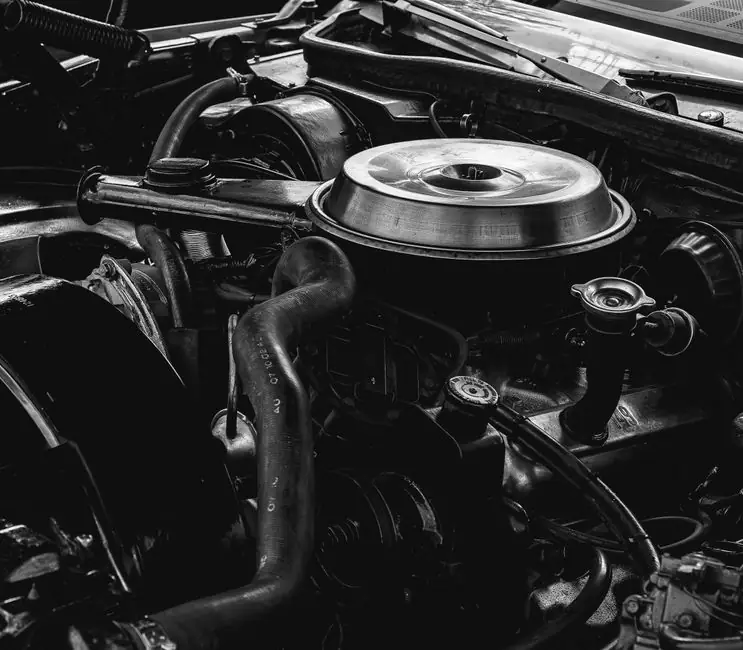
A cold box core shooter is the right pick when the casting depends on an internal sand core that has to be dimensionally stable, fast to produce, and strong enough to survive handling before pour. For automotive parts such as cylinder heads, engine blocks, intake manifolds, and water-jacket sections, phenolic urethane cold box is the dominant process because cores cure in seconds at room temperature under amine gas, no oven, no baking, and bench strength after ejection is high enough for robotic placement [S3].
Selection for an automotive line really comes down to four numbers: shot capacity (kg per core), shot air pressure (bar), cycle time (s), and parting orientation (vertical vs horizontal). Most OEM-style automotive core shooters published in 2026 sit in the 5-25 kg per core window, run on 5-7 bar shop air, draw 2-5 kW, and complete a single core in 40-60 seconds depending on geometry and binder level [S1]. Those ranges are the baseline, not the ceiling, and they line up with what high-mix tier-1 foundries actually buy.
What a cold box core shooter does that hand ramming cannot
A core shooter machine produces sand cores that are placed inside molds to create internal cavities and passages in castings; the machine controls filling, forming, curing, and release, not just sand dumping [S2]. In automotive, valve, pump, and machinery castings, the internal structure is often just as important as the outside shape, and that is why a core shooter machine is not simply a sand-filling device but a production system whose output decides whether the casting passes or scrapes [S2].
For automotive parts specifically, the cold box resin system cures at room temperature by passing a tertiary amine catalyst gas through the sand-binder mix after it has been blown into the core box, giving a handling-strength core in seconds rather than minutes [S3]. That speed is what lets a high-volume engine block line keep up with molding; without it, a 90 s core cycle becomes a 10-minute bottleneck.
The downstream cost of a weak core is concrete: uneven wall thickness, rough internal passages, shape deviation after pour, scrap, rework, and internal defects that only show up after machining [S2]. Automotive foundries pay for that failure mode in PPAP rejections, not in machine invoices.
Vertical-parted vs horizontal-parted: pick by geometry, not by habit
Vertical-parted cold box core shooters split the core box along a vertical plane and open side-to-side; horizontal-parted machines stack the halves and separate up-down [S4]. The parting direction changes how the machine loads, how it cures, and what geometry it handles cleanly, so it is the first spec decision on the quote sheet, before shot pressure or tonnage.
Vertical machines tend to work better for cores with deep pockets or undercuts, because gravity works with the opening motion and the core can swing free instead of being lifted out [S4]. Loading and unloading also automate more easily because the core sits in a consistent accessible position, which is why most inline automotive core lines are vertical-parted. The trade-off is wider side clearance on the floor and tooling that has to be designed around the side-opening motion.
Horizontal machines tend to fit flat or simpler core geometries where the up-down motion does not fight the core shape, and the front-to-back footprint is often more compact for tight core shops [S4]. Deep or undercut cores can be harder to eject cleanly because the core has to drop or lift out, and some horizontal machines need extra handling steps between stations. For a high-mix automotive line mixing water jackets and small branch cores, a horizontal machine is often the second unit, not the first.
For a deeper dive on how these two machine types compare on floor space, ejection, and inline integration, see the breakdown on vertical vs horizontal cold box core shooters before locking the spec.
The 2026 spec window for automotive cold box core shooters
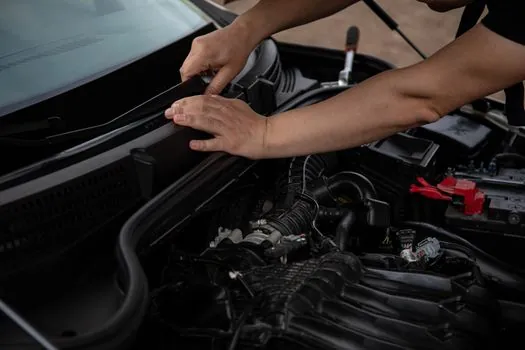
The published 2026 envelope for a mid-size automotive cold box core shooter is narrow and consistent across vendors: 5-25 kg sand per core, 75-120 kg sand hopper, 1600 x 850 x 1900 mm typical footprint, 900-2000 kg machine weight, 415 V three-phase power, 2-5 kW draw, and a noise floor under 75 dB [S1]. Pneumatic or hydraulic core ejector, PLC-based control, mild steel or cast iron frame, and 0.2 mm dimensional tolerance on the finished core are the standard options in this class [S1].
Air consumption is the number that quietly runs the line: 5-7 bar shop air for the shot, and a 40-60 second cycle time per core depending on geometry, binder level, and whether an optional heating stage is used to push the cure slightly faster [S1]. Core box clamping is manual on entry-level semi-automatic units and automatic on the full PLC lines, which is the spec that decides whether one operator per shift or one operator per two machines.
For automotive cores above 25 kg, the next step up is a larger platen, longer sand throw, and higher shot pressure, often paired with a double-head or twin-station configuration. A double head core shooter lets two cores be produced per cycle, which is how high-volume foundries push effective cycle time below 30 s per core on smaller geometries [S5]. The single-head 40-60 s envelope [S1] is the single-station reference; double-head simply halves the per-core clock for small parts.
Phenolic urethane binder: why cold box beats hot box on the automotive line
The phenolic urethane cold box binder is a two-part liquid system: phenolic resin (Part 1) and isocyanate (Part 2), mixed into the sand before shooting, then hardened by a tertiary amine catalyst gas that is purged through the core box [S3]. The reaction forms a urethane polymer network that locks the sand grains in seconds, which is the source of the high early strength and the dimensional stability automotive foundries need.
Because cold box cures at room temperature, the core box itself does not need heating channels, so tooling cost and lead time are lower than on a hot box line, and the same phenolic urethane system is used for engine blocks, cylinder heads, pump and valve bodies, agricultural equipment castings, and general industrial machinery [S3]. The trade-off is amine gas handling: the catalyst is a hazardous vapor that needs proper scrubbing, exhaust, and operator training, which is why a cold box line is usually a fixed install with dedicated ventilation, not a benchtop unit.
For a wider view of how cold box fits against other coremaking methods and against shell core shooters and hot box core machines, the spec windows overlap on part size but diverge sharply on cycle time, tooling cost, and binder handling discipline.
Who a cold box core shooter is for, and who should not buy one
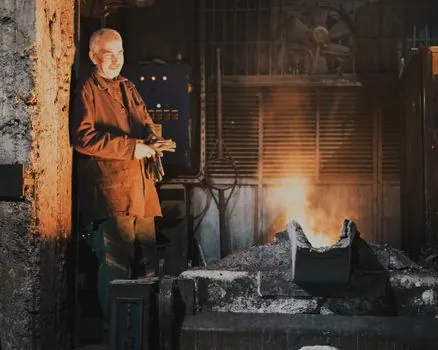
Cold box is the right answer for foundries running medium to large batch sizes on cores that need tight dimensional control, fast cure, and consistent bench strength, which describes most tier-1 and tier-2 automotive suppliers producing cylinder heads, engine blocks, and complex water-jacket cores [S3]. It also fits pump and valve body producers, agricultural equipment castings, and any shop where the part mix is broad and core changeover happens several times per shift.
It is the wrong answer for very short prototype runs where hand ramming or a small cold box core machine bench unit is cheaper, for parts where hot box or shell processes are already proven, and for shops without amine gas handling infrastructure. The amine catalyst scrubber, exhaust ducting, and PPE discipline are not optional; they are the reason some low-volume foundries stay on hand-rammed oil-sand cores or move to shell core shooters instead.
Foundries comparing cold box against other coremaking options should also weigh the related decision on V-process vacuum molding lines when the bottleneck shifts from coremaking to moldmaking; the two choices are linked, and buying a faster core shooter into a slow mold loop just moves the queue.
What to verify on the supplier quote before signing
Five numbers have to be on the quote, not just the brochure: shot capacity in kg per core (not per shift), shot air pressure in bar, cycle time in seconds at a stated core weight, platen or core box size in mm, and amine gas consumption per cycle in kg or L. If any of those are missing, the cycle time claim is unfalsifiable and the kW rating is for an unloaded machine, which is how automotive buyers end up with a 90 s cycle instead of the 40-60 s they were sold [S1].
Beyond the numbers, verify the control system is PLC-based with documented ladder logic or structured text, that the core ejector is sized for the heaviest core in the planned mix, and that the clamping force is rated for the deepest draw in the core box, not just for the average part. A 0.2 mm tolerance spec [S1] is only real if the clamping can hold that tolerance under 5-7 bar shot pressure for the full 8-hour shift, which is where most warranty disputes actually start.
The next trackable signals for buyers sizing 2026 capex are: amine scrubber retrofit regulations tightening in EU and Indian foundries, double-head and twin-station adoption on engine block lines, and the gradual shift of mid-size foundries from semi-automatic to fully automatic clamping, all of which will move the spec envelope, not the price, over the next 12-18 months.