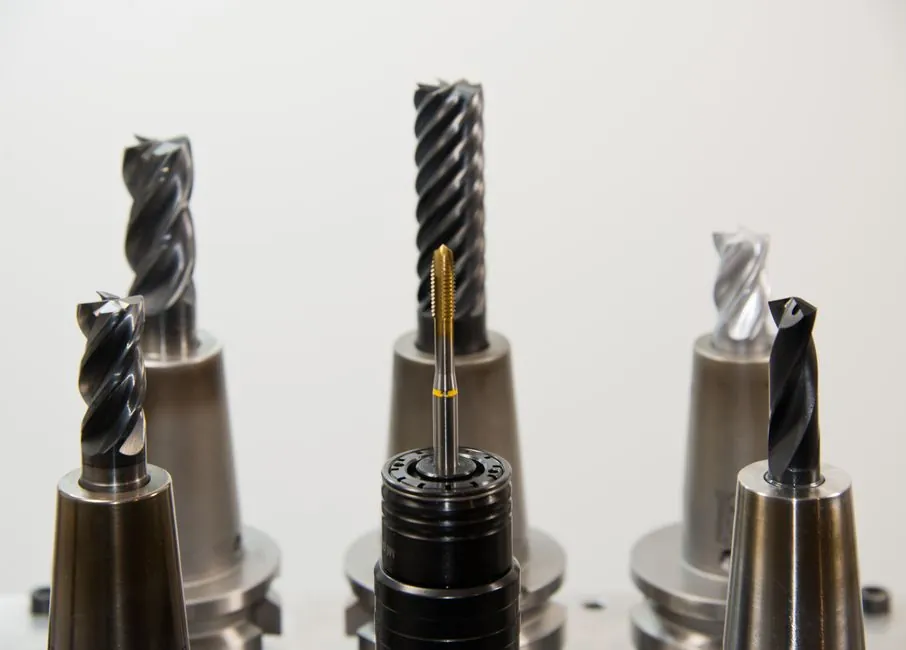
A 3100x1900x450/450 mm or 3100x1900x350/550 mm V-Process flask running at roughly 20 molds per hour, 50 t/h sand throughput, and an annual output near 50,000 castings is the published configuration used for railway bottom bolsters and side frames [S4][S5][S6]. The cell uses vacuum negative pressure rather than chemical binders, holds dry silica sand at 50-100 kPa of vacuum differential, and seals the cavity with a 0.05-0.20 mm EVA or LDPE thermoplastic film [S1][S7].
For a procurement engineer, the rail-component use case is one of the cleanest fits for V-Process: the castings are large, structurally simple, and demand tight CT7-CT9 dimensional tolerance without the binder-related gas defects that plague phenolic resin sand at thick sections [S4][S8]. Sand recyclability above 95% also matters on a railway tender, where audit-grade environmental reporting is now standard on most European and Indian rail procurement specifications.
Why Rail Castings Fit the V-Process Window
Railway bogie castings are heavy-section steel or ductile iron parts, typically 200-800 kg, where green-sand molds struggle to hold density through the pour and resin sand adds cost via binder consumption and gas evacuation steps. V-Process sidesteps both problems: the dry silica sand is held rigid purely by atmospheric pressure on the film, so there is no moisture or resin to generate gas, and the mold collapses by itself once vacuum is released, leaving the casting clean [S1][S7].
The published public spec literature lists a 3100x1900x450/450 mm flask as the typical size for railway bottom bolsters and side frames, paired with a 20 mold/h molding efficiency, a 50 t/h sand processing capacity, and an annual output around 50,000 castings per line [S4][S5]. Surface finish is rated at Ra 6.3-12.5 micrometers and dimensional accuracy at CT7-CT9, which is competitive with resin sand and ahead of green sand for these geometries [S4]. A 100% gas extraction claim and a +30% mould filling rate over a traditional automatic molding line are also published process-window claims, alongside a roughly -30% cost per casting at steady-state [S8].
Mandatory Spec Items for a Rail-Line V-Process Tender
Five numeric decisions determine whether a V-Process line will pass a railway QA audit. First, the flask internal size: 3100x1900x450/450 mm for bogie frames, or 3100x1900x350/550 mm when a deeper drag is needed [S4][S5]. Second, the vacuum target: a steady 50-100 kPa differential held through pour and solidification, with the vacuum reservoir sized so a one-second film tear does not collapse the mold [S1][S7].
Third, the film: a 0.05-0.20 mm EVA or LDPE blend for the cavity face, paired with an unheated back film for sealing [S7]. Fourth, the cycle: the published 20 mold/h figure is the realistic ceiling for a 3100x1900 mm flask, and buyers should verify the PLC-controlled stations for film heating, sand hopper feed, vibrating compaction, vacuum-chamber sealing, mold closing, and pouring conveying are all on a single synchronized track [S4][S5]. Fifth, the recycle loop: dry sand should report a documented recovery rate above 95% after screening and cooling, with film waste segregated for high-temperature-resistant film recycling [S4].
Comparison: V-Process vs Traditional Automatic Molding for Rail
For a buyer weighing V-Process against a conventional automatic molding line on a railway tender, the published metrics line up clearly. Surface roughness is rated at RZ-70 on the V-Process side versus typical Ra 12.5-25 micrometers on green-sand auto lines, gas extraction is reported as 100% versus partial on resin systems, and casting density runs about 5% higher thanks to the uniform atmospheric compaction [S8]. Mould filling rate is reported +30% over traditional auto lines, and cost per casting lands around -30% at steady-state [S8].
The catch is throughput ceiling: a 3100x1900 mm V-Process cell caps near 20 mold/h, which is lower than a high-pressure green-sand automatic molding line running 60-120 mold/h on smaller flasks. V-Process therefore wins on quality-per-casting and on binder-free environmental compliance, but loses on raw mold count when the railway program needs more than roughly 50,000 bogie castings per year on a single line. For a related cross-industry view of the same V-Process cell, see the V-Process selection guide for electronics housings, which uses the same process core on a smaller flask class.
Line Architecture and Supporting Equipment
A complete V-Process line for rail work integrates eight stations: a film laminator, a film spreading platform, a coating spraying and drying device, a vacuum chamber, the molding flask itself, a vibrating compaction table, a mold-closing conveyor, and the pouring track [S9]. The PLC controls film heating and vacuum draw timing, sand hopper feed rate, vibration duration, and the seal between cope and drag [S4]. For rail programs that also produce agricultural castings on shared equipment, the same OEM family typically offers interchangeable flask sizes; the V-Process line selection map for agricultural machinery covers the 1750x1600x650/450 mm and 2000x1400x320/360 mm flask classes on the same control philosophy.
On energy and auxiliaries, V-Process is comparatively modest: there is no sand mixer, no binder dosing system, and no gas-fired drying oven. The recurring energy draw is the vacuum pump, the film heater, and the vibrating table; sand is almost entirely recycled and vacuum is the main running cost, so getting pump sizing and seal film quality right is what separates a stable cell from one plagued by film tears and weak molds [S7]. For deeper process context on how the vacuum-sealed molding line compares with a conventional automatic molding line, see the automatic molding line reference and the broader molding line taxonomy.
Limitations and Failure Modes Buyers Should Audit
Three failure modes show up repeatedly in V-Process commissioning on heavy-section rail castings. First, film tearing at sharp pattern edges, which collapses the vacuum and blows sand into the cavity; the mitigation is rounded pattern geometry and a film thickness at the 0.10-0.20 mm end of the working range for the cavity face [S1][S7]. Second, vacuum pump undersizing, which manifests as soft molds on the far side of large flasks; the audit item is verifiable pump curve versus flask volume at the rated 50-100 kPa hold [S7].
Third, moisture ingress from humid plant air, which condenses on the cold film and produces local steam explosions during pour; the working cure is a dry-back film, sealed sand-handling, and a controlled humidity foundry hall. None of these failure modes is exotic, but all three are showstoppers on a railway QA gate if not addressed in the FAT. For a deeper look at the underlying vacuum-sealed process and its historical use in the broader V-process line class, the reference page lays out the consumable and process calibration envelopes in detail.
Vendor Shortlist Signals and Sourcing Footprint
Public supplier pages for V-Process rail lines cluster around Chinese OEM capacity: Qingdao Chong Jen Machinery publishes a 3000x1800 mm model, 220-460 V 50/60 Hz supply, 60-90 day delivery, 12 sets per year capacity, and CE certification at a 30,000-300,000 USD per set price band [S4][S5][S6]. CEJER markets a semi-automatic V-Process line with a customization path for foundry projects, and XKMT Machinery and Sandrycast both list dedicated V-Process line product pages with the eight-station layout described above [S3][S9][S10]. Shengmei, the parent referenced by Sandrycast, reports a decade of specialization in vacuum process equipment for iron, steel, magnesium, and aluminum castings, with counterweights, axles, bath hubs, and petroleum machinery parts as named applications alongside rail work [S10].
For buyers, the practical sourcing signal is to verify three documents per vendor: the FAT protocol at the 3100x1900 mm flask size, the documented sand recycle rate (target above 95%), and the film specification including EVA/LDPE grade and 0.05-0.20 mm thickness range. CE marking is published, but railway programs typically also require EN 13261 or equivalent bogie-casting traceability documentation on top of the machinery CE file, so the machinery CE alone does not close the rail procurement loop [S4][S5][S6].
Track next: confirm the FAT protocol for 3100x1900 mm flask and 50 t/h sand throughput, and require the vendor to publish the film grade and thickness band rather than leaving it as a generic "EVA" line item.