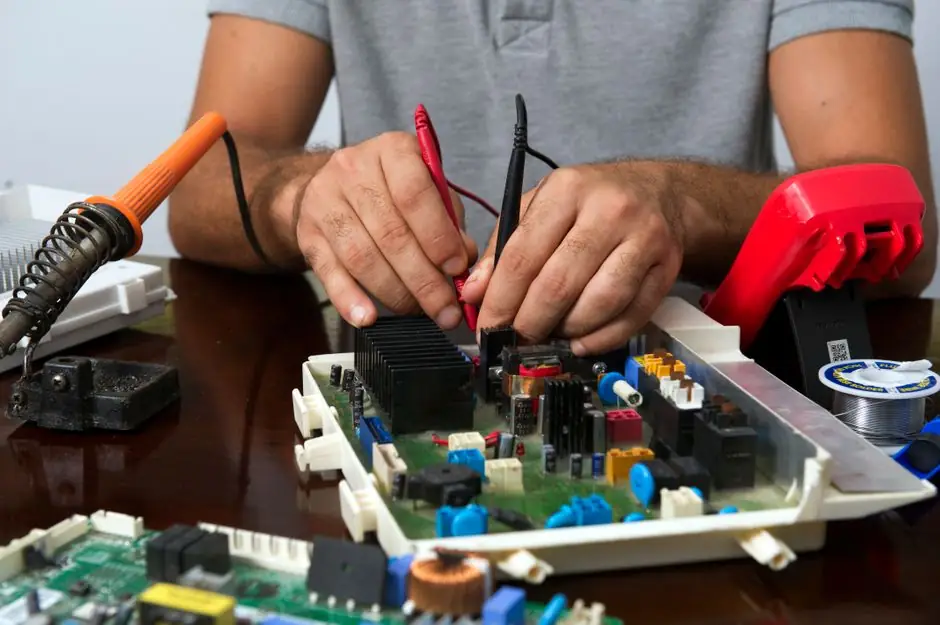
Electronics-housing static pressure molding machines, a sub-class of static pressure molding machine fleets used for connector shells, EMI/RFI enclosures, and heat-resistant housings, lose the most hours to five predictable zones: plasticating unit, hydraulic power unit, clamping unit, electrical cabinet, and mold ejector stack.
The financial logic is blunt: a 150-ton press represents $80,000 to $200,000 in capital, produces $1,500 to $4,000 of output per shift when healthy, and racks up $12,000 to $28,000 in lost production per unplanned 8-hour stop [S3]. Plants that run 92%+ OEE do it with disciplined routines tied to runtime hours, shot counts, and material abrasiveness, not with newer iron [S3].
Hydraulic Power Unit: The 30-50 degrees C Window and 3000-4000 Hour Oil Cycle
Keep the hydraulic oil temperature between 30 degrees C and 50 degrees C; 60 degrees C or above accelerates oxidation that turns oil dark and degrades seal compounds, and temperatures below 30 degrees C waste energy and slow valve response [S5]. Pressure oil is replaced every 3000 to 4000 hours of operation, and the in-tank oil net is pulled and cleaned at the same interval [S5].
Quarterly hydraulic filter and fluid sampling costs $200 to $450, versus $4,000 to $8,000 for an emergency contamination flush and $5,000 to $10,000 per servo valve replacement driven by particulate ingestion [S3]. The early warning is filter indicator in the yellow zone, or oil temperature above 55 degrees C, or pressure gauge fluctuation above 5%, all of which show up 6 weeks before a hard failure [S3]. Oil cooler internals are flushed every 6 months to keep cooling-water leakage from contaminating the oil side [S5].
Plasticating Unit: Heater Bands, Melt Drift, and Glass-Filled Resin Reality
Heater band and thermocouple audits run $150 to $400 per event, and an annual screw pull with full inspection runs $800 to $1,800, a fraction of the $18,000 to $35,000 cost to rebuild a screw and barrel on a 150-ton press [S3]. For glass-filled or flame-retardant compounds common in electronics housings, the maintenance-to-failure cost ratio climbs sharply, with every $1 of disciplined PM preventing roughly $8 to $14 in unplanned repair and lost output [S3].
Real-time temperature and pressure monitoring is the only reliable way to catch drift before short shots appear on the line, because melt temperature swings above plus or minus 3 degrees C and visible carbon streaks in purged parts both precede scrap, not follow it [S1][S3]. Cycle time creep is the second tell: rising cycle time on a constant shot weight points to screw flight wear before shot weight itself has shifted, so the press log is the early-warning system, not the lab [S1][S3].
Clamping and Tie Bars: Level, Parallel, and the Ejector Pin That Costs a Day
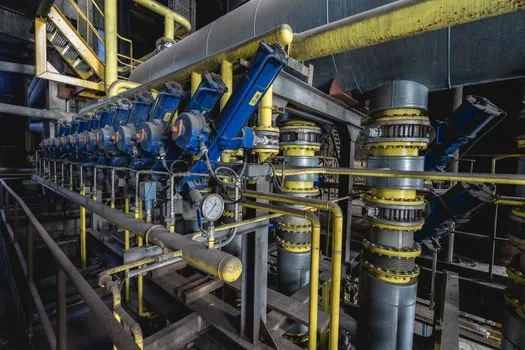
Mold leveling is a monthly task, not an annual one, because jostle and vibration during normal operation push the press out of square, which then drives uneven grease flow, extra friction on rods and bushings, and parting-line flash on the housing [S4]. Flash along the parting line is the first audible symptom, followed by excessive mold venting and audible mechanical knock during clamp close [S3].
Ejector pin straightness, ejector plate return, and bushing lubrication with mold-safe grease belong on every shift's pre-start checklist: a single bent ejector pin costs hours of downtime and, in the worst case, $15,000 to $120,000 in mold-crash damage [S3]. After every production cycle, cavities are cleaned with a gentle solvent and blown down with compressed air, and any residual moisture is removed before storage to prevent rust on polished surfaces [S4].
Electrical Cabinet and Safety Stack: Filters, Breathers, and Limit Switches
Cabinet air filters are kept clean and replaced on schedule, and tank breathers are kept free of debris; a blocked breather causes the reservoir to expand and contract with oil flow, straining welds and inviting leaks [S2][S4]. Safety limit switches, which are bumped over months of normal use, are checked on every safety inspection along with their mounting bolts and trip-arm adjustment [S4].
Weekly visual inspection of electrical enclosures, wiring, and components looks for signs of overheating, loose or pinched conductors, and dust accumulation on hybrid and fully electric presses [S8]. Loose wire connectors fail in two ways: heat and spark damage at the contact, and signal transmission errors from vibration and electromagnetic disturbance, both of which show up as intermittent faults on the HMI long before the line stops [S5]. Static var generator cabinets feeding the press are covered by the same dust-and-filter discipline, since the harmonic filters on SVG busses degrade fast in oily, particulate-laden plant air. For a wider view of how plant electrical infrastructure maintenance stacks against the press itself, see the automatic level maintenance practices in electrical installation reference.
Electronics-Housing Specific: Static Control, Material Drying, and Molding Discipline

Electronics housings are the worst-case PM environment because glass-filled nylon, FR-PC/ABS, and PBT compounds are abrasive, corrosive to screw flights, and outgas enough moisture to cause silver streaks on polished surfaces if the dryer is off-spec [S3]. Material drying is part of the maintenance envelope, not a separate process: a wet resin lot eats heater-band life and shows up as surface defects long before screw wear does.
Anti-static equipment grounding straps, ionizer bars, and surface-resistivity meters on the housing discharge line need their own quarterly verification, because a drifting ground is invisible until the rejection rate climbs. For the upstream signal of where electronics-housing volume is heading into 2026-2030, the PCB demand 2026-2030 outlook sets the demand pull that drives housing capacity, and the SCADA system industry shifts in 2026 piece shows where real-time press monitoring is moving next.
What This Looks Like on the Schedule and the Budget
An annual structured PM budget on a single press runs $4,500 to $8,000, which is the right order of magnitude against a single mold-crash event at $15,000 to $120,000 [S3]. The cadence that hits the 92% OEE benchmark is: weekly electrical and safety visual checks, monthly press leveling, quarterly hydraulic sampling and filter change, semi-annual oil cooler flush, 3000-4000 hour oil replacement, annual screw pull, and per-shift ejector and mold cleaning [S1][S2][S3][S4][S5][S8].
The acceptance test for a healthy electronics-housing line is concrete: melt temperature drift under plus or minus 3 degrees C, hydraulic oil in the 30-50 degrees C window, pressure gauge fluctuation under 5%, no flash on the parting line, and shot weight within the control chart's established limits [S3][S5]. Molding process windows for thin-wall housing walls under 1.5 mm typically need the heater-band audit stepped up to monthly rather than quarterly, because thermal drift at 0.5 mm wall sections scrapes the entire cavity in minutes, not hours. The shell molding machine reference is the right cross-check for plants that run both static pressure lines and shell lines on the same housing family, since the sand-vs-resin wear profiles drive different PM intervals on otherwise similar clamp frames.
Track next: heater-band replacement rate per 1,000 hours on glass-filled nylon runs as the leading indicator of screw-and-barrel health, and quarterly oil particle count trend is the leading indicator of servo valve life. A new screw installed under planned PM at month 11 is a budget line; the same screw as an emergency rebuild at month 14 is a margin event.