
A cold milling machine — also called a cold planer — is a self-propelled crawler or wheeled unit that uses a rotating drum fitted with tungsten carbide teeth to strip asphalt or concrete pavement to a controlled depth for resurfacing or full-depth reclamation [S4]. The 2026 buying decision is driven by four spec gates: milling width, milling depth, engine power, and undercarriage configuration, with operating weight and drum-drive type as the next-tier filters [S1][S4].
New units from Wirtgen, Caterpillar, Dynapac, XCMG and Ca-long cover working widths from roughly 500 mm on compact utility planers up to 2,000 mm on full-lane machines, with milling depth envelopes typically 0–320 mm and engine power ranging from about 50 kW on the smallest compact class to 433 kW (589 PS) on large half-lane and full-lane units such as the Wirtgen W 2000 [S1][S2]. Used inventory on Construction Equipment Guide confirms the same envelope: compact, half-lane and full-lane classes dominate the second-hand market in 2026 [S4].
Class Boundaries Defined by Working Width and Power
Cold planers split into three operating classes that map directly to road geometry and project scale [S4]. Compact planers typically work at 500–1,000 mm width and are used for utility cuts, manhole surrounds, trench reinstatement and pavement patching around municipal infrastructure. Half-lane machines cover roughly 1,000–1,500 mm and are the workhorse for lane-by-lane highway resurfacing, where one pass removes a full traffic lane. Full-lane machines at 1,500–2,000 mm and above are specified for airport aprons, motorway mainline rehabilitation and large freight yards.
The Wirtgen W 2000 — a large half-lane / full-lane reference unit — lists 2,000 mm milling width, 0–320 mm milling depth, 433 kW / 589 PS engine output, mechanical milling-drum drive, four-track travel layout with hydraulic all-track drive, and an operating weight of 30,000 kg (CE) [S1]. XCMG's XM Series covers large-scale highway, urban road, airport and freight-yard renovation, removing full asphalt concrete layers in a single pass [S2]. The Ca-long CLX-1000 sits in a smaller class: it is positioned for milling asphalt concrete layers on expressways, roads, airports, parking lots and freight yards, finishing oil lenses, bitumen protuberance and rut tracks [S6].
Selection Criteria: Depth, Drum Drive and Undercarriage
Three engineering parameters separate a usable planer from the wrong one for the job. First, milling depth: full-depth asphalt removal commonly needs 0–200 mm; full-depth reclamation of concrete or thick composite pavements pushes toward the 300+ mm range seen on machines like the W 2000 (rated 0–320 mm) [S1]. Second, drum-drive type: mechanical belt drives dominate large half-lane and full-lane machines for high torque at the drum; hydraulic drives are typical on compact and mid-size planers where variable drum speed matters for finish quality [S1]. Third, undercarriage: four-track full-crawler layouts give stability and uniform weight distribution on large machines; three-track or wheeled configurations appear on compact units where road-speed transit matters [S1][S4].
Engine power must scale with width and depth. The 433 kW W 2000 figure sets the upper envelope for 2,000 mm-class full-lane work [S1]. Mid-size half-lane machines typically run 200–300 kW, while compact 500–1,000 mm planers can operate in the 50–130 kW band.
Who a Cold Milling Machine Is For — and Who It Is Not
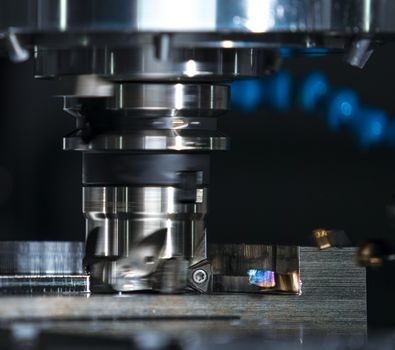
Cold milling machines are specified by road contractors, municipal public-works departments, airport maintenance crews, port and freight-yard operators, and pavement-recycling specialists who need controlled-depth pavement removal before resurfacing or full-depth reclamation [S2][S4][S6]. They are the right tool when the goal is to strip deteriorated asphalt or concrete to a precise depth in a single pass, leaving a textured surface that bonds to the new overlay.
They are the wrong tool for precision concrete grinding (use a concrete planer or grinder classification distinction matters), thin polymer or paint removal (use a shot blaster or grinder), and small spot repairs under about 1 m² (a hand-held planer or saw is more economic). Buyers who only need a few square metres per month should consider renting or subcontracting rather than owning a class 1,000+ mm unit. For comparison context on equipment buying across heavy industrial categories, see the backhoe loader buying guide for 2026, which uses a similar class-and-spec structure.
Drum, Teeth and Cutting-Line Economics
The milling drum is the consumable heart of the machine. Drums come in three patterns: standard fine-grade drums for smooth finish at shallow depth, standard coarse-grade drums for bulk removal, and micro-fine drums for thin-layer texturing. Tungsten carbide-tipped picks are the standard cutting tool, with typical service life of a few hours per pick in abrasive aggregate and longer in limestone; budget picks and holders as a recurring consumable line, not a one-time cost. A 2,000 mm class drum rotating at typical planer speeds engages a large contact area with the pavement, which is why machine class and engine power scale together [S1].
Water-spray dust suppression is standard on most modern planers for occupational exposure control and for keeping cutters cool in hard aggregate. Buyers should confirm spray-nozzle count, tank capacity, and whether the system is plumbed for optional additive injection when bidding on urban jobs with strict dust limits.
Standards, Compliance and Spec Documentation to Request

Spec sheets should list milling width in mm, milling depth range in mm (not a single number), engine power in kW and PS, emission stage (e.g. EU Stage V / EPA Tier 4 Final for units sold in 2026 in regulated markets), operating weight per CE or SAE convention, drum-drive type, number of tracks, and travel-drive type [S1][S2]. Request line-by-line confirmation: a 2,000 mm width with only 100 mm depth capacity is a different machine class than a 1,000 mm width with 300 mm depth, even though both are sold as "cold milling machines."
For projects tied to pavement-recycling specifications, confirm the machine can produce the nominated maximum particle size required by the mix design; for airport work, confirm FOD (foreign object debris) control and that the water system meets the runway authority's dust-suppression rule. The same spec-discipline principle applies to other heavy-equipment buys, including the vibrating conveyor selection guide, where the spec sheet is the contract.
New vs Used, Sourcing Map and Lead Time
New large half-lane and full-lane units from Wirtgen, Caterpillar and Dynapac typically carry 6–12 month lead times in 2026 due to engine certification and assembly bottlenecks; XCMG, Ca-long and other Chinese OEMs offer comparable working envelopes at shorter lead times and lower upfront cost, which is why they dominate the export listings on Construction Equipment Online and EZB2B-style B2B portals [S2][S3][S6]. Used inventory on Construction Equipment Guide remains deep in 2026, with compact and mid-size units most readily available; large 2,000 mm-class full-lane machines are scarcer on the second-hand market and command premium prices [S4].
For buyers outside the major OEMs, XCMG's XM Series is explicitly positioned as a large-scale asphalt concrete road maintenance platform for highways, urban roads, airports and freight yards, with single-pass removal of full asphalt layers [S2]. The Ca-long CLX-1000 occupies the expressway / airport / parking-lot / freight-yard segment with a focus on finishing oil lenses, bitumen protuberance and rut tracks [S6]. When evaluating Chinese-OEM pricing, factor in spare-parts logistics: confirm pick, holder and water-nozzle part numbers, and verify that the local dealer holds critical-path spares, not just the OEM's main warehouse.
Total Cost of Ownership Levers to Verify Before Purchase
Four cost levers drive 5-year total cost on a cold planer. First, fuel consumption: a 433 kW-class machine at 50% load typically burns 60–100 L/h depending on milling depth and material hardness — request a duty-cycle fuel curve from the OEM, not a single number. Second, pick consumption: a 2,000 mm drum can engage 100+ picks; pick life in granite aggregate may be a fraction of the life in soft limestone. Third, drum replacement: a new drum is a meaningful fraction of machine cost; budget one drum replacement over a typical first ownership cycle on heavy-abrasion work. Fourth, undercarriage wear: four-track full-crawler machines on abrasive milled pavement can see track-pad and roller wear measured in thousands of hours, not tens of thousands. [S1]
Resale value tracks brand recognition: Wirtgen, Caterpillar and Dynapac hold residual value better in North America and Western Europe; XCMG, Ca-long and Huatong dominate price-sensitive export markets and depreciate faster in those regions [S1][S2][S6]. Match the brand choice to where the machine will be resold, not just where it will be first deployed. For a different angle on heavy-equipment cost structuring, the concrete fiber 2026 price and cost guide applies a similar total-installed-cost frame to a different product class.
Trackable signals for the next buying window: monitor Q3 2026 OEM price-list updates for Stage V / Tier 4 Final compliant compact and half-lane units, and watch used-inventory days-on-market on Construction Equipment Guide for large full-lane machines, which remains the tightest supply segment in 2026 [S4].
For component-level specifications, see cold chamber machine, and cold box core machine.