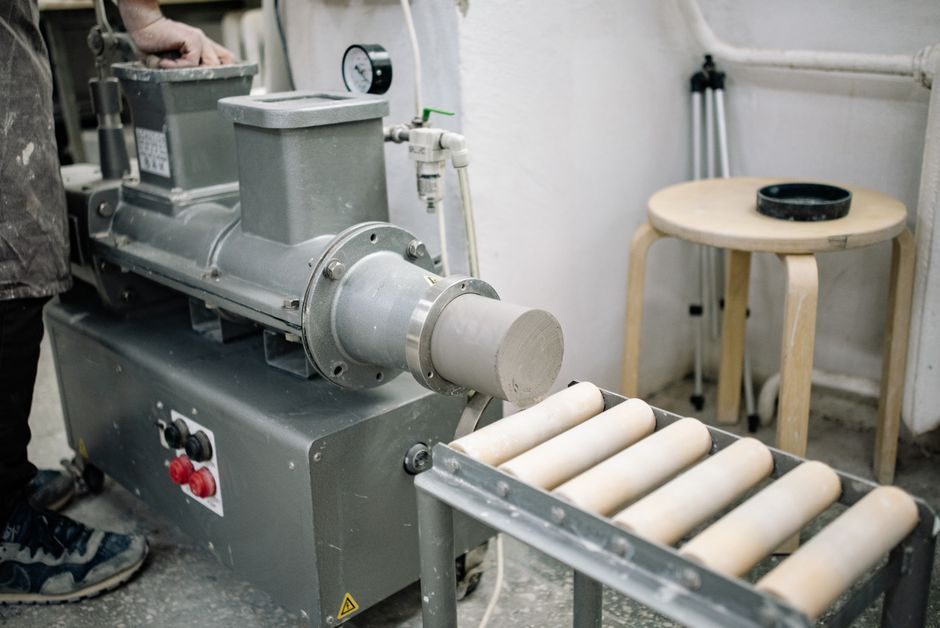
Vibrating conveyors transport powders, granules, packaged parts and hot castings through controlled oscillation rather than rolling contact, and the 2026 OEM catalog splits them into three mechanical families: eccentric-mass brute-force, linear-motor, and electromagnetic drives, each matched to a different trough geometry and duty cycle [S3][S6].
Selection is dominated by four gates — material temperature, contamination tolerance, conveying angle, and feed rate — and getting any one wrong typically costs more than the conveyor itself, so a spec lock on trough width, drive frequency, and amplitude has to come before vendor shortlisting [S3][S7].
Drive Family Comparison: Eccentric-Mass vs Linear-Motor vs Electromagnetic
Eccentric-cam brute-force drives remain the workhorse for heavy bulk solids, with one Chinese OEM's 5XBZ horizontal trough line running 320–350 oscillations per minute at a fixed 10 mm amplitude across 300/400/480 mm trough widths and 2–20 m lengths, producing 5, 10 and 20 t/h at 2.2, 3.0 and 4.0 kW respectively [S7]. The reciprocating eccentric-cam mechanism delivers constant amplitude regardless of load, which is exactly what a metallurgical foundry or grain elevator wants when the bulk density varies minute to minute [S1][S7].
Linear-motor and electromagnetic drives replace the mechanical cam with an AC linear actuator or pulsed coil, enabling variable frequency and amplitude from a control cabinet and cutting mechanical wear parts, which is why spiral and inclined feeders from JÖST and Constructie Bruynooghe default to them for food-grade and pharmaceutical alignment duties [S4][S6]. For gentle product handling at low throughput — bottle alignment, cap feeding, tablet orientation — electromagnetic drives win on cleanliness; for abrasive ores or hot sand above 200 °C, the brute-force eccentric drive still wins on robustness [S3][S4][S6].
The General Kinematics VIBRA-BELT® hybrid illustrates a fourth route: a flexible trough riding on vibratory side frames, combining the contained-belt sanitation of a belt conveyor with the vibration-assisted flow of a shaker [S1]. Where dust containment or sanitary wash-down matters more than the absolute lowest cost per ton, this belt-trough hybrid is the option to shortlist before the others.
Trough Geometry and Construction: Stainless, Carbon Steel and Lined Options
Stainless 304 sandblasted troughs are the default for food, pharmaceutical and cosmetic lines, and the Constructie Bruynooghe inclined alignment shaker ships in 304 as standard with a project-tuned angle for cap, jar and bottle orientation before further processing [S4]. Where the product is abrasive, OEMs typically swap to carbon steel with a replaceable wear liner, or to a heavier stainless 316, trading surface finish for life-cycle cost [S3].
Form factor follows duty: troughed/horizontal units handle the bulk of horizontal transport, inclined shakers double as feeders, and the spiral JÖST vertical lifts products up through a height-adjustable frame so the same footprint that fed the line can also elevate it [S6]. For abrasive or hot bulk above 200 °C — sinter, foundry sand, hot aggregate — a refractory-lined trough on a heavy eccentric drive is the spec to lock; for ambient powders below 80 °C, a stainless electromagnetic spiral is cheaper to own over a 10-year horizon even with higher unit price [S3][S4][S6].
The 5XBZ trough geometry is U-shaped, one-time-bend formed, with no reported product degradation on powder and granular duty at the 10 mm amplitude tested, so where breakage rate matters — animal feed, seed, snack pellets — that low-amplitude brute-force geometry is a defensible baseline [S7]. Buyers comparing against chain conveyor and belt conveyor alternatives should note that vibrating units typically quote lower wear-part counts but higher unit horsepower per ton conveyed.
Throughput, Amplitude and Frequency: Reading the 2026 Spec Sheet
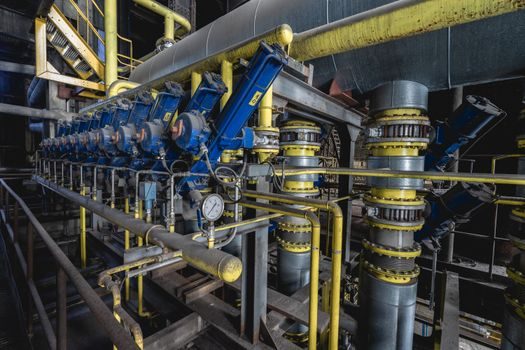
OEM throughput tables in 2026 still lead with trough width × length × oscillation rate × amplitude, and the 5XBZ 300/400/480 mm family illustrates the scaling: width drives capacity (5, 10, 20 t/h), length drives installed power only marginally (2.2–4.0 kW over 2–20 m), and frequency climbs slightly (320–350 min⁻¹) to keep conveying velocity constant as the trough widens [S7]. Amplitude is held at 10 mm across the range, which keeps particle breakage below the measurable threshold for granular product [S7].
Spiral vertical units deviate from the table format because capacity is set by helix diameter, pitch and amplitude/frequency product rather than straight length, and JÖST's height-adjustable spiral lets the buyer re-tune elevation without re-buying the frame [S6]. For abrasive or lumpy bulk, requesting a vendor amplitude/frequency sweep chart — not just a single rated point — is the cheapest way to derisk a vibrating conveyor order, because resonance and conveying velocity both shift with material bulk density and moisture content [S3][S7].
Where the duty is gentle orientation rather than bulk transport — caps, vials, small cartons — the relevant figure is feed rate in pieces per minute, not t/h, and the Constructie Bruynooghe alignment shaker is sized by part footprint and angle of repose rather than by mass flow [S4]. Cross-check these feed-rated shakers against your linear guide and crossed-roller guide drive trains on the upstream and downstream ends, since the conveyor's vibration can back-propagate into poorly isolated linear axes.
Application Mapping: Food, Foundry, Pharma and Recycling
Food and seed handling still defaults to horizontal brute-force stainless units on the 5XBZ pattern, with 5–20 t/h the typical capacity band and 304/316 stainless the standard contact surface where wash-down is required [S7]. Pharmaceutical and cosmetic lines split: brute-force troughs for bulk powder transfer, electromagnetic inclined shakers for vial and cap alignment at the packaging head, and spiral lifts where floor space is constrained [S4][S6].
Foundry, metallurgical and mining duties are where VIBRA-BELT® and heavy eccentric-mass troughs dominate, because the same vibration that moves hot sand and sinter also fluidizes the bed, breaking bridging that would stall a screw or stop a belt conveyor [S1]. Recycling and waste sorting increasingly use electromagnetic feeders under eddy-current separators and optical sorters, where the variable frequency drive lets the line integrator tune feed rate from a PLC without mechanical adjustment [S3][S6].
Buyers handling elevated-temperature bulk — hot castings, sinter, clinker — should size the trough for thermal expansion and verify the drive isolators (rubber shear springs or coil springs) are rated for the operating temperature, since rubber elements above 80–100 °C are the most common premature-failure point on vibrating conveyors in foundry service [S1][S3].
Selection Gates and Sourcing Watch-Points for 2026
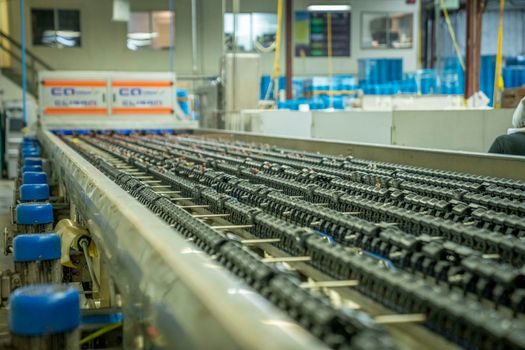
Lock four numbers before requesting quotes: trough width (mm), length or lift height (m), required capacity (t/h or pcs/min), and bulk density / part footprint — these alone cut a 2026 vendor list of dozens down to three or four [S3]. Then layer the secondary gates: material of construction (304 vs 316 vs lined carbon), drive type (eccentric-cam, linear-motor, electromagnetic), sanitary finish (Ra value, wash-down rating), and isolation (rubber shear springs vs metal coil springs vs air isolators) [S4][S6][S7].
On the sourcing side, the 2026 DirectIndustry index lists multiple vibrating-conveyor manufacturers across belt-vibrating hybrid [S1], inclined alignment stainless [S4] and spiral vertical lifts [S6], with separate tubular and bulk-solids categories that include vibrating as one technology option [S5]. For mid-volume OEM orders above 12 units with a declared FOB budget, structured RFQs on industrial sourcing platforms remain the norm, and inland shipping to CIS/Central Asia destinations is quoted on a per-piece basis [S9].
Worth tracking through 2026: (1) wider adoption of linear-motor drives on sanitary lines as the cost gap with electromagnetic narrows, (2) hybrid trough-belt designs like VIBRA-BELT® displacing pure brute-force units in wash-down food plants [S1], and (3) growing use of spiral vertical lifts as floor-space pressures push integrators away from inclined vibrating conveyor or chain conveyor legs [S5][S6]. Specifying a 5–10% spare on motor nameplate and a documented resonance sweep remain the two lowest-cost insurance policies a buyer can buy into a vibrating conveyor order in 2026.
For related coverage, see Bucket Elevator Selection: 4 Gates, 3 Discharge Types, 1 Spec Lock.