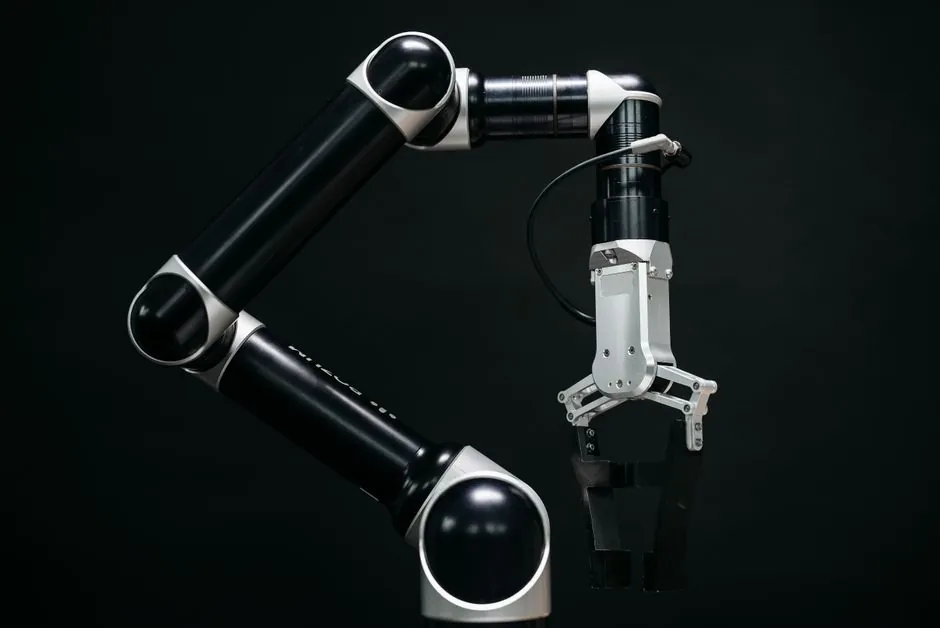
The robot arm represents only 30–50% of typical collaborative-project cost, so model-specific TCO must include end-effectors, safety measures, software, training, maintenance and lost production time [S6].
Collaborative Robot TCO Scope and Purchase-Price Baseline
Collaborative robots typically cost €20,000–€60,000 to purchase, while the arm accounts for only about 30–50% of total project cost [S6]. The balance is not optional decoration: it contains the application-specific hardware, engineering work and operating resources needed to turn a manipulator into a production system.
A TCO model should cover the capital purchase price, integration, programming, peripherals, maintenance, software, training, electricity and productivity effects [S3].
The wider lifecycle approach also avoids treating every robot type as interchangeable. A collaborative robot may suit a constrained workspace with frequent operator interaction, while an articulated robot can provide greater reach and speed where a fenced high-throughput cell is justified. Selection must follow task requirements and process economics, not the collaborative label alone.
Cost Drivers That Move Collaborative Robot Project Price
The cost rises with complex guarding, cell redesign, electrical work, mechanical interfaces, custom programming, validation work and the number of upstream and downstream devices that must communicate with the robot.
Hardware scale also affects pricing. The collaborative-robot market was valued at $2.28 billion in 2026, with hardware representing 71.35% of market size in 2025 while software revenue was growing at 27.15% CAGR [S4]. That split supports two distinct procurement decisions: buy the arm as a product, then price the operating software and connected equipment as separate lifecycle commitments.
Application requirements further shift cost. A simple handling task may need one gripper, a modest fixture and straightforward programming, while assembly, palletizing or inspection can require vision, sensors, external axes, safety devices, specialized tooling and validated process logic. Every added peripheral carries acquisition, commissioning, spare-parts and obsolescence costs beyond its invoice price.
Purchase Price, Integration and Operating Cost Comparison

The main options may differ less in nominal arm price than in total system cost: a collaborative arm generally has a €20,000–€60,000 purchase-price band, and its arm may represent 30–50% of project cost [S6]. These are commercial planning figures rather than universal quotations.
For flat, repetitive transfer work, a SCARA robot may offer a simpler machine architecture, while a high-speed articulated system can be justified in a fenced production cell. For mixed manual work, a collaborative arm can reduce the amount of physical cell construction, but it does not remove the engineering requirements of validation, tooling and process control [S3].
Safety, Software and Tooling Determine Real Project Cost
A collaborative application requires application-specific risk assessment that accounts for the task and the fitted end-effector, including sharp tools [S3]. Force sensing, speed and separation monitoring, and collision detection can support direct workspace integration, but they are design inputs rather than automatic approval to remove every safety control.
ISO/TS 15066 is relevant to collaborative-robot applications that use the contact and separation principles it addresses, but it does not replace the machine integrator’s task-specific risk assessment. The market analysis states that updated ISO/TS 15066 standards clarify safety requirements [S4]. Equipment selection should therefore be checked against the applicable machine-safety framework and the intended method of collaboration.
End-effector choice can change both safety and operating cost. Payload selection starts with the heaviest object plus gripper weight, while reach must cover the mapped workspace [S3]. A marginal payload rating can force a larger, more expensive arm, and a poorly chosen gripper can introduce damage, jam recovery, consumable replacement and cycle-time penalties that do not appear on the purchase invoice.
Maintenance, Electricity and Downtime Shape Lifecycle Cost
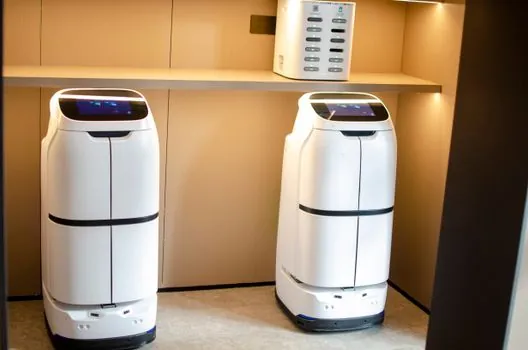
Maintenance and downtime should be modeled as scheduled operating costs, not treated as residual risk. Preventive service, replacement components, controller and safety-system support, gripper maintenance, and internal labor for fault response all contribute to lifecycle cost.
One published production-line case reported €85,594.38 in total collaborative-robot integration expenses, including annual electricity cost of €1,546.27 [S5]. These values are case-specific, not universal budget rates, but they demonstrate the model structure: electricity is one recurring element and must remain separate from integration, labor, maintenance and capacity effects.
Productivity value must be calculated on the same basis as cost. Useful measures include paid productive hours per shift, changeover time, rework, uptime, operator attention consumed and the number of hours the cell can run without manual intervention. A fast nominal cycle is not valuable if setup, jam recovery or inspection consumes the released capacity.
Total Cost of Ownership and Payback Method
A defensible TCO calculation starts with the installed system cost, adds annual energy, maintenance, software, training and support costs, subtracts measurable labor savings or avoided capacity costs, and discounts the resulting cash flows over the 7–10 year analysis period [S2][S3]. Integration effort must be separated from recurring operating cost so managers can distinguish a large upfront engineering event from an inefficient operating system.
Payback should be tested with conservative utilization assumptions and a documented baseline. One worked case used annual electricity cost of €1,546.27 and total integration expenses of €85,594.38 [S5]. Adapt those values to the proposed machine, labor schedule, duty cycle and energy tariff rather than transferring them directly into another project.
Volume tier affects commercial terms, but it must not be confused with operating leverage. A larger purchase commitment may improve unit pricing while increasing spare-parts inventory and obsolescence exposure. Redeployment across assembly cells can cut changeover from weeks to hours in some high-mix manufacturing operations, with redeployment identified as a medium-term 2–4 year cost-impact driver [S4]. That value belongs in the scenario analysis only if the process actually has multiple qualified tasks for the same arm.
Who Benefits from Collaborative Deployment

Collaborative deployment is best suited to repetitive, strenuous or precise tasks where the product changes frequently, operator access is valuable and a compact cell has a clear technical advantage [S3]. A useful first scope includes palletizing, machine tending, screwdriving, laboratory automation, welding support and inspection, provided cycle time and safety controls meet the business case.
It is not automatically the right choice for a fixed high-volume line. A conventional robot can justify more guarding and a larger installed footprint when that infrastructure produces a lower cost per good part and less downtime. A collaborative arm is also unsuitable when the process cannot be made sufficiently repeatable or when the application-specific risk assessment cannot support the proposed method of collaboration [S3].
Implementation Controls for TCO Reliability
Measure the task before selecting the robot: document the heaviest object plus gripper, map the workspace, record the target cycle time and identify every operator interaction [S3]. Then price the full installed scope, including software, peripherals, training, maintenance and productivity or capacity gains [S3].
Three validation checkpoints make the TCO model trackable: obtain a complete bill of materials with integration separated from the arm, record the assumed annual productive hours and utilization, and recalculate after commissioning with measured cycle time, downtime, energy and maintenance data. If the arm is part of a broader motion-control project, the same lifecycle discipline can be applied through the Servo Drive TCO: Lifecycle Cost Decision Framework.
The closing financial review should compare quoted purchase price, installed cost, annual recurring cost and verified productive capacity over the 7–10 year horizon [S2]. A project is financially credible when those four lines support the stated payback without relying on unverified labor savings or optimistic uptime.