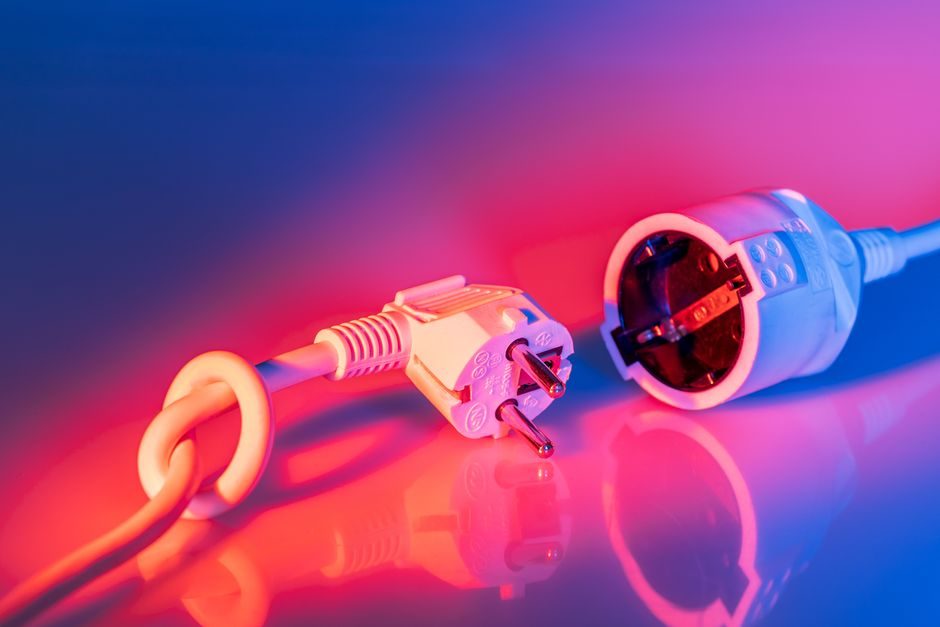
Global connector demand in 2026 is being pulled by three force-multipliers running in parallel: data-center switch ports scaling to 800G/1.6T, EV high-voltage distribution running 400 V to 800 V architectures, and miniaturized IP67/IP69K links in industrial automation nodes. Connector-supplier guidance published 2024-01-23 already flagged high-speed backplane, harsh-environment sealing and supply-chain regionalisation as the dominant design vectors, and the same three vectors still define engineering RFQs through 2026-07-02 [S2].
On the supply side, the chemicals value chain — a major downstream consumer of instrumentation-grade interconnects — is retooling around low-carbon processes and feedstock flexibility, which keeps the order book open for ATEX/IECEx-rated connector families used in zoned hazardous areas [S1]. That same dual-track pressure (electrification of chemicals + electrification of mobility) is the single biggest reason connector makers have moved capacity from generic rectangular I/O into high-current and high-speed specialty lines.
High-Speed and High-Bandwidth Connectors: 800G/1.6T Is the Spec Trigger
Connector product launches in 2024 already centred on Ethernet, USB4 and Thunderbolt 4 form factors, with signal-integrity work targeting 25 GB/s+ per lane and tighter impedance budgets [S3]. The 2026 build cycle is a continuation rather than a pivot: AI training fabrics and hyperscale switch tiers are pushing backplane and I/O connectors into 112 Gbps and 224 Gbps PAM4 territory, with QSFP-DD, OSFP and next-gen CDFP footprints dominating server-to-switch and accelerator-to-switch runs [S3]. The practical consequence for OEM buyers is that legacy 10G/25G mezzanine designs are being replaced two generations at a time, so approved-vendor lists and tooling drawings for high-speed interconnects need re-validation on every AI-fabric refresh.
For industrial buyers, the cross-over point is the industrial Ethernet switch port: managed switches with 1G/2.5G/10G copper have shipped in volume for years, and 2026 platforms are adding 25G SFP+ uplinks for vision and edge-AI nodes. Buyers who normalised on RJ45 with PoE+ (Type 2, 30 W) now routinely spec PoE++ Type 4 (90 W) for pan-tilt-zoom cameras and small-cell radios, which drives demand for higher-temperature jack housings (≥85 °C) and reinforced contact plating.
EV and Energy: High-Voltage, High-Current Connector Standards
Passenger-EV platforms in 2026 split cleanly between 400 V and 800 V architectures, and connector specification tracks that split: 400 V packs typically use locked secondary-latch HVIL (high-voltage interlock loop) headers rated to about 60 V DC working and 250 A continuous, while 800 V fast-charge inlets go to 1000 V DC and 350–500 A peak under CCS2 and NACS pinouts. DC fast-charge coupler standards (IEC 62196-3 configuration FF for CCS2, and the SAE J3400 NACS profile) are now the dominant procurement spec, and Chinese GB/T 27930 stacks continue to drive a parallel but cross-certified connector population for the domestic market. [S1]
Outside the passenger car, energy-storage and stationary battery installations are pulling the same HV connector families into BESS racks, with finger-proof IP2X touch-safe requirements and 5000 V DC withstand becoming the procurement default. For the chemicals process floor, the same UL 1973 and IEC 62619 wiring ecosystem is feeding back into pressure transmitters and flow meters that now ship with battery-backed wirelessHart or Ethernet-APL options, which sit on top of hardened M12 and M8 cordsets rather than legacy conduit glands.
Harsh-Environment and Hazardous-Area Connectors: ATEX, IECEx, IP67/IP69K
Harsh-environment sealing is no longer a premium option — it is the procurement default for any outdoor, washdown or hazardous-area connector. The dominant ratings seen in 2026 RFQs are IP67 (temporary immersion to 1 m) for general outdoor, IP68 (continuous immersion, depth/time defined by maker) for buried sensors, and IP69K (80 °C water, 100 bar, for steam-jet cleaning) for food/beverage and pharmaceutical skids. M12 A-coded (sensors, 4–5 pins), D-coded (100 Mbit/s Ethernet), X-coded (10 Gbit/s Ethernet) and L-coded (4 A power) form the bulk of new industrial wiring; M8 Pico is the parallel small-format line for robotics and valve-sensor clusters. [S2]
Hazardous-area connector families add the ATEX 2014/34/EU and IECEx certification layers, with Ex e (increased safety) and Ex d (flameproof) enclosures used in zoned chemical, refinery and pharmaceutical cabinets. The specific connector families commonly cited are Ex d cable glands and Ex e terminal housings rated to IEC 60079-0 / IEC 60079-1 / IEC 60079-7, with T6 (85 °C) or T4 (130 °C) temperature classes driven by the surrounding process fluid. Buyers should note that ATEX 2014/34/EU equipment is required for new EU zoned installations, and IECEx is the parallel scheme for APAC, Middle East and offshore projects; cross-certification (ATEX + IECEx + cULus Class I Div 1) is now standard for global EPC contractors.
Miniaturisation, High-Density and Board-Level Trends
Board-to-board pitch is the spec where 2026 is most visibly different from 2018. 0.4 mm and 0.5 mm pitch BTB stacks are mainstream in 5G smartphones, wearables and edge-AI modules, with stacking heights of 1.5–3.0 mm and 30–60 position counts being typical. FPC/FFC connectors have moved from 0.3 mm to 0.2 mm pitch in display and camera assemblies, and the locking actuator has shifted from ZIF (zero insertion force) to back-lock or front-lock to survive shock and vibration in automotive and industrial gateways. [S3]
On the wire-to-board side, the 2.54 mm pitch header is being displaced by 1.27 mm and 1.0 mm pitch systems in PLC I/O and PLC backplanes, which lets a single slice of DIN-rail real estate carry more channels. For industrial valves and servo motors, the move is to M12 T-coded power (up to 12 A per pin) and M12 S-coded motor power, replacing hard-wired terminal blocks with quick-disconnect cordset topologies that survive EMC-immune encoder feedback on the separate D- or X-coded M12 data line. The pressure sensor market is following the same path: transmitters that shipped with conduit entries and terminal blocks in 2010 are now defaulting to M12 4-pin or 5-pin connectors, with stainless-steel 316L housings and laser-welded diaphragms for chemical compatibility.
Supply Chain, Regionalisation and Counterfeit Risk

Connector-supplier guidance published 2024-01-23 named global conflict and supply-chain stress as the dominant 2024 risk, with regional manufacturing footprints and qualified-second-source strategies as the structural response [S2]. The same logic still defines 2026 sourcing: Tier 1 connector suppliers run parallel plants in North America, Mexico, Europe, Malaysia, Vietnam and China, and OEMs that hold single-region tooling for high-speed backplane or HV connectors have absorbed 8–14 week lead-time extensions on at least one program during the past four quarters.
Counterfeit risk is the second-order effect. The defence, aerospace and railway segments that already live under AS6081 / AS5553 counterfeit-control regimes have extended the same requirements to commercial aerospace, and the trend is bleeding into medical and industrial safety. For buyers, the practical response is to demand lot traceability, factory-of-origin documentation, and a current EC/UKCA/UL file number for every harness SKU, and to refuse any part shipped outside authorised distribution. The same discipline is also visible in the Industrial Valve 2026: API 6D, HART Actuators and China Sourcing Trends coverage of API 6D valve sourcing, where factory-acceptance-test video and pressure-test certificates are now baseline, not optional.
Selection Criteria: Matching Connector Type to Application
A side-by-side comparison clarifies which connector family fits which engineering spec. Backplane / high-speed coax systems (e.g. 112/224 Gbps PAM4, OSFP, QSFP-DD) win on bandwidth and signal-integrity margin but lose on cost and tooling; they are specified for AI fabric, hyperscale switches and 5G baseband. EV HV connectors (USCAR-2, LV215, GB/T 27930 inlets) win on current rating, HVIL and touch safety, and are the default for traction battery, inverter and DC fast-charge. M12 A/D/X/L-coded industrial circulars win on sealing, vibration and 25+ year field life, and are the default for flow meter and valve islands. Board-to-board 0.4/0.5 mm pitch and 0.2 mm FFC/FFCs win on density and z-height, and are the default for wearables, 5G handsets and edge-AI modules. M8 Pico and M5 cordsets win on size and weight, and are used where M12 is too large. [S1]
For the 2026 spec cycle, the procurement checklist is short: confirm high-speed connector supports the target PAM4 baud rate and the channel-loss budget; confirm HV connector is rated to the pack voltage with HVIL and IP67 minimum; confirm M12 coding matches current, data rate and pin count; confirm ATEX/IECEx zone and temperature class against the process fluid; and confirm the part is on the OEM's approved-vendor list with current certification paperwork. Aerospace and defence buyers can reference the broader sourcing framework laid out in Aerospace Suppliers & Manufacturers 2026: Tier Map, Spec Levers, and Sourcing Paths for tier mapping and traceability requirements.
Outlook Signals and Watch-List for 2026 H2
Three signals are worth tracking into the second half of 2026. First, OSFP1600 and 1.6T-capable pluggable modules: hyperscale data-center qualification announcements in 2026 Q3–Q4 will be the first hard indicator of which connector suppliers have won the next-generation AI fabric sockets. Second, NACS vs CCS2 split on 800 V DC fast-charge couplers: North American OEM consolidation around SAE J3400 has pulled the global market into a single dominant pinout for passenger EVs, and any shift in cross-certification (NACS ↔ ChaoJi/GB/T) is the spec event for HV connector supply. [S2]
Third, IEC 63171-7 (single-pair Ethernet, SPE) industrial mating faces and IEC 63171-1 (IP67 M12 SPE) variants are the most likely baseline for 2027 sensor-level Ethernet-APL field device build-outs; connectors that ship with this certification in 2026 H2 will land on the EPC preferred-supplier list for greenfield chemical and pharma plants. Buyers who want a near-term read on adjacent industrial categories can also cross-check the Solenoid Coils vs Electric Ball Valves: 2026 Spec Cut for Fluid Control coverage, since coil and valve connector spec is now the cleanest leading indicator of which M12 coding wins the next plant build.