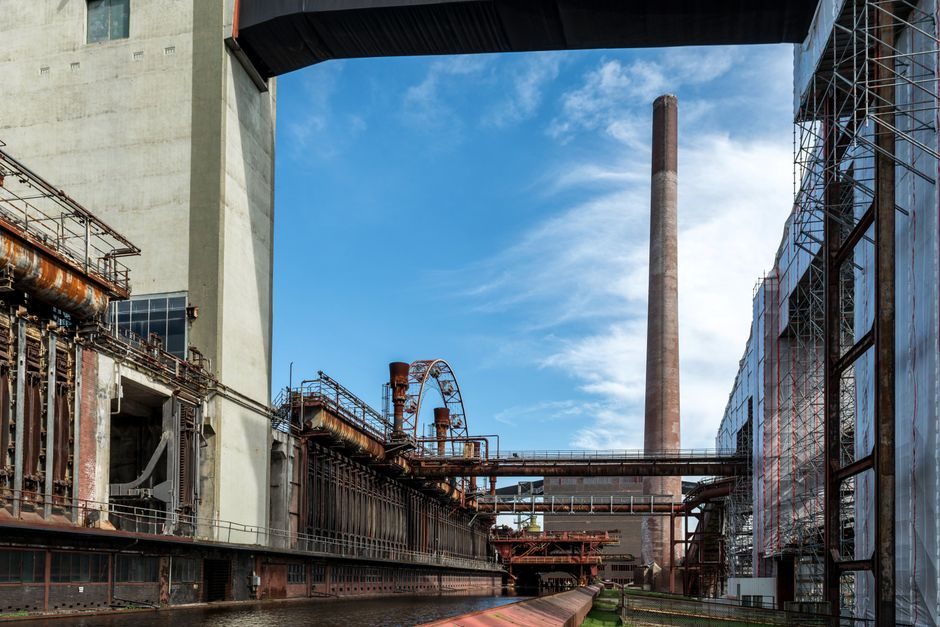
Copper cathode, the 99.99% pure electrolytic plate product defined by ASTM B 115-00, sits at the single most-traded chokepoint in the non-ferrous metals chain: roughly 22 million metric tons of mine output flowed into the upstream pool in 2023, and almost all of it must pass through a cathode or equivalent registered shape before any wire, busbar, or alloy can be made [S2].
The 2026 chain splits cleanly into three tiers — mining and concentrate production upstream, smelting/refining and semi-fabrication midstream, and wire/cable, alloy, and electronics manufacturing downstream — with cathode chemistry, plate geometry, and exchange registration (LME, CME) acting as the common language between them [S2][S4].
Upstream: mining, concentrate, and what reaches the tankhouse
Mine production is dominated by major diversified producers such as BHP, Rio Tinto, and Freeport-McMoRan, with Chile and Peru holding the two top-producing country positions; junior and exploration companies (Hudbay Minerals, Ivanhoe Electric) sit at the higher-risk discovery end of the pipeline [S2].
Concentrate from these operations is the input to smelters, which produce blister copper that is then fire- and electrorefined into cathode plates; the chemical envelope that downstream fabricators actually buy against is set at the tankhouse, not the mine head. ITS Impex's commercial spec is a workable example: Cu at 99.99% by difference, total impurities ≤ 65 ppm (typical ≤ 25 ppm), with Fe ≤ 5.0 ppm, S ≤ 10.0 ppm, Ag ≤ 12.0 ppm, Pb ≤ 1.0 ppm, As ≤ 3.0 ppm, and O₂ in the 100–600 ppm window — typical 200 ppm [S1].
Rio Tinto's own cathode product, advertised as 99.99% pure and good-deliverable on both the Chicago Mercantile Exchange and the London Metal Exchange, is shipped in boxcar fleets served by UP and BNSF — a logistical fingerprint that matters when procurement teams compare anode-cathode copper versus ISA-style refinery output [S4][S6]. For context on parallel non-ferrous supply, the aluminum ingot upstream map follows a comparable mine-to-ingot progression.
Midstream: tankhouse output, plate geometry, and the LME/CME gate
The midstream is where cathode becomes a financial instrument as much as a physical one. ITS Impex's plate dimensions are 990 ± 10 mm long, 970 ± 10 mm wide, and 5 to 25 mm thick, bundled in 2,300–3,000 kg packages bound by two metal ribbons and identified by four CbM fastening seals carrying lot, package, plate, and net-weight data [S1]. The Univertical "Second Tier" spec tightens impurity ceilings further, pinning P ≤ 0.0005%, S ≤ 0.0025%, Fe ≤ 0.0015%, Ni ≤ 0.0010%, and O₂ effectively held to a tight band for downstream wire-rod users [S5].
The physical chokepoint that decides whether a tonne of Cu enters the global trade flow is exchange registration. Grade-A cathode to ASTM B 115 (Cu-CATH-1) at 99.99% minimum, supplied as 914 × 914 × 10–12 mm plates weighing 125 kg ±1% in 2 MT bundles, with 20 MT minimum per container (~22.20 MT gross), is the canonical shape that clears LME/CME good-delivery rules [S7]. Implats' Impala Base Metals Refinery ships an equivalent ISA-process cathode under document MAN-HDS-002, and like all Cu-CATH-1 product is classed as general freight requiring standard heavy-weight handling rather than hazmat protocol [S6].
Two spec comparison axes worth memorising at the buying desk:
1. Purity tier — ITS Impex holds Se, Te, Bi, Sb, As, Pb, Fe, S, Ni, Sn, Ag to specified ppm ceilings with O₂ 100–600 ppm (typical 200 ppm) [S1]; Univertical's "Second Tier" expresses the same impurity family in mass-percent with O₂ explicitly controlled as a low value for wire-rod feedstock [S5].
2. Physical form — 990 × 970 mm 5–25 mm thick bundles of 2.3–3.0 t (ITS Impex) versus 914 × 914 mm 10–12 mm thick 125 kg plates in 2 MT bundles and 20 MT containers (Grade-A ASTM B 115) [S1][S7].
3. Standards alignment — ASTM B 115-00 plus BS EN 1978:1998 and NBR 5026-2001 for the European/Latin American trading axis [S1]; pure ASTM B 115 / Cu-CATH-1 with LME deliverable shape for exchange-cleared parcels [S4][S7].
Downstream: wire-rod mills, alloy foundries, and electrical end-uses
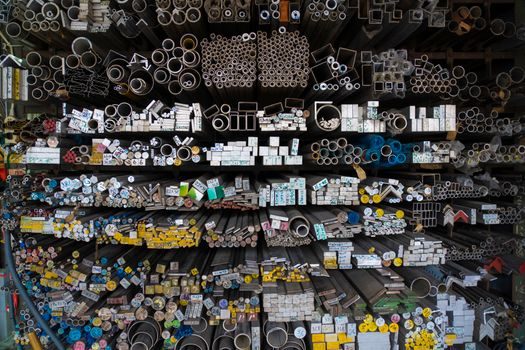
Once a cathode clears the tankhouse gate, the value-add shifts to fabrication premium rather than commodity price. Continuous-cast wire rod for the wire and cable sub-sector is the largest single sink, fed by companies such as Encore Wire and Amphenol, and is structurally tied to global electrification, 5G rollout, data-center buildout, and EV manufacturing [S2].
Alloy foundries are the second sink: brass (Cu-Zn), bronze (Cu-Sn), and copper-nickel strip and billet all draw directly on Grade-A cathode, with sulfur, lead, and iron ceilings acting as the most-cited rejection criteria — sulfur at >10 ppm embrittles free-machining brass; lead above spec poisons nickel-silver conductivity; iron above 5 ppm degrades anneal response in transformer strip [S1][S3].
Electronics and electrical uses — busbar, transformer winding, magnetron and vacuum-sputtering targets — sit at the highest conductivity tier, and the IACS (International Annealed Copper Standard) electrical-conductivity floor of 100% minimum published in the ITS Impex datasheet is the cross-vendor benchmark that lets procurement write a single spec line into a transformer or busbar tender [S1]. Buyers who already spec other non-ferrous feedstocks against similar ASTM anchors will recognise the discipline used in the 2026 carbon-steel electronics map.
Selection criteria: what a procurement team should pin down first
Three questions short-list the cathode source in practice: (1) Is the parcel LME/CME good-deliverable or only "in accordance with" ASTM B 115? Rio Tinto's cathode is explicitly good-deliverable on both exchanges; ITS Impex is "in accordance with" the standard, which is fine for industrial use but blocks exchange-cleared financing [S1][S4]. (2) Does the impurity ceiling — not just the purity headline — match the downstream process? Wire-rod mills need low S and low O₂; brass mills need tight Pb and Fe; electronics need low residual radioactivity and tight Bi/Te [S1][S5]. (3) Does the form factor fit the receiving furnace? A 5–25 mm thick 990 × 970 mm bundle is friendlier to a vertical shaft furnace than a 10–12 mm 914 × 914 mm plate stack [S1][S7].
For traders and industrial procurement, the practical decision rule is: match ASTM B 115 / Cu-CATH-1 plate geometry to exchange deliverability if financing matters; match impurity ceilings to the downstream alloy or conductor grade; and match bundle weight to in-plant crane and furnace charging limits. The same logic drives spec-driven sourcing in adjacent non-ferrous chains, including the aluminum-ingot tier map.
Failure modes and constraints across the chain
Upstream, the binding constraint is orebody grade and water/energy availability at the concentrator, with capex intensity gating the time from discovery to first cathode — typically 7–10 years for a greenfield project [S2]. Midstream, the binding constraint is tankhouse capacity and the impurity ceiling of the feed; high-arsenic or high-antimony concentrate depresses current efficiency and forces blend management. Downstream, the binding constraint is surface quality: nodules, grease, oil, sulfate, or sludge residue on the cathode plate are explicitly called out as defects in the ITS Impex datasheet because they generate slag and inclusions when the plate is charged into a vertical or shaft furnace [S1].
Logistics is a fourth, often-overlooked constraint: a 2.3–3.0 t bundle or a 20 MT container needs rail, port, and crane infrastructure matched to boxcar and ISO-20/40 dimensions; this is why integrated miners like Rio Tinto maintain captive rail fleets rather than relying on spot trucking [S1][S4].
Sourcing, standards, and trackable 2026 signals
The standards stack that a 2026 buyer should anchor a cathode tender against is small and stable: ASTM B 115-00 (now B 115) for Grade-A Cu-CATH-1 chemistry and shape, BS EN 1978:1998 for European Cu-CATH-1 equivalents, and NBR 5026-2001 for the Brazilian ABNT axis, with the LME and CME good-delivery lists as the de facto physical-form contract [S1][S4][S7].
Trackable signals for the next sourcing cycle: (a) tankhouse expansions and restarts in Chile, Peru, the DRC, and Indonesia that will add to the 22 Mt 2023 mine base [S2]; (b) the EV-driven wire-rod pull that is already reshaping fabrication premiums; (c) ISA-process versus traditional electrorefined cathode mix, with safety-data documentation such as Implats' MAN-HDS-002 becoming a routine procurement attachment alongside the COA [S6]. Buyers who frame cathode tenders around these three signals — exchange deliverability, impurity ceiling, and bundle geometry — will avoid most of the spec drift that has shown up in the 2025–2026 spot market.
Spec-level background on the components involved: pressure transmitter, and flow meter.