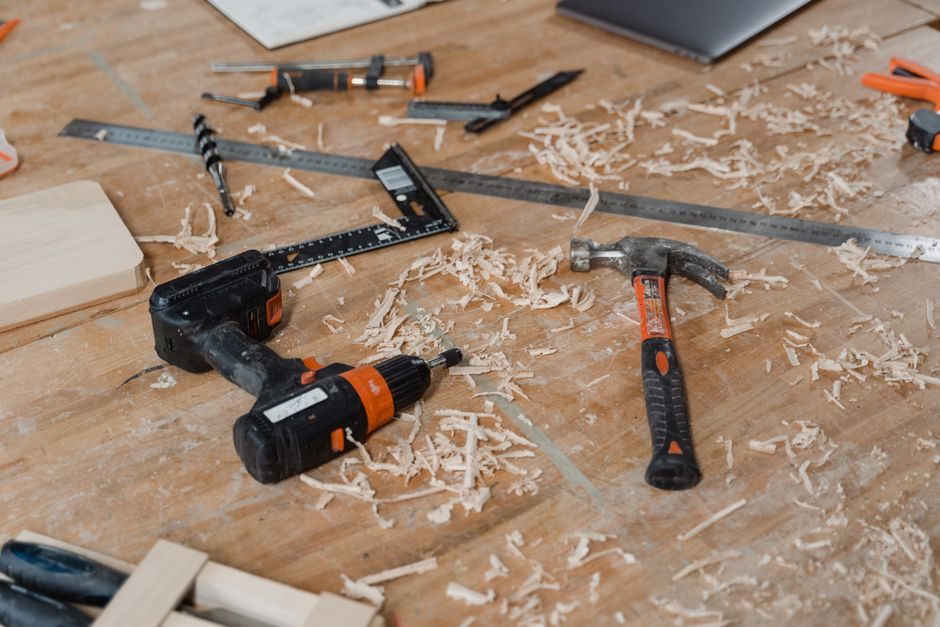
Core drilling machines and impact drills solve overlapping but distinct problems: a magnetic core machine extracts a clean cylindrical slug via an annular diamond or carbide-tipped bit, while an impact drill couples rotation with a percussive hammer stroke to drive a solid twist bit into substrate.
For holes larger than ~12 mm in concrete, brick, or stone, a core drill is the productive tool; below that threshold, and for wood, steel, and fastener work, an impact drill delivers lower cost-per-hole and faster cycle time.
Operating Principle and Bit Geometry
A core drill uses a hollow cylindrical bit that cuts only a kerf at the perimeter of the hole, leaving the inner core intact for ejection; this is why a 1,000 W core drill can cut a 100 mm hole in reinforced concrete faster and with less energy than a solid bit of equivalent diameter [S9]. The published YT27 pneumatic rock drill — a non-electric core-drilling platform — runs at 0.4–0.5 MPa working pressure, delivers ≥70 J impact energy at ≥36 Hz, and bores 34–42 mm diameter holes up to 5 m deep, weighing 26 kg over a 668 mm length [S3].
An impact drill (also called a hammer drill) uses a solid twist bit and adds an axial hammer mechanism that strikes the back of the bit thousands of times per minute while the chuck rotates. It cannot cut an annular kerf, so all cut material must be converted to chips; this caps practical hole diameter on a handheld impact drill at roughly 12–16 mm in masonry before bit cost and cycle time become uneconomic.
Spec Comparison Across the Decision Criteria
Below is a side-by-side spec map based on the catalog data in the research set. Impact drills in the 2026 wholesale channel span a 20 V cordless class (e.g. Fixtec FCDI20001 with 1/4" hex chuck) up to heavy 220 V mains units; the lowest listed entry sits at US$ 17.40 per piece MOQ 5, and a dedicated mining impact drill from Mengyin Feida lists US$ 63,000–70,000 per piece [S2]. The Euroboor ECO.36+ electric magnetic core drill caps at 36 mm diameter, runs two fixed speeds (400 rpm and 700 rpm), and stands 165 mm tall — the lowest profile magnetic core drill in its vendor's catalogue [S1]. A separate 4-inch (100 mm) bench core drill ships with 860 W / 6 A draw, 750 rpm, 110 V or 220 V supply, and a 4-inch (100 mm) maximum bit depth [S9].
On three core criteria the two tool classes diverge sharply: an impact drill prioritises percussive energy density (Joules per stroke) at low chuck speed, while a core drill prioritises steady torque at low rpm to keep diamond or carbide segments in their cutting band. Cordless impact drills in the Made-in-China catalogue expose 20 V nominal voltage and 1/4" hex chucks for quick bit change [S2]; the ECO.36+ uses a 19 mm Weldon shank for annular cutters [S1]. A Chinese export floor for stainless-steel manual core cutting machines with 100 mm capacity sits around ₹1.30 lakh (≈ US$ 1,560) per piece [S6].
Application Fit: Concrete, Steel, Wood, Mining
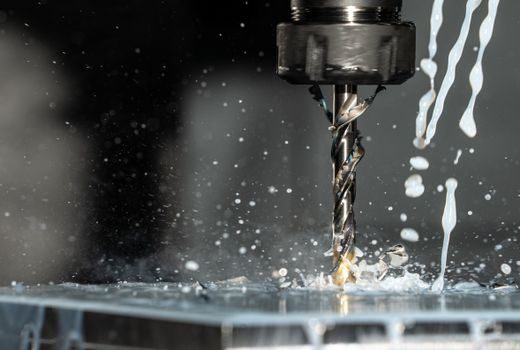
For structural steel erection, electrical conduit through brick walls, or plumbing penetrations in poured concrete, a magnetic core drill with annular cutter is the industry default; the magnet adheres to the workpiece and the cutter produces a 12–100 mm round hole with no through-thickness chip evacuation problem. The 4-inch (100 mm) core drill in [S9] covers the bulk of MEP (mechanical, electrical, plumbing) hole specs on commercial job sites.
For anchor bolt setting, wood framing, light-gauge steel, and small-diameter masonry, the impact drill is faster and cheaper per hole. The hand-held pneumatic YT27 covers hard-rock (concrete f=8–18) drilling in mines, tunnels, and railway cuttings, with a 22×108 mm shank and 5 m hole-depth capacity [S3]. Chinese OEM Shanghai Bono Tools groups impact drill, diamond core drill, magnetic drill, and wall saw under one product family — evidence that buyers routinely cross-shop these categories [S4].
Power Source, Mobility, and Site Constraints
Cordless 20 V impact drills dominate the trades where no mains is available: the Fixtec cordless impact drill ships with a 1/4" hex chuck and 20 V rated voltage, listed under the Made-in-China 2026 impact-drill catalogue [S2]. Mains impact drills in the same catalogue are typically 500–1,200 W and run at 0–3,000 rpm no-load with 0–48,000 bpm hammer rate for general masonry work.
Core drills in the dataset split into three power tiers: hand-pushed manual units (petrol-engine or hand-fed, ~100 mm capacity, common in Indian export listings [S6]); electric magnetic units (1,000–1,800 W, 110 V / 220 V, fixed or two-speed gearbox, 12–100 mm cutters, exemplified by the Euroboor ECO.36+ at 400 / 700 rpm and the 4-inch 860 W / 750 rpm bench unit [S1][S9]); and full-hydraulic exploration rigs for mineral coring, where a variable-displacement pump and hydraulic motor deliver stepless speed for diamond drilling in XY-5, XY-6B, and XY-8 series rigs (2024-10). The hydraulic option is the only one that adapts to both high-speed small-diameter diamond drilling and high-torque low-rpm engineering work without a gearbox.
Cost, Bit Consumption, and Total Cost of Ownership

Entry-level impact drills start at US$ 17.40 per piece MOQ 5 in the Made-in-China 2026 catalogue, while a single-piece MOQ mining impact drill from Mengyin Feida lists US$ 63,000–70,000 [S2] — three orders of magnitude apart, reflecting the gap between a 20 V cordless tool and a drill-rig-class machine. Mid-range magnetic core drills from established brands (Euroboor, BDS, Nitto) sit in the US$ 800–2,500 band for the 36–50 mm cutter class [S1], with the Indian export floor at roughly US$ 1,560 for a 100 mm manual core cutter [S6].
Bit cost is where the comparison turns: an impact drill uses cheap HSS or SDS-plus masonry bits (US$ 3–15 each), while a core drill consumes diamond-tipped or carbide-segment annular cutters (US$ 40–300 each, with life rated in linear metres, not holes). For a job site producing 200 × 20 mm anchor holes in concrete, the impact drill is the economic choice; for 50 × 75 mm conduit penetrations through a 300 mm thick slab, the core drill wins on cycle time and surface finish despite higher bit cost.
Who Each Tool Is For — and Who It Is Not
The impact drill is the right tool for electricians, carpenters, general maintenance crews, and DIY users making holes in the 3–12 mm range across wood, metal, plastic, and light masonry. It is the wrong tool for clean large-diameter penetrations in reinforced concrete, for mineral exploration coring, and for any application where the slug needs to be recovered intact. [S3]
The core drill — whether a rotary drilling rig for exploration, a magnetic annular cutter for fabrication, or a hand-held pneumatic rock drill for mining — is the right tool for MEP contractors, structural steel erectors, mining and tunnelling crews, and anyone needing 12–100 mm (or larger) holes in masonry, stone, or rock. The YT27 hand-held rock drill targets hard-rock drilling in mines, tunnels, railway, and water-conservancy works at 0.4–0.5 MPa air pressure with 5 m hole-depth reach [S3]. Buyers comparing impact drills to shell-core-machine and cold-box-core-machine platforms should note that those last two are foundry-sand coring devices, not construction tools — a category mistake to avoid.
Standards, Certification, and Selection Checklist

Common impact-drill certifications in the 2026 Made-in-China catalogue include CE, ISO 9001:2000, ISO 9001:2008, RoHS, EPA, GS, and CCC [S2]; the CE mark and a 2008/2015-era ISO 9001 certificate are the baseline expectation for European-bound product. Core-drill safety hinges on the magnetic adhesion rating (typically ≥ 750 N for a 32 mm cutter), the annular cutter's EN 13236 compliance for diamond tools, and a two-speed gearbox that keeps the diamond segments within their specified surface-speed band.
Spec-first selection checklist: (1) hole diameter — ≤16 mm favors impact drill, ≥20 mm favors core drill; (2) substrate — wood/steel/light masonry favors impact drill, reinforced concrete/stone/rock favors core drill; (3) hole depth — ≤300 mm favors any handheld tool, ≥1 m requires a rig-class core drill; (4) power availability — cordless 20 V only viable for impact drill in the small-diameter class; (5) bit cost amortisation — fewer than 50 holes per job favors impact drill consumables, high-frequency coring favors diamond-segment lifetime maths. For a similar spec-first decision pattern in adjacent test equipment, see magnetic particle vs ultrasonic flaw detector selection and the eddy current vs phased array UT map.
Trackable signals for the next sourcing cycle: Euroboor ECO-series 36–50 mm magnetic core drill price moves on European distributor channels; new cordless 40 V+ impact-drill platforms entering the Made-in-China catalogue above the 20 V Fixtec class [S2]; and any revised YT27-class pneumatic rock-drill efficiency metrics from H.H.Drill-Tech or Shandong China Coal Group listings [S3][S5].