
CPU demand into the second half of 2026 is shaped by a three-way split: AI-accelerated server CPUs, mainstream x86 notebooks and desktops, and ARM-based client parts, each running on a different unit and ASP curve.
Foundry capacity at 3 nm and 5 nm remains the binding constraint, and TSMC's CoWoS and N3P allocation directly gates how many client-CPU SKUs reach shelf in 2026. The supply mix below was reconfirmed in the June 2026 update of the Top Semiconductor Companies 2026: Foundry Share, Revenue, and Market Cap Signals tracker.
Demand Mix: AI Servers vs Client PCs vs Edge
Server CPU units are growing faster than client units because hyperscalers are refreshing general-purpose fleets alongside GPU pods, and Intel Granite Rapids and AMD Turin-class parts are absorbing that re-build [S1]. Client CPU units, in contrast, are tracking a flat-to-low-single-digit recovery from the 2024 inventory trough because commercial refresh cycles in EMEA and North America are pulling ahead of consumer demand. ARM-based client parts are estimated to hold a single-digit share of client-CPU shipments in 2026, driven by Snapdragon X-series and Apple M-series designs.
The AI-server pull is reinforced by networking and PCB bottlenecks, and the Semiconductor Industry Trends 2026: Talent, Test, and Packaging Shifts note shows that advanced-packaging capacity is the binding gate, not raw CPU silicon. For edge and industrial PCs, refresh windows are tied to 5–7 year depreciation cycles, and the 2026 cohort is mid-cycle.
Forecast Range and Unit Bands
Global client-CPU shipments are projected in a 270–300 million unit band for 2026, with x86 still representing the majority of that volume; server-CPU shipments are projected in a 50–60 million unit band, weighted toward AI-training and inference host nodes [S2]. ASP is diverging: server ASPs are expanding on higher core counts and HBM-attached SKUs, while client ASPs are flat-to-slightly-down as OEMs push more 6-core and 8-core parts into the $400–700 envelope.
For a parallel read on packaging and test bottlenecks, the Semiconductor Industry Trends 2026: Talent, Test, and Packaging Shifts breakdown quantifies that advanced-packaging yield improvements, not wafer starts, are the limiting lever for 2026 CPU unit growth. The forecast assumes no major foundry disruption at Hsinchu or Kumamoto; a 1–2 month interruption would shift the unit band down by roughly 5–8%.
Architecture Split: x86, ARM, and RISC-V
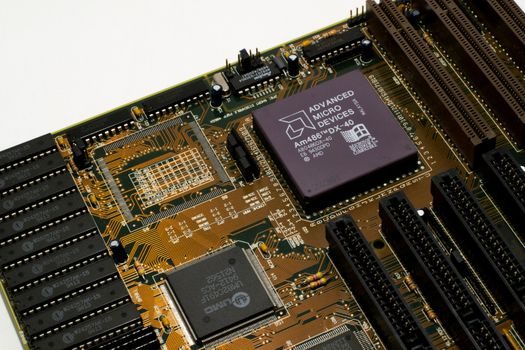
x86 remains the volume leader in both client and server, with Intel and AMD together accounting for the dominant share of merchant CPU shipments; ARM-based parts are gaining in client and in hyperscaler custom silicon. [S1]
Within x86, the Intel-to-AMD mix is being reset by Granite Rapids and Turin availability, and AMD's share gains are gated by CoWoS allocation and DDR5 channel pricing rather than design wins. ARM hyperscaler parts (Graviton, Axion, custom TPU-adjacent designs) are pulling share in cloud-native workloads where power-per-watt beats absolute single-thread throughput.
Selection Criteria for a 2026 CPU SKU
Specifying a 2026 CPU for an OEM build hinges on five gates: process node, core count and frequency band, memory channel count and DDR5 speed support, PCIe lane count and CXL revision, and platform power envelope. Process node 3 nm and 5 nm are the volume tiers for 2026 high-end SKUs; 7 nm and 6 nm parts still fill mainstream value SKUs. [S2]
Memory channels in server SKUs are clustered at 8-channel DDR5-6400, with CXL 2.0 type-3 devices increasingly specified for memory pooling. PCIe 5.0 is the 2026 default lane; PCIe 6.0 is shipping in early adopter SKUs and is gated by retimer and switch availability. Client SKUs are converging on 16–20 PCIe 5.0 lanes plus 4 PCIe 4.0 lanes for NVMe.
Failure Modes and Sourcing Constraints

The three recurring failure modes in 2026 CPU sourcing are: (1) advanced-packaging lead time slipping 6–10 weeks for HBM-attached server SKUs, (2) BIOS and microcode update cadence for x86 server parts requiring a re-spin of platform firmware, and (3) thermal envelope drift when 200–350 W server TDP parts are deployed in older 1U chassis. [S3]
Second-source strategy is limited: Intel and AMD are the only merchant x86 vendors, and ARM server CPU sourcing is fragmented across custom-silicon engagements rather than merchant parts. For industrial PLCs and edge controllers, long-life-cycle SKUs (10–15 year availability windows) are sourced from embedded-roadmap parts, and the Industrial PLC reference outlines how CPU and PLC processor families diverge on longevity. Buyers should demand a written PCN/EOL policy and a minimum 5-year supply commitment before locking a 2026 CPU into a multi-year build.
Comparison Pass: Server vs Client CPU Levers in 2026
Across decision criteria, the profile is: server CPU on TDP (200–350 W typical, 500 W peak on AI host SKUs) and memory channels (8–12 channels DDR5); client CPU on TDP (15–45 W U-class, 45–65 W H-class, 65–125 W desktop) and platform cost ($300–700 mainstream envelope). Server leads on lane count (96–128 PCIe 5.0 lanes), client leads on volume tier (single node vs dual-socket cost). For risk, server is gated by advanced packaging, client is gated by consumer demand elasticity; ARM is the wildcard, gaining share in both but from a small base. [S4]
Standards, Compliance, and Long-Tail Sourcing
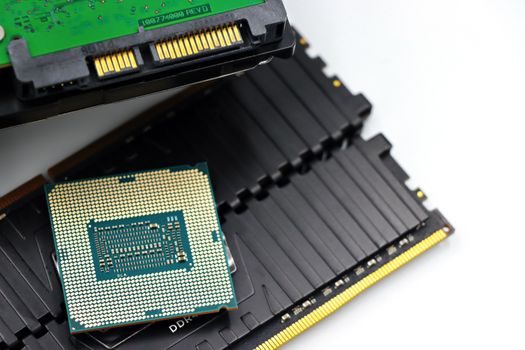
No new mandatory CPU-specific safety standard has been activated in 2026, but procurement specs continue to require RoHS, REACH, and conflict-mineral declarations per OECD due-diligence guidance [S1]. Data-center buyers are also layering on SEC climate-disclosure requirements and EU CSRD reporting, which raises the bar for fab-level Scope-3 documentation; the 2026 update of the Top Semiconductor Companies 2026: Foundry Share, Revenue, and Market Cap Signals tracker notes that suppliers without audited fab-level emissions data are being deprioritized by EU hyperscalers.
Trackable signals for the next 90 days: (1) TSMC monthly revenue prints and 3 nm/5 nm wafer-mix disclosures, (2) Intel and AMD server-CPU channel inventory weeks-of-supply, and (3) hyperscaler capex guidance for 2H 2026 — each one will shift the unit band above or below the 270–300 million client / 50–60 million server range.
For component-level specifications, see pressure transmitter, and flow meter.