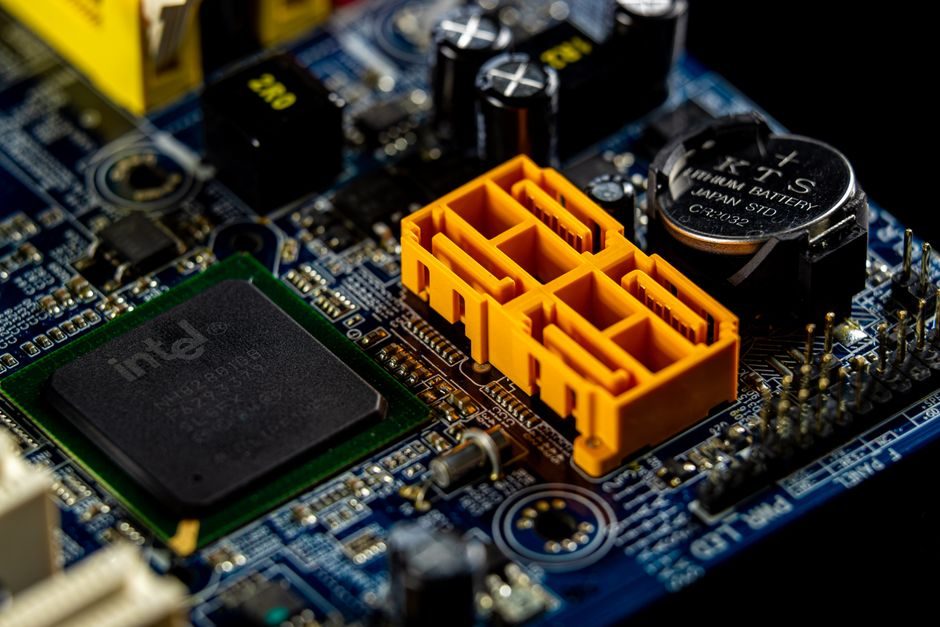
Enterprises that buy or build compute in 2026 are managing two parallel supply chains: the silicon side (wafer capacity, packaging, DDR5/PCIe 5.0 enablement) and the software side (open-source component reuse, CVE exposure on every CPU-hosted workload) [S1].
The Sonatype 2026 State of the Software Supply Chain report, dated 2026-06-09, frames the year as one in which "software supply chains have hit machine scale" — more reuse, more transitive dependency, and a wider blast radius for a single vulnerable component [S1]. On the silicon side, Intel's mid-range Core i5-12600KF landed at a street price of 1,830 RMB on 2026-05-28, with the Core Ultra 7 265K AI-enhanced flagship at 3,199 RMB, defining the domestic mid- and high-tier desktop reference points for AI research builds [S8].
What "CPU supply chain" actually means in 2026
The term covers three layers that must be mapped separately. Layer 1 is upstream silicon: foundry nodes (Intel 7, TSMC N3/N5), advanced packaging (Foveros, CoWoS), and substrate supply. Layer 2 is the software bill of materials that runs on each CPU: open-source libraries pulled by every AI/ML pipeline, container base images, firmware, and microcode. Layer 3 is the operational supply chain — lead time, allocation, distributor stocking, and the KPI set procurement and operations track once CPUs are deployed [S3].
Sonatype's 2026 report places open-source reuse at the centre of layer 2 risk: "the world did not just build more software. It reused more of it, more often," which means a single compromised npm or PyPI component can be inherited by every CPU-hosted inference service an enterprise runs [S1]. The Oracle Supply Chain Products Suite CVE-2024-20956 denial-of-service flaw — affecting versions before 6.2.4.2 and disclosed in Oracle's January 2024 CPU — is the kind of enterprise-software overlay risk that propagates on top of any CPU procurement decision [S6].
Selection criteria for a 2026 CPU build
Three numbers govern most purchase orders this year: core count, memory bandwidth, and PCIe lane generation. Intel's Core Ultra 7 265K ships with a hybrid core complex plus a dedicated NPU tuned for on-device inference; vendor testing cited in the 2026-05-28 round-up reports a 42% latency reduction on Llama-3-8B quantised local inference versus a CPU-only baseline, with CPU+GPU+NPU work distributed across the three domains [S8]. The Core i5-12600KF, by contrast, is positioned as a 10-core/16-thread mid-tier workhorse — its 4.9 GHz all-core sustained frequency, native DDR5 and PCIe 5.0 support, and 12 MB L3 cache are credited with roughly 35% faster Scikit-learn clustering in the same source [S8].
Buyers should weigh four decision criteria side by side. AI workload share: the NPU-equipped Ultra 7 265K carries a 1,369 RMB premium over the 12600KF (3,199 RMB vs 1,830 RMB per S8), and S8 cites a 42% latency reduction on Llama-3-8B quantised local inference for the NPU-equipped 265K. (2) Memory subsystem: both SKUs support DDR5, but the Ultra 7 265K platform exposes more PCIe 5.0 lanes for direct-attached NVMe caching pools used in Pandas batch and HDF5 I/O [S8]. (3) Software-supply-chain posture: pairing any new CPU with SBOM scanning and signed-firmware policies is now baseline, per the Sonatype 2026 framing of "machine scale" reuse [S1]. (4) Lead time and allocation: desktop SKUs in the 12600KF/265K class have been continuously stocked through Chinese e-commerce in mid-2026, unlike server-grade Xeon SP or AMD EPYC SKUs that remain allocation-managed [S8].
Who this is for — and who it is not
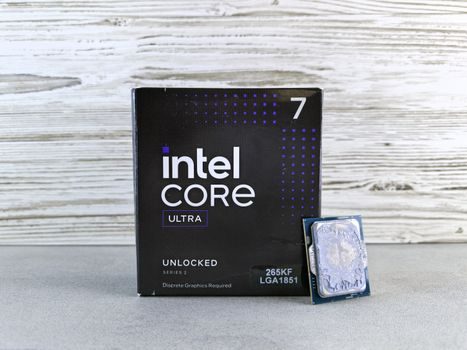
Intel's mid-2026 desktop Core i5-12600KF and Core Ultra 7 265K tier fits independent AI researchers, university labs, and small on-premise inference clusters where a single workstation under ~3,500 RMB must serve mixed CPU/GPU/NPU loads [S8]. They are not a substitute for rack-scale AI training; that segment routes through the AI chip maker map 2026, where GPU, NPU, ASIC and foundry tiers are tracked separately at the wafer and HBM level.
Conversely, the Sonatype 2026 framing of software-supply-chain risk is universal — every CPU owner, from a single 12600KF workstation to a hyperscale cluster, inherits the same open-source reuse exposure [S1]. For a broader read on the silicon supply squeeze hitting other electronics categories, the solar panel supply shortage 2026 and display panel supply chain 2026 dossiers cover adjacent allocation and certification dynamics. Procurement teams running 12600KF or 265K fleets should still track those supply signals because motherboard, PSU and chassis lead times move in lockstep with the panels and modules feeding the same fabs.
Software-side risks that ride on every CPU
Two failure modes dominate the 2026 layer-2 picture. The first is open-source dependency chain compromise: Sonatype's 2026 report explicitly ties the year's threat surface to the rate at which organisations pull and re-pull upstream components, and to the SBOM hygiene of the artefacts they publish [S1]. The second is enterprise-software overlay risk on top of the CPU — Oracle's January 2024 CPU patched CVE-2024-20956 against Supply Chain Products Suite versions prior to 6.2.4.2, a flaw that allowed unauthenticated attackers to perform unauthorised update, insert, delete and read operations plus denial-of-service on the suite's planning, execution and PLM modules [S6].
Both modes share a single mitigation pattern: an SBOM-first procurement policy. The 2026 State of the Software Supply Chain report positions that as the minimum bar for any organisation pulling third-party code onto a CPU-hosted workload [S1]. For an industrial procurement audience, this is the same discipline used for valves, bearings and pumps — vendors are evaluated on traceability and certification, not just price — and the same industrial valve supply chain map 2026 approach applies to firmware provenance for any 12600KF or 265K build.
KPI discipline once the CPUs are deployed
Procurement and operations should be tracking the same 11-supply-chain-KPI set on any new CPU fleet: order-to-delivery cycle time, forecast accuracy, on-time-in-full, inventory turnover, days of supply, supplier defect rate, perfect order rate, cash-to-cash cycle, gross margin return on inventory, fill rate, and supply chain cycle time [S3]. MRPeasy's 2026 guide, dated 2025-12-04, recommends starting with a few critical metrics and expanding only as the data infrastructure matures — the same advice applies to a 50-seat AI research lab as to a 5,000-unit hyperscaler build-out [S3].
For talent-side constraints, the 2026 hiring market is bidding up data-analysis, data-governance and data-lake skills as core supply-chain analyst requirements; Coursera's 2025-12-06 skills guide puts these at the top of the in-demand list, alongside data storytelling and visualisation [S4]. A 2026 supply-chain analyst compensation guide from the same publisher frames the role as one in which analytics tooling is the differentiator, not logistics theory [S7]. This matters for CPU fleet operations because the SBOM tooling that mitigates the Sonatype-2026 risk profile is operated by the same analyst cohort.
Standards, sources and the procurement paper trail
There is no single standard that governs "CPU procurement" end-to-end; the 2026 picture is a stack of overlapping references. Sonatype's annual State of the Software Supply Chain report is the de facto layer-2 reference for open-source reuse and CVE cadence [S1]. Oracle's Critical Patch Update programme — including the January 2024 advisory for CVE-2024-20956 against Supply Chain Products Suite prior to 6.2.4.2 — is the layer-2 enterprise-overlay reference [S6]. The 11-KPI guide from MRPeasy and the Coursera skills/compensation pieces are the layer-3 operational reference set [S3][S4][S7]. Intel's mid-2026 desktop pricing, as reported on 2026-05-28, is the layer-1 silicon reference for the China-channel mid- and high-tier [S8].
A reference quote worth keeping on file, from the Sonatype 2026 report's executive summary: "In 2025, the world did not just build more software. It reused more of it, more often" [S1]. That sentence is the single best one-line justification for treating SBOM scanning as a line item on the same purchase order as the CPU itself.
Trackable next signals: (1) the next Sonatype data point on open-source reuse growth, expected with the 2027 report cycle; (2) any Intel/AMD 2026-Q3 desktop price revision on SKUs in the 12600KF/265K band, which would shift the mid-tier reference price off the 1,830 RMB / 3,199 RMB marks captured on 2026-05-28 [S8]; (3) further Oracle CPU advisories against the Supply Chain Products Suite line, given the active 6.2.4.2 patch baseline established in 2024 [S6].
For component-level specifications, see dc power supply, switching power supply, and chain conveyor.