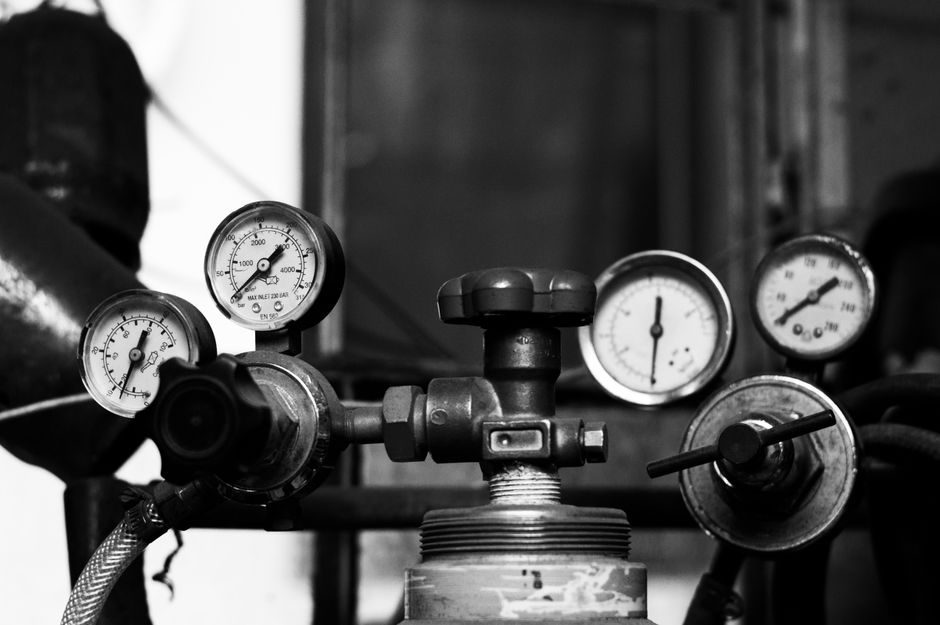
The 2026 industrial-valve ecosystem reads as a four-layer chain — raw steel and casting inputs, body machining and trim assembly, actuator/instrumentation integration, and end-user project demand — with the OEMs themselves (JIANENG in China [S1], YDB Valves in India [S2], PT Solusi Cita Mandala distributing Bray, JC Valves and Ventil in Indonesia [S3]) operating as Tier-1/2 fabricators rather than as raw-material sources.
Cross-vendor certification overlap is real and verifiable: JIANENG publishes ISO 9001 plus API certification on its product page [S1]; YDB holds ISO 9001:2015, ISO 14001:2015, ISO 45001:2018 plus API 6D monogram approval [S2]; SCM distributes API/ASME-conformant Bray (USA), JC Valves (Spain) and Ventil (NL) product lines into Indonesian process plants [S3]. That stack is the floor for any serious cross-border RFQ in 2026.
Upstream Layer 1: Castings, Bar Stock and Forged Bodies
Carbon steel (ASTM A216 WCB), low-temperature carbon (A352 LCC), stainless (A351 CF8/CF8M), duplex (A890 4A/5A) and nickel-alloy (Alloy 625, C-276) forgings and castings are the dominant body materials used by API 600 gate, API 6D ball and ASME B16.34 globe/Check manufacturers worldwide [S1][S2]. YDB's product line explicitly covers high-pressure and high-temperature services where WCB hits its limit and 316/CF8M or higher alloys become mandatory [S2].
Foundry capacity remains the binding constraint in 2026: a Tier-1 valve maker typically sources castings from approved foundries on long-term release, with destructive and PMI (positive material identification) witness testing per ASME B16.34 and the customer's MTR/EN 10204 3.1/3.2 requirements [S1]. For sour service, NACE MR0175 / ISO 15156 metallurgical limits (hardness ≤ 22 HRC, restricted chemistries) are written into the body spec at the casting stage, not added later [S1][S2].
Upstream Layer 2: Sealing, Trim and Soft-Part Sub-Suppliers
Seats, seals, gaskets, stem packings and bellows are the components that drive fugitive-emissions compliance. Graphite-based stem packings, PTFE/RPTFE seats and metal-to-metal Stellite #6 / SS316 overlay trims are the workhorse options specified across JIANENG, YDB and Bray-origin lines [S1][S2][S3]. For low-emission service, ISO 15848-1 Class A / API 624 qualification is the typical target, and that target is reached at the sub-supplier level (seat insert, stem seal, body gasket) before final assembly.
Actuators — pneumatic diaphragm, pneumatic scotch-yoke, electric multi-turn and quarter-turn — are almost always a buy item sourced from dedicated actuator OEMs rather than built in-house. SCM's portfolio of Bray, JC Valves and Ventil demonstrates that even regional distributors integrate the actuator stack at the channel level rather than fabricate it [S3].
Midstream: Body Machining, Assembly, Test and Certification
Every ISO 9001-certified shop on the public list runs a documented test bench: hydrostatic shell test (typically 1.5× the design pressure cold, held for a defined dwell), seat leakage test per API 598 or API 6D, and for control valves an ISA 75.02 / IEC 60534-4 characteristic verification (equal percentage, linear, modified parabolic) at bench [S1][S2][S3]. SCM's product page highlights repair and test bench capability alongside the new-valve supply side, showing that midstream test infrastructure is itself a commercial product line in Indonesia [S3].
Certification to API 600 (gate), API 602 (compact), API 603 (corrosion-resistant), API 6D (pipeline ball/check) and ASME B16.34 (valve design & materials) is the basic mechanical-API stack [S1][S2]. Fire-safe API 607 / ISO 10497 is the additive for hydrocarbon service, and ATEX 2014/34/EU or IECEx marking is the additive for European and offshore explosive-atmosphere builds [S1]. YDB's API-6D monogram is explicit on its About page; JIANENG publishes the same via its API/9001 statement [S1][S2].
Downstream Demand: Oil & Gas, Petrochemical, Power, Water and Mining
Oil & gas (upstream wellhead, midstream pipeline, downstream refinery) is consistently cited as the largest demand pool, with petrochemical, thermal power, nuclear auxiliary, LNG, desalination, mining slurry and water/wastewater as secondary blocks [S1][S2][S3]. YDB's market claim is oil, gas, chemical and power, with API 6D monogramming the pipeline piece specifically [S2]. JIANENG positions itself across extreme-service flow control with global reach to 50+ country end users [S1].
Indonesia's distribution profile through SCM — Bray (US) butterfly and triple-offset, JC Valves (Spain) severe-service, Ventil (NL) industrial process — is a clean illustration of a regional integrator mixing Western-originals on a common API/ASME base [S3]. For comparison context on how valves sit beside adjacent motion-control equipment, see this hydraulic system tier map for 2026; both categories share forged-body capacity as a binding upstream constraint.
Selection Criteria Across the Main Valve Types
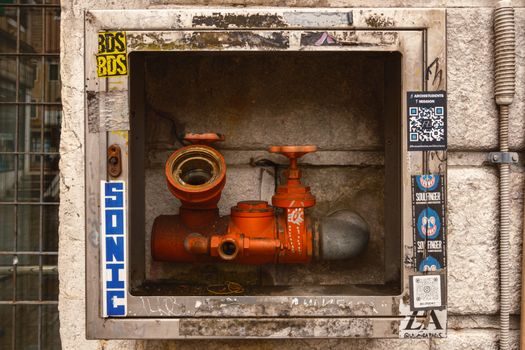
Ball, gate, globe, check, butterfly and control valves each map to a different service window, and a clean spec sheet lines them up against four decision criteria: pressure class, temperature, leak-tightness target, and actuation philosophy. API 6D ball valves dominate on pipeline block-and-bleed at Class 150–2500 and −46 °C to +200 °C with bi-directional zero-leakage seats [S2]. API 600 gate valves handle refinery and steam at the same classes with lower pressure drop but slower actuation.
Butterfly (concentric, double-eccentric, triple-offset) wins on cost, footprint and weight in water, HVAC and low-pressure hydrocarbon service, and triple-offset extends to ASME Class 600 and above [S3]. Globe and control valves take throttling and modulation work where the inherent equal-percentage characteristic and predictable gain matter, typically paired with pneumatic diaphragm or electric actuators on a 4–20 mA + HART or Foundation Fieldbus signal. For selection depth and body-trim cross-reference, the industrial valve encyclopedia entry consolidates pressure-temperature tables and API 600/602/603/6D scope boundaries.
Where This Supply Chain Fits a Sourcing Decision
For a buyer deciding between a China direct-OEM, an India API-6D shop and a Western-original regional distributor, the real differentiators in 2026 are: documented foundry release and PMI practice, in-house test bench with API 598/6D witness capability, actuator integration depth (pneumatic vs electric vs hydraulic), and emission / fire-safe / sour-service qualification evidence on the model being quoted [S1][S2][S3]. Lead time on a 12" Class 300 gate or ball typically runs weeks to a few months from these vendors; special alloys and full-Stellite trim push that out further.
Where this chain ends and the next industrial asset chain begins is on the actuation and instrumentation side — positioners, industrial cameras for remote seat-leak imaging, industrial borescopes for internal-trim inspection, and industrial buzzers for end-position feedback on critical block valves.
Constraints, Failure Modes and 2026 Risk Levers
[S1]
Upstream material risk sits in foundry capacity for low-temperature carbon steel (A352 LCC) and super-duplex (A890 5A/6A), both of which are allocated in 2026 and visible in extended foundry lead times across China, India and Europe. Downstream demand risk is oil-price-driven — capex deferral on LNG, petrochemical and upstream-midstream pipeline work shifts RFQ volume month-to-month. Trackable signals through the rest of 2026: API 6D monogram audit cycle outcomes on Tier-1 Indian and Chinese shops, ISO 15848-1 Class A adoption rate on new RFQs, and foundry release of low-temp carbon and super-duplex for Q3/Q4 2026 delivery.
Verifiable next node to watch: the Q3 2026 API/ISO recertification results published by JIANENG [S1], YDB [S2] and the Bray/JC/Ventil principals distributed by SCM [S3] — those updates are the cleanest public read on foundry throughput, monogram scope and emission-class compliance in the current cycle.