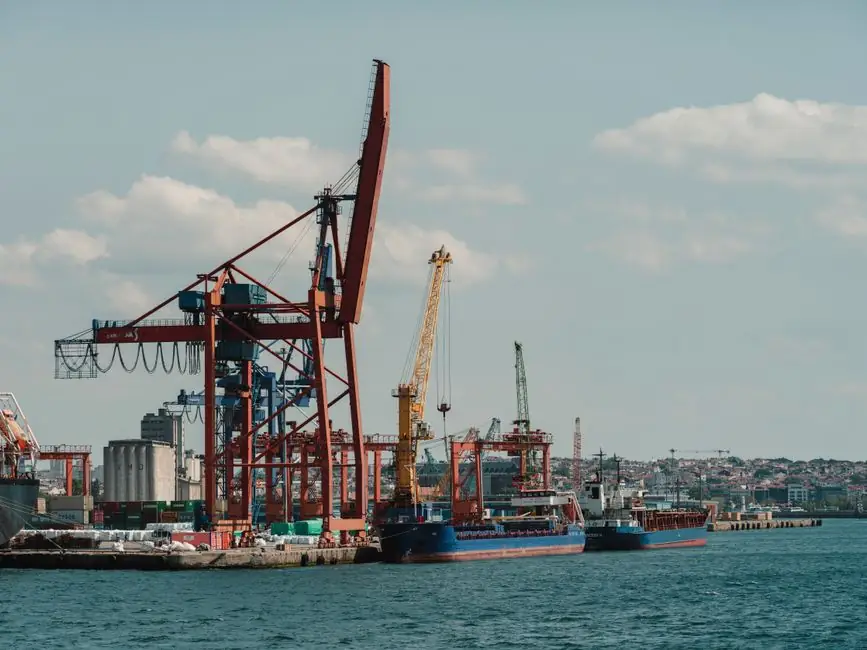
A crawler crane rated 15 to 1800 t with rubber-track undercarriage and lattice or telescopic boom is the right pick for soft, uneven ground and long-term site work, while a gantry crane rated 1 to 900 t on rail-mounted wheels is the right pick for outdoor yards, container storage, and port or station handling where the crane is fixed-format but travels along a rail [S1][S2].
The two machines differ on every axis that matters to a project engineer: load class, mobility model, ground pressure, setup time, and unit cost. Crawlers win on raw capacity, ground contact, and reach into unstructured sites; gantries win on duty cycle, repeat positioning, space utilisation, and total cost of ownership on a fixed route [S1][S2][S3].
What Each Crane Actually Is, and Where It Sits in the Family Tree
Cranes divide first into mobile and fixed formats; a crawler crane is a mobile crane on a tracked undercarriage, while a gantry crane is a fixed-format overhead crane standing on its own legs and rolling on rail-fixed wheels at ground level [S2]. Crawler cranes are described as track vehicles built on an undercarriage fitted with a pair of tracks, which limits turning radius but lets the machine operate on soft ground and unimproved sites without sinking [S3]. Gantry cranes, by contrast, are described as a door-frame structure with the main beam carried on legs that travel on rail wheels fixed to the ground, with the beam able to extend as a cantilever beyond the legs [S1].
The capacity envelopes published for the two formats are different by roughly one order of magnitude at the top end. Crawler cranes are listed at 15 to 1800 t rated capacity, while gantry cranes are listed at 1 to 900 t rated capacity, with gantries frequently used for long, large and cumbersome objects that an overhead crane on a building support structure could not reach [S1]. Working envelopes also differ: a crawler has a flexible lattice or telescopic jib for high-reach work on construction sites, while a gantry is structured around a horizontal girder on legs and is built for repetitive pick-and-set cycles in a defined yard footprint [S1][S2].
Selection Criteria: Capacity, Ground, Mobility, Setup, Cost
Four criteria drive almost every crawler-vs-gantry decision on a real project: rated capacity, ground condition, mobility model, and the resulting site-prep plus mobilisation cost. Crawler cranes deliver the highest flexible operating performance of any mobile format, with the structure described as simple and unit price reported at roughly 25% lower than a comparable truck crane, while gantry cranes are valued for high space utilisation, large operating range, wide adaptability, and strong commonality in port-yard work [S1].
On ground pressure and terrain, crawlers spread load across the full length of the tracks and outriggers, which lets them work in marshy areas and on soft or fragile soils where rubber tyres would lose traction and tear the surface [S5]. The flip side is documented: crawlers are slow to travel, can damage finished ground, and require long working and evacuating times, with the machine itself transported to site in pieces and assembled on location [S1]. Gantries need a prepared rail track fixed to the ground, but once that civil work is in place the crane simply rolls along it under its own power with no ground-damage risk and no on-site assembly cycle [S1][S2].
Crawler vs Gantry, Criterion by Criterion

On rated capacity, crawlers span 15 to 1800 t and gantries span 1 to 900 t, so crawlers are the only option for the very top end of heavy lift and high-rise construction [S1]. On mobility, the crawler is self-propelled at the load and can crawl with the hook on a slow controlled traverse, while the gantry is rail-bound within a fixed yard and only moves along that rail envelope [S1][S2]. On terrain, crawlers handle soft, uneven, marshy, and unimproved ground because of the tracked undercarriage; gantries need a level, civil-prepared site with rail foundations [S3][S5].
On setup and mobilisation, crawlers must be transported to site as components and assembled on the pad, with larger installation space and a separate lifting helper required, while gantries are erected once and reused indefinitely on the same rails [S1]. On unit price, crawler structure is described as simple and cheap, at about 25% lower than a truck crane of comparable class, whereas gantries carry the cost of the rail civil works and the supporting leg structure but skip the recurring transport and re-assembly bill [S1]. On duty cycle and repeat positioning, gantries are built for repetitive yard work, port container handling, and storage loading, while crawlers are built for one-off heavy picks and long-term site campaigns where bulk, slow travel, and a special setup are acceptable [S2][S3][S7].
Who Each Format Is For, and Who It Is Not For
A crawler crane is for the project engineer who has to set a 200 to 1800 t module on a soft, muddy, or uneven pad, or build a high-rise where the crane must walk between lifts with the load partially rigged, and who can absorb slow travel, ground marking, and a multi-day mobilisation at the start of the job [S1][S3][S4]. It is not for a yard that needs 50 picks per shift on a fixed route, where the rail-bound cycle of a gantry will out-produce a tracked machine by a wide margin, and it is not for finished concrete or asphalt surfaces where track damage is unacceptable [S1].
A gantry crane is for the yard, port, station, or storage operator who needs a 1 to 900 t lifter moving along a defined envelope day after day, with cantilever reach beyond the legs for awkward loads, and who can fund the rail civil works up front in exchange for low recurring cost and zero ground damage [S1][S2]. It is not for a remote, unstructured construction site without prepared foundations, and it is not the right tool for the very top of the heavy-lift range above 900 t, which only tracked formats can address [S1][S3].
Real Use Cases on Active Sites

For high-rise construction, soft-ground industrial builds, and remote infrastructure sites, a crawler crane is the typical primary lift: the format is described as ideal for soft or uneven terrain, equipped with tracks instead of wheels, and powered by a lattice boom that gives long reach for tower and bridge work [S7]. Crawlers also turn up in oil, gas, and mining campaigns where the undercarriage has to walk between lifts on unimproved haul roads [S4]. For container yards, rail terminals, steel stockyards, shipyards, and port loading zones, the gantry is the typical primary lift, with the door-frame leg structure and rail travel matched to the rectangular footprint of a container block or a stockyard aisle [S1][S2].
For long, large, and cumbersome objects such as bridge sections, ship hull panels, and oversized fabrications, the gantry's ability to extend the main beam as a cantilever beyond the legs and to span a wide bay without intermediate building support is the decisive advantage [S1]. For multi-shift yard work where a tower crane or mobile crane would burn fuel repositioning between picks, a rail-mounted gantry keeps the same operator cab and power feed cycling through the load list, which is the productivity case that keeps gantries dominant in container terminals and steel service centres [S2][S3].
Limitations, Failure Modes, and Sourcing Standards
The two formats fail in different ways and those failure modes should drive specification. Crawlers fail on ground damage to finished surfaces, on slow repositioning that crushes duty cycle, and on the multi-day site assembly that delays first pick; specification has to include track-pad protection on finished ground, a defined evacuation plan, and a heavy-lift transport escort for the modular components [S1][S3]. Gantries fail on rail alignment, on foundation settlement along the runway, and on collision risk at the cantilever tip when two gantries share a yard; specification has to include rail gauge tolerance, rail-clamp or buffer stops at the ends, and a defined anti-collision protocol where multiple gantries operate on parallel runways [S1][S2].
On sourcing, crawler cranes in the 15 to 1800 t band and gantry cranes in the 1 to 900 t band are both widely available as OEM new-build, dealer-stocked used, and rental fleet units, with rental being the dominant procurement route for one-off construction lifts and purchase being more common for permanent yard gantries [S1][S2][S5]. For yard owners weighing a permanent gantry against a rental crawler for a 12 to 24 month project, the rule of thumb in the comparison data is that gantry civil cost is amortised over many years of rail-mounted duty, while a rental crawler avoids that civil spend but pays a daily rate that compounds over the same period [S1]. For procurement teams that need a broader lifting-handling reference, the crane scale encyclopedia entry covers the load-monitoring side that both formats rely on for safe picks.
Decision Matrix: Pick by Site Condition

If the site is unstructured, soft, or remote, and the lift is in the 15 to 1800 t band, specify a crawler crane with track protection, a documented mobilisation plan, and a lattice or telescopic boom sized to the radius chart. If the site is a permanent yard, port, station, or storage facility with a defined rectangular envelope, and the lift is in the 1 to 900 t band, specify a gantry crane on a prepared rail with cantilever extension and a duty cycle matched to the shift pattern. For projects that fall in the overlap zone, roughly 50 to 500 t on a site that is part-fixed and part-unimproved, the deciding factor is ground: a tracked undercarriage will out-produce a rail-bound gantry on soft ground, and a rail-bound gantry will out-produce a tracked undercarriage on a finished yard surface [S1][S3][S5].
Track one signal for a re-spec: published 2025 OEM guidance continues to position tracked undercarriages as the format of choice for rough, soft, and uneven terrain, including construction sites, mines, and uneven ground, while gantry formats are positioned for fixed-yard, high-duty-cycle work [S4]. Watch for one more signal: rental fleet data showing crawler demand tracking heavy-infrastructure and energy projects, and gantry demand tracking port, rail-terminal, and steel-yard capacity adds, as the divergence between the two demand curves is the cleanest leading indicator of which format to spec next [S2][S5].
This topic is covered further in Air Pick Selection for Interior Finishing: Shank, BPM, and CFM Gates.