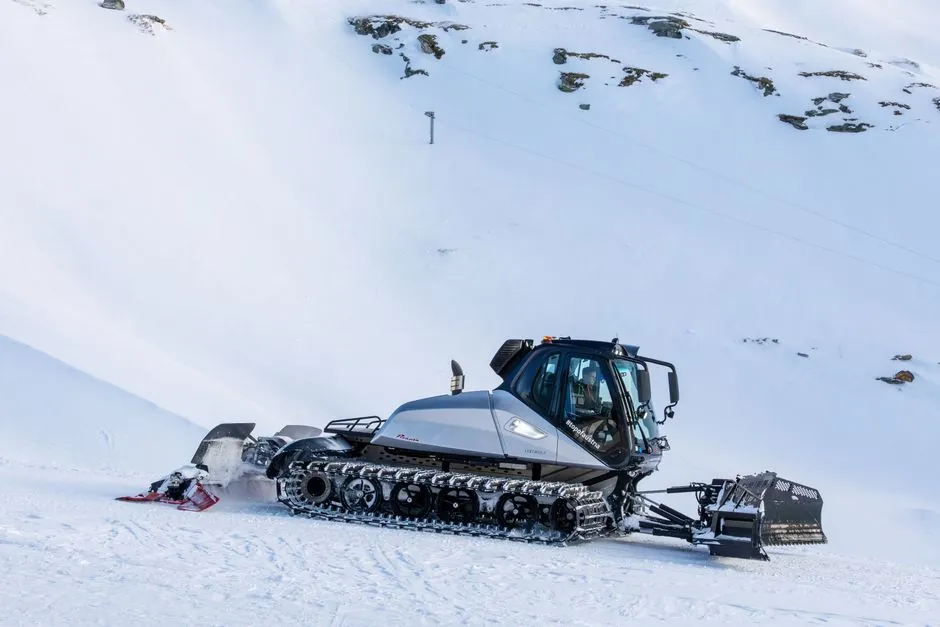
A crawler crane used for snow removal, roof clearing, or frozen-site rigging faces cold-soak, condensation, frozen grease, and ice-packed track frames, all of which accelerate wear on the undercarriage and hydraulics far faster than summer duty [S3].
The core routine spans five recurring tasks: pre-operation inspection of hydraulics, racks, and load-moment indicators; scheduled lubrication of boom, mast, and winches; cleaning of mud, road salt, and ice from moving parts; replacement of filters, oils, and brake linings on the manufacturer's interval; and operator-level cold-start training [S3]. The same five-bucket structure shows up across published snow-equipment checklists for plows, spreaders, and chassis, where the recurring items are hydraulic fluid flush, cutting-edge and shoe wear, hose and fitting torque, electrical connector cleanliness, and chain or fastener tension [S5].
Pre-operation cold-start checks: block heaters, fuel, and steering
Operators must verify that block heaters and cold-weather starting devices are functional before each shift, because hydraulic steering response slows sharply at low temperatures even when the correct oil grade is in the sump [S4].
For diesel-powered crawler cranes, the field practice is to use only high-quality diesel fuel, keep a spare fuel filter in the cab, and idle the engine until it reaches operating temperature before any lift or travel demand, since cold oil raises backpressure and starves the track-drive motors [S4]. Pre-shift inspection should also clear ice or snow from the throttle and brake area, the exhaust intake, and any recessed linkage, because ice in these locations binds controls and produces the most common winter breakdown mode on tracked machines [S4].
Undercarriage and track care: the highest-wear item in snow service
Track frames, idlers, sprockets, and carrier rollers accumulate packed snow, road salt, and frozen mud that the operator cannot see without a deliberate cleaning pass, and that pack accelerates pin and bushing wear faster than any other winter condition [S3].
Cleaning is the controlled first step: removing debris from key components reveals hidden wear on track shoes, pins, and tension cylinders that a dirty undercarriage would mask during a routine walk-around [S3]. For machines that stand outdoors between shifts, a weather-resistant tarp over the engine reduces condensation and the resulting ice on the air intake, which is a documented cold-weather failure path [S4]. A separate but related best practice is to clean the work area and mark hazards with reflective stakes before snowfall, so the snow removal crew does not strike hidden debris or stored equipment that could be driven over and fed into the track frame [S4].
Lubrication, fluids, and the spec that controls the change interval
Lubrication must cover the boom, mast, and winches on a written interval, and fluid management must treat hydraulic fluid, engine oil, and coolant as three separate cold-weather disciplines, because each has a different pour point and a different failure signature when neglected [S3].
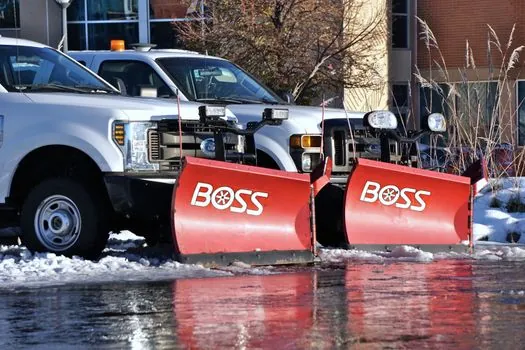
For plows and auxiliary hydraulic attachments in the same fleet, the published pre-season step is to flush and replace hydraulic fluid, then check cutting edges and shoes for excessive wear and replace shoes before steel-on-pavement contact begins [S5]. The same source lists dielectric grease on every electrical connector as a post-season step, which carries over to the crawler crane: moisture in unsealed connectors is the leading cause of sensor and LMI faults on cold-soaked machines [S5]. Grease points on pivots, pins, and exposed cylinder rods follow the same logic: lubricate, then coat any exposed rod to keep the salt spray out of the seal wiper [S5].
Snow removal around the machine: site prep, plowing order, and deicing
Snow removal around a working crawler crane follows the same plow-then-treat order used on public roads: plow first to remove snow and loose ice, then apply deicing product, then plow again if accumulation continues, because deicers under a layer of unplowed snow lose contact with the pavement and stop working [S1].
Pre-storm anti-icing is the documented best practice for the surrounding yard and access route, with the caveat that pavement temperature can be substantially lower or higher than air temperature, so product rate and selection are driven by pavement sensor data, not by ambient readings [S1]. For the crane pad itself, operators are expected to clear all ice and snow from the jobsite and to keep it that way throughout the shift, because a tracked machine on a frozen, uneven pad can shear a track pin or twist the carbody if one track suddenly gains traction and the other does not [S4]. Site drainage should be checked before freeze-up as well: channels and exterior outflows must be clean and draining away from walking surfaces, parking, and the crane pad, so meltwater does not refreeze into a hard, invisible ice layer under the tracks [S8].
Operator practice and the seatbelt rule

Slips, trips, and falls are the most common injury mechanism in snow and ice work, so the published rule is to wear a seatbelt when operating equipment and to maintain three points of contact when mounting or dismounting the machine [S4].
Operator training is treated as a maintenance item, not a separate HR task, because an operator who does not understand load limits, load testing, or proper rigging technique can over-stress a cold boom, crack a hoist drum, or two-block a hook before any mechanical inspection would catch the damage [S3]. Daylight-hour management is part of the same discipline: winter cuts the available shift, so warm-up, walk-around, and post-shift cleaning have to fit inside a shorter working window or get skipped, and skipped cleaning is the documented path back into the undercarriage-wear problem covered above [S4].
When to stop repairing: thresholds for component replacement
Track shoes, cutting edges, and plow shoes are wear parts with a defined replacement point: when steel contacts the ground or pavement, the part is functionally failed and must be replaced rather than re-shimmed, because the next failure mode is damage to the undercarriage frame, not just the shoe [S5].
Filters, oils, winch drum liners, and brake linings fall on the manufacturer's published interval, and the documented practice is to follow that schedule rather than extend it in winter, because cold service pushes contamination and moisture into fluids faster than the design assumption [S3]. A crawler crane that shows hydraulic steering response lag after a full warm-up, or an LMI that faults repeatedly after cold start, is no longer a maintenance candidate: the right move is to escalate to component-level diagnosis, because a cold-start fault that survives warm-up is almost always a sensor, pump, or seal issue rather than a fluid issue [S4]. For a deeper look at how scheduled lubrication intervals compare with run-to-failure practice on adjacent heavy equipment, the power trowel maintenance spec map for HVAC slabs uses the same daily, 50-hour, and annual cadence for a comparable winter-pour concrete workflow.
Track the next winter as two signals: pavement temperature at the crane pad relative to ambient, and grease-point interval compliance on the undercarriage; both are measurable, both move before a failure, and both are tracked in the same winter maintenance log that the manufacturer's service interval already requires.
For the relevant spec sheets and selection criteria, see crane scale, and gantry crane.